
PEG 400 as a Plasticizer in Pharmaceutical Tablet Film Coating




AI Summary
A PEG 400 plasticizer is selected to increase molecular mobility within a compatible film-forming polymer, helping the dried tablet coating bend without cracking. Too little can leave the film rigid and brittle; too much can reduce mechanical strength and increase softness or tack. Formulators must balance flexibility, tensile strength, adhesion and process behaviour by optimizing the PEG 400-to-polymer ratio for the complete coating composition, tablet core and manufacturing conditions. The selected level must then be confirmed through coated-tablet trials and stability testing.
Why PEG 400 Is Used in Pharmaceutical Tablet Film Coating
Film-forming polymers create the structural matrix of a tablet film coating containing PEG 400. Depending on polymer chemistry and processing conditions, an unplasticized film may have insufficient molecular mobility to deform without breaking. Stress generated during drying, tablet movement, packaging or storage can then lead to cracks, chips or loss of adhesion.
A plasticizer modifies this matrix by increasing polymer-chain movement, helping the dried coating tolerate mechanical strain. Flexibility, strength, adhesion and barrier behaviour must remain appropriately balanced.
When developing a PEG 400 tablet coating, selection must account for the polymer grade, intended coating function, other solids and excipients, process conditions, tablet core, packaging and storage environment.
 WhatsApp Now
How PEG 400 Functions as a Tablet Film-Coating Plasticizer
In a polyethylene glycol 400 film coating, the small, mobile plasticizer molecules can distribute between compatible polymer chains. This reduces intermolecular attraction and increases freedom of movement, potentially lowering the effective glass-transition temperature (Tg), increasing elongation and reducing brittleness.
Research involving PEG 400-plasticized HPMC strip films provides useful mechanistic evidence, although the results should not be treated as direct tablet-coating specifications. In that study, increasing plasticizer concentration reduced Tg and tensile strength while generally increasing elongation. PEG 400 is not the structural polymer; it modifies the polymer matrix. Its effect depends on distribution within that matrix after drying and during storage.
PEG 400 Compatibility with Tablet Film-Forming Polymers
Compatibility determines whether this pharmaceutical coating plasticizer remains uniformly incorporated. Homogeneous distribution supports consistent clarity and mechanical behaviour, while poor compatibility may contribute to haze, phase separation or migration.
Pigments, opacifiers, colourants, surfactants and other solids can change polymer interactions, viscosity and drying behaviour. Results obtained with one polymer grade should therefore not be transferred automatically to another coating system.
Compatibility screening can combine visual observation, free-film preparation, thermal analysis and mechanical testing before trials on representative tablets.
How PEG 400 Affects Tablet Film Flexibility and Mechanical Strength
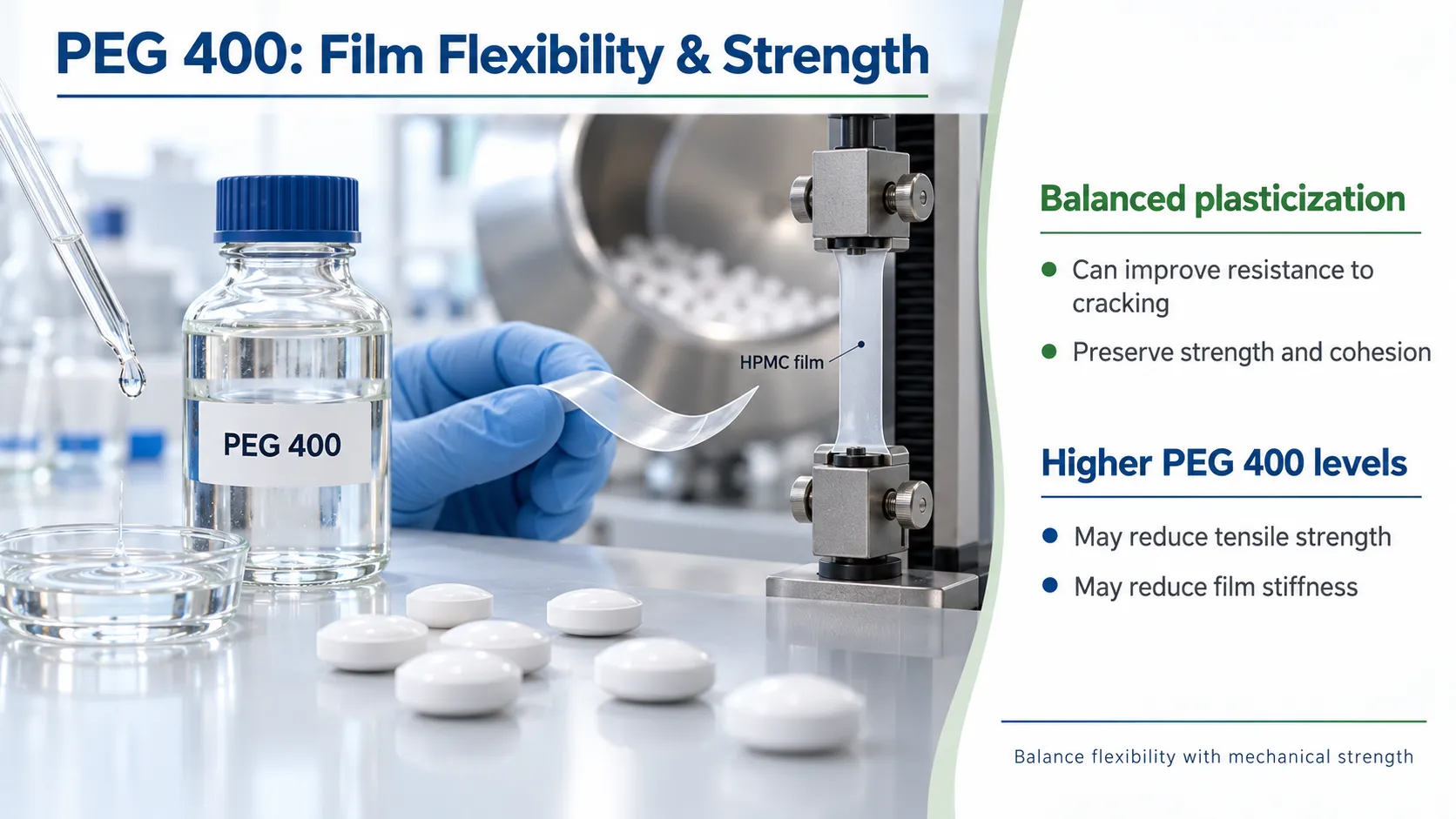
An appropriate PEG 400 level can increase resistance to cracking while preserving sufficient tensile strength and cohesion during coating, transfer, packaging and handling. As plasticization rises, however, tensile strength and stiffness can decline. Studies of specific HPMC films found that higher PEG 400 levels reduced tensile strength.
| Plasticization condition | Possible film behaviour | Potential coating problem | Evaluation required |
|---|---|---|---|
| Insufficient | Rigid or brittle film | Cracking, edge damage or poor flexibility | Mechanical tests and visual examination |
| Optimized for the system | Flexible, coherent film with suitable strength | Supports intended coating performance | Confirm through formulation, process and stability trials |
| Excessive | Overly soft, weak or tacky film | Sticking, picking or handling damage | Reassess ratio, composition and drying conditions |
How to Select the PEG 400-to-Polymer Ratio
Plasticizer content is commonly considered relative to dry polymer content, but a general percentage cannot replace development work. The appropriate ratio may change with:
- polymer type, grade and concentration;
- aqueous or solvent-based coating system;
- total solids and pigment loading;
- other excipients and their interactions;
- required flexibility, strength and coating function;
- core porosity, hardness, friability and moisture;
- product-bed temperature and drying capacity;
- storage humidity, packaging and shelf-life target.
Candidate levels should be compared systematically rather than judged from appearance alone:
| Development variable | What to measure | What the result indicates |
|---|---|---|
| Low PEG 400 level | Cracking, elongation and folding resistance | Whether plasticization is insufficient |
| Intermediate level | Strength, flexibility, adhesion and tack | Whether film properties are appropriately balanced |
| High level | Tack, picking, tensile strength and storage changes | Whether over-plasticization is occurring |
| Stability samples | Appearance, migration, adhesion and relevant product-performance tests | Whether performance remains consistent over time |
Effect of PEG 400 on Tablet-Coating Formulation and Process Behaviour
PEG 400 can influence formulation viscosity, flow, atomization, spreading and drying. Its contribution cannot be separated from polymer concentration, solvent composition, solids loading and temperature.
During spraying, the formulation must atomize, wet the moving tablet bed and coalesce while moisture or solvent is removed. Plasticizer level can influence this sequence and tack development.
Process variables must be optimized together rather than fixed independently:
- inlet-air and product-bed temperatures;
- spray rate and atomization pressure;
- airflow and drying efficiency;
- pan speed and tablet movement; and
- gun-to-bed distance and spray pattern.
An imbalance may cause over wetting, sticking, picking, roughness or non-uniform coverage; equipment design, core properties and operating conditions should be investigated alongside composition.
Our Other Product
PEG 10000 (Polyethylene Glycol 10000 | Macrogol 10000)PEG 400 Film Adhesion and Tablet-Core Interaction
Even a mechanically suitable film may fail on an unsuitable tablet surface. Wetting and spreading depend on surface energy, roughness, porosity and cleanliness. Dust can weaken contact, while a friable substrate may break beneath the coating.
Core hardness and residual moisture also matter. Representative-tablet trials should examine adhesion after coating and storage because plasticizer adjustment cannot correct poor core quality, contamination or an unsuitable process.
PEG 400 Tablet-Coating Defects and Possible Causes
Defects are diagnostic signals, not proof of a single cause. Formulation composition, core quality and process settings should be investigated together.
| Observed problem | Possible plasticizer-related cause | Other factors to examine |
|---|---|---|
| Brittle or cracked film | Insufficient plasticization or poor compatibility | Polymer grade, drying conditions and storage humidity |
| Tackiness or sticking | Excessive plasticization | Spray rate, drying efficiency and bed temperature |
| Weak or easily damaged film | Over-plasticization or incompatible composition | Polymer level, film thickness and curing history |
| Peeling or poor adhesion | Inadequate wetting or formulation incompatibility | Core surface, dust, friability and spray conditions |
| Bridged logo or score | Film unable to accommodate geometry, or excessive deposition | Coating weight, viscosity, atomization and tablet design |
| Orange-peel or uneven surface | Unsuitable formulation rheology or droplet behaviour | Spray pattern, atomization, drying and tablet movement |
Defect investigations should compare formulation variables with process records and physical observations before changing the plasticizer level.
PEG 400 Moisture, Migration and Storage Considerations
PEG 400 is hydrophilic, so environmental moisture can affect the equilibrium of a plasticized film. Changes in moisture content may alter flexibility, tack or mechanical strength during storage. Depending on compatibility and composition, plasticizer migration or redistribution can also change local film properties.
PEG 400 is not automatically a moisture barrier. Coated tablets in the proposed packaging should undergo relevant long-term and accelerated studies, with appearance, adhesion, strength and product-performance tests repeated according to the stability protocol.
Testing PEG 400-Plasticized Tablet Film Coatings
A risk-based evaluation may include:
- free-film preparation and visual inspection;
- film thickness and surface examination;
- tensile strength, percentage elongation and folding endurance where relevant;
- adhesion and tack assessment;
- thermal analysis, including Tg evaluation where appropriate;
- moisture uptake and plasticizer-migration studies;
- coated-tablet appearance and coating uniformity;
- disintegration or dissolution when coating changes may affect performance; and
- accelerated and long-term stability studies.
Free films help compare formulations under controlled conditions, while coated-tablet studies capture effects of the substrate and production process. Acceptance criteria and test conditions should be defined for the dosage form and intended performance; they should not be borrowed as universal values from an unrelated formulation.
PEG 400 Tablet Film-Coating Formulation Checklist
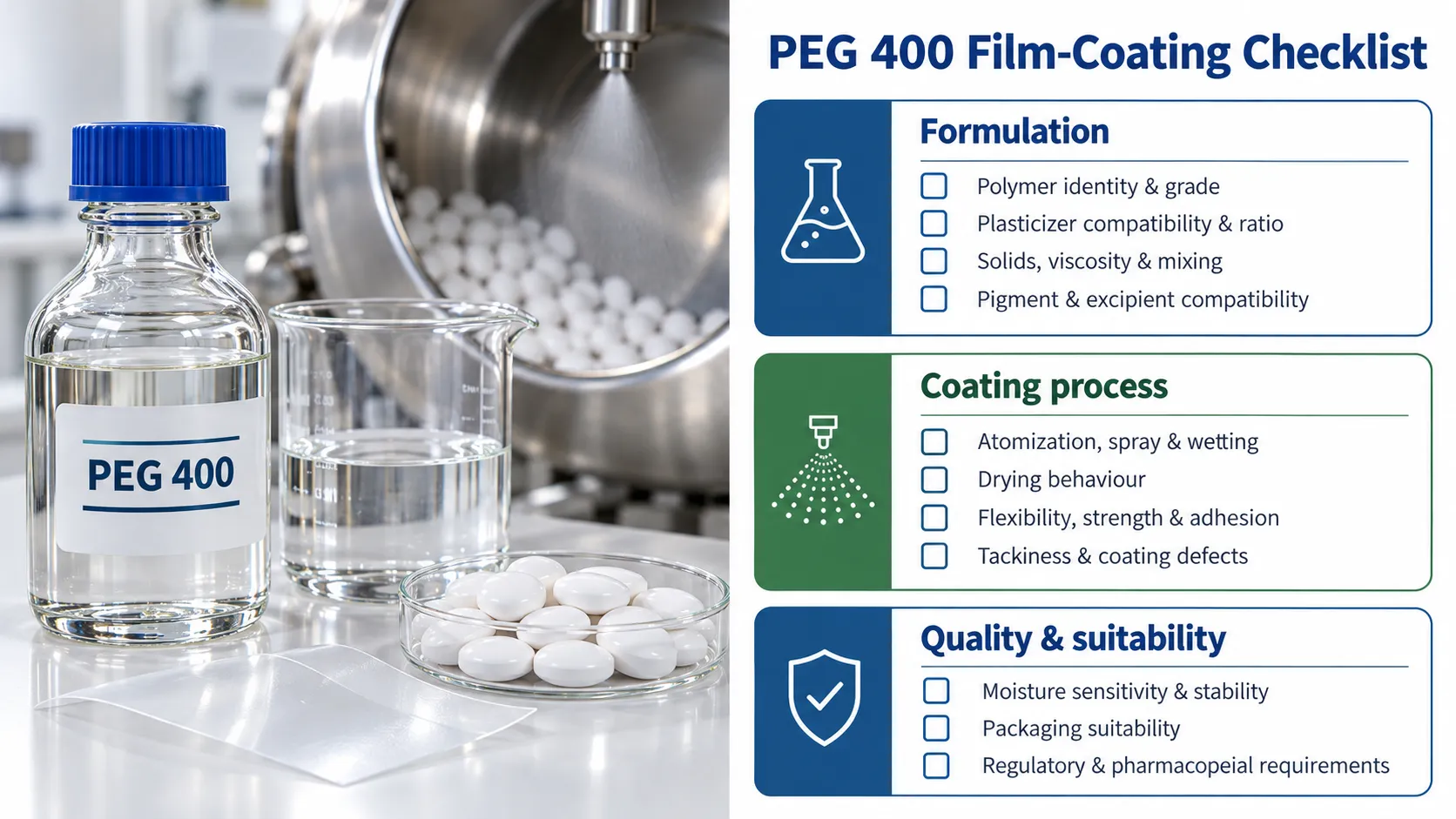
Before selecting a PEG 400-plasticized coating system, confirm:
- film-forming polymer identity and grade;
- polymer–plasticizer compatibility;
- justified plasticizer-to-polymer ratio;
- coating solids, viscosity and mixing uniformity;
- pigment, colourant and excipient compatibility;
- atomization, spray pattern, wetting and drying behaviour;
- suitable flexibility, tensile strength and adhesion;
- absence or control of tackiness and coating defects;
- moisture sensitivity and stability performance;
- packaging suitability; and
- applicable regulatory and pharmacopeial requirements.
Our Other Product
PEG 20000 (Polyethylene Glycol 20000 | Macrogol 20000)PEG 400 (Polyethylene Glycol 400 | Macrogol 400) from Pharcos Speciality Ltd
Pharcos Speciality Ltd offers PEG 400 (Polyethylene Glycol 400 | Macrogol 400) under the Pharcogol 400 product line. The company identifies it as a low-molecular-weight polyethylene glycol for pharmaceutical applications and lists plasticization of film coatings among its uses. Its official product page states compliance with USP–NF, EP and BP requirements.
Before sourcing, formulation and procurement teams should request the current specification and applicable pharmacopeial-compliance documentation. They can also ask Pharcos about certificate-of-analysis availability, samples or development quantities, technical documents and commercial terms. The supplied documentation and grade should be reviewed against the intended formulation, manufacturing site and target-market requirements; availability should be confirmed directly with Pharcos.
About Pharcos Speciality Ltd
Pharcos Speciality Ltd manufactures pharmaceutical ingredients and speciality chemicals. Its pharmaceutical portfolio includes polyethylene glycol products offered under the Pharcogol range. The company’s official information describes dedicated PEG manufacturing and an emphasis on quality controls and applicable industry requirements. Readers evaluating PEG 400 for tablet film coating should consult Pharcos for product-specific documentation and confirm that the selected grade meets their formulation, quality and regulatory needs.
 Call Us Now!
Conclusion: Optimizing PEG 400 for Tablet Film Coating
PEG 400 can support flexible, coherent tablet films when the selected ratio balances elongation, tensile strength, adhesion and processability. The final coating must also remain suitable throughout its proposed storage period.
Tablet manufacturers, coating specialists and formulation teams can review Pharcogol 400 and contact Pharcos Speciality Ltd for current specifications, technical documentation, samples, pharmacopeial information and commercial enquiries.
Frequently Asked Questions About PEG 400 Tablet Film Coating
Dr. Avinash Dubey (R&D Head)
Dr. Avinash Dubey is a PhD in Organic Chemistry with a distinguished career spanning more than four decades. As the head of R&D at Pharcos, he focuses on the development of novel molecules for a wide array of industrial sectors, blending long-standing experience with a passion for innovation.
Mr. Ankit Shah (Managing Director)
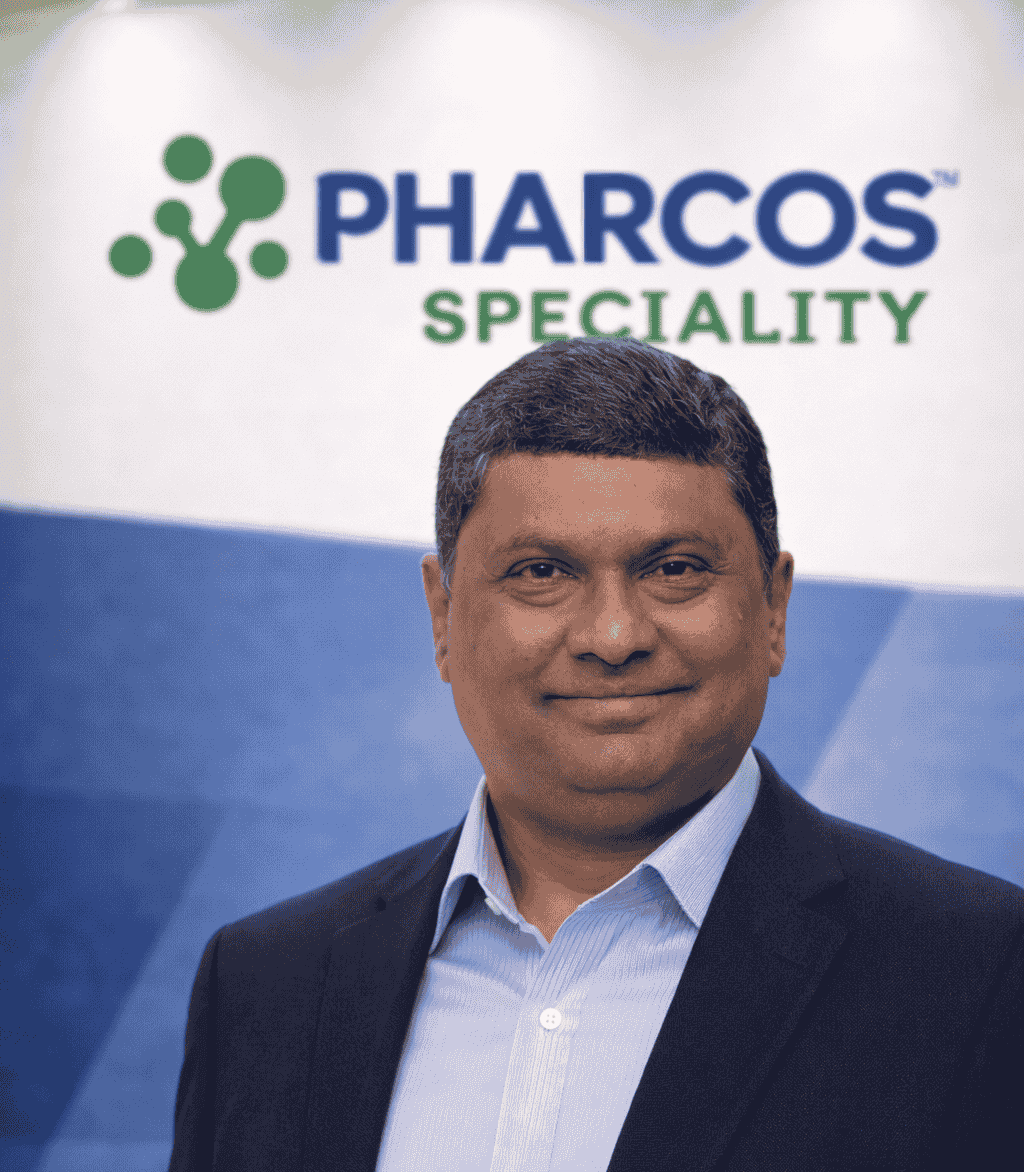
Mr. Ankit Shah has led Pharcos Speciality for over three decades, establishing it as a pioneer in specialty chemicals. He currently directs the company’s strategic expansion into the APIs, Excipient and Speciality Surfactants markets, upholding a steadfast commitment to "Make in India" and world-class manufacturing quality and new product development.