
Articles - Insights & Innovations
Exploring the future of specialty chemicals, sustainable practices, and industry trends.
How to Evaluate Pharmaceutical-Grade PEG-40 Hydrogenated Castor Oil: Quality and Supplier Checklist
A practical checklist for evaluating PEG-40 hydrogenated castor oil quality, specifications, impurities, documentation, suppliers and formulation performance.
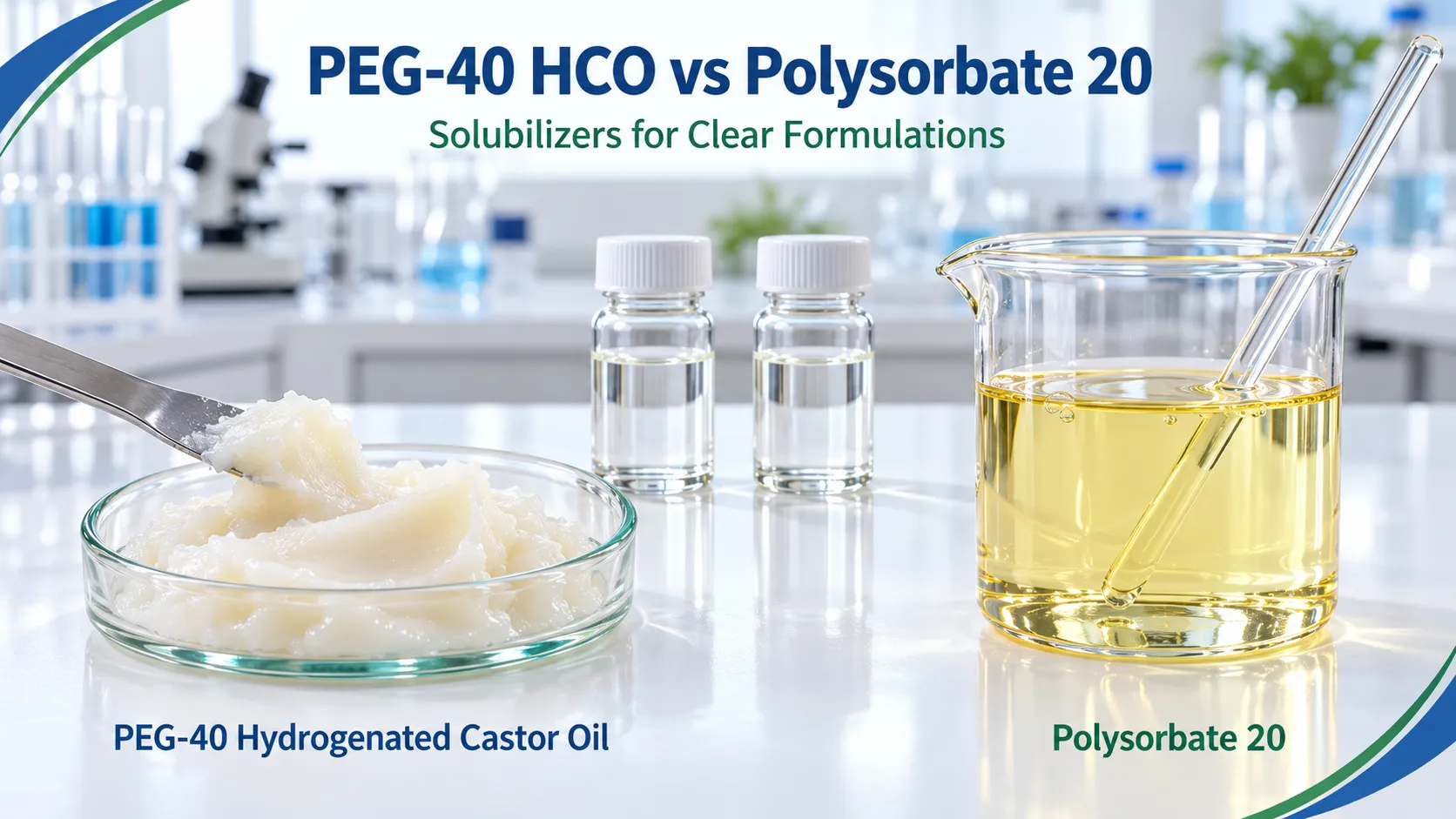
PEG-40 Hydrogenated Castor Oil vs Polysorbate 20: Choosing a Solubilizer for Clear Formulations
Compare PEG-40 Hydrogenated Castor Oil and Polysorbate 20 for clear fragrance and essential-oil formulations, processing, compatibility, and stability.
PEG 400 as a Plasticizer in Pharmaceutical Tablet Film Coating
PEG 400 can improve tablet film flexibility, but its polymer ratio must balance tensile strength, adhesion, tack, process behaviour, and storage stability.
PEG 400 as a Co-Solvent for Poorly Water-Soluble APIs: Formulation and Stability Considerations
PEG 400 can improve the solubility of poorly water-soluble APIs, but dilution, precipitation, stability, compatibility, and processing must be evaluated.
PEG 3350 vs PEG 4000: A Pharmaceutical-Grade Selection Guide
Compare PEG 3350 and PEG 4000 by molecular weight, physical form, thermal behaviour, viscosity, processing, and pharmaceutical application.
PEG 3350 Beyond Laxatives: Its Role in Solid Pharmaceutical Dosage Forms
PEG 3350 can support tablet granulation, lubrication, solid-dispersion development, and matrix design when selected for the right dosage form.
Surfactants for Detergents and Cleaning Products: Complete Guide to Industrial Applications
Primary surfactants, foam boosters, solubilizers, pearlizing agents and alcohol ethoxylates support detergent, personal care and industrial cleaning formulations.
Specialty Chemicals for Paper and Pulp Processing: Wetting Agents, Coating Lubricants and Defoamers
Wetting agents, coating lubricants and defoamers support fiber processing, sheet formation, surface quality and efficient paper manufacturing.
Emulsifiers for Polishes and Wax Formulations: Floor, Automotive and Shoe Polish Applications
Glyceryl stearate, Ceteareth blends, tallow amine ethoxylates and oleyl cetyl ethoxylates support stable wax emulsions across polish categories.
Specialty Process Chemicals for Petroleum Refineries: Desalting Aids and Fuel Additives
Petroleum refining depends on specialty process chemicals at multiple stages, from the earliest crude oil processing step through to finished fuel quality.
Binders and Processing Aids for Ceramic Tiles and Flooring: A Complete Guide
Ceramic tile manufacturing is a multi stage process, moving from spray dried powder through pressing and glazing to high temperature firing, and specialty processing chemicals play a defined role at each stage.
Emulsifiers, Surfactants and Polymers for Lubricant Formulation: Metalworking Fluids and Beyond
Amine ethoxylates, blended ethoxylates and high molecular weight PEGs help lubricant formulators build stable emulsions, corrosion protection and boundary lubrication.
Surfactants and Chemical Auxiliaries for Textile Processing: From Scouring to Finishing
Textile mills use stage-specific wetting agents, dye leveling agents, softeners, spin finishes and dye carriers to improve processing and fabric quality.
Polymers and Surfactants for Adhesive Manufacturing: Bonding Solutions
Adhesive manufacturers use emulsifiers, plasticizers and crosslinking additives to control polymerization, film flexibility, shear strength and thermal stability.
Emulsifiers and Dispersants for Pesticide Formulation: EC, SC and Adjuvant Systems Explained
Crop protection products rely on precise emulsifier, dispersant and adjuvant systems to remain stable, mix correctly and deliver active ingredients effectively.
Surfactants, Demulsifiers and Emulsifiers for the Oil and Gas Industry: Upstream to Downstream Applications
Oil and gas operations rely on specialty chemicals to manage emulsions, protect equipment from corrosion and scale, assure flow and stabilize drilling fluids.
How Specialty Chemical Additives Enhance the Performance of Industrial Paints and Protective Coatings
Modern industrial paints and protective coatings depend on specialty chemical additives to achieve consistent quality, application performance and durability.
Polyethylene Glycol 3350 (PEG/Macrogol 3350): Uses, Properties and Pharmaceutical Applications
Polyethylene Glycol 3350, also known as PEG 3350 or Macrogol 3350, is a high molecular weight PEG used as an osmotic laxative and functional excipient in pharmaceutical formulations.
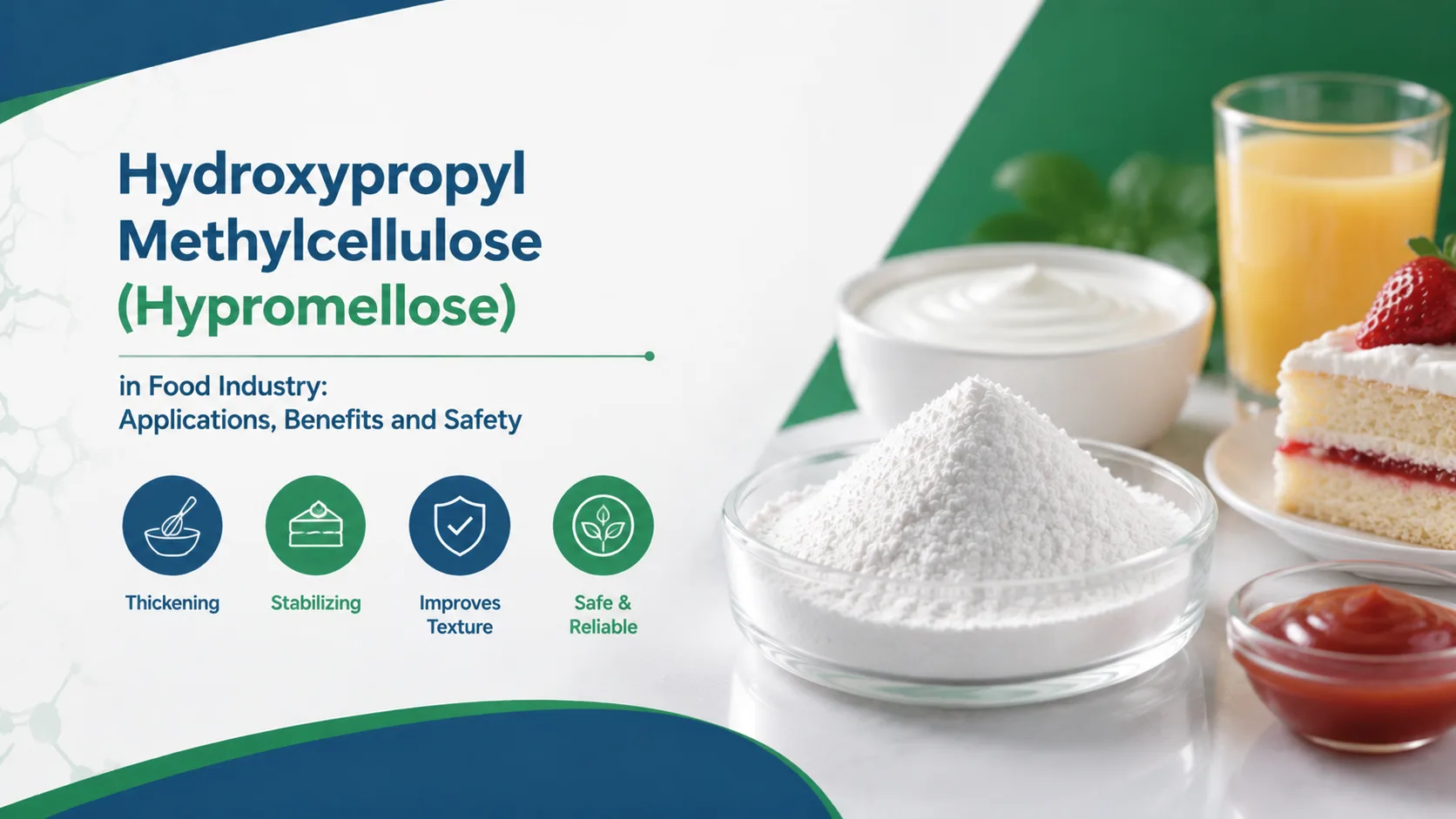
Hydroxypropyl Methylcellulose (Hypromellose) in Food Industry: Applications, Benefits and Safety
Hydroxypropyl Methylcellulose, known as HPMC or Hypromellose, is a plant derived, nonionic cellulose ether recognized globally as a multifunctional food additive under E464.
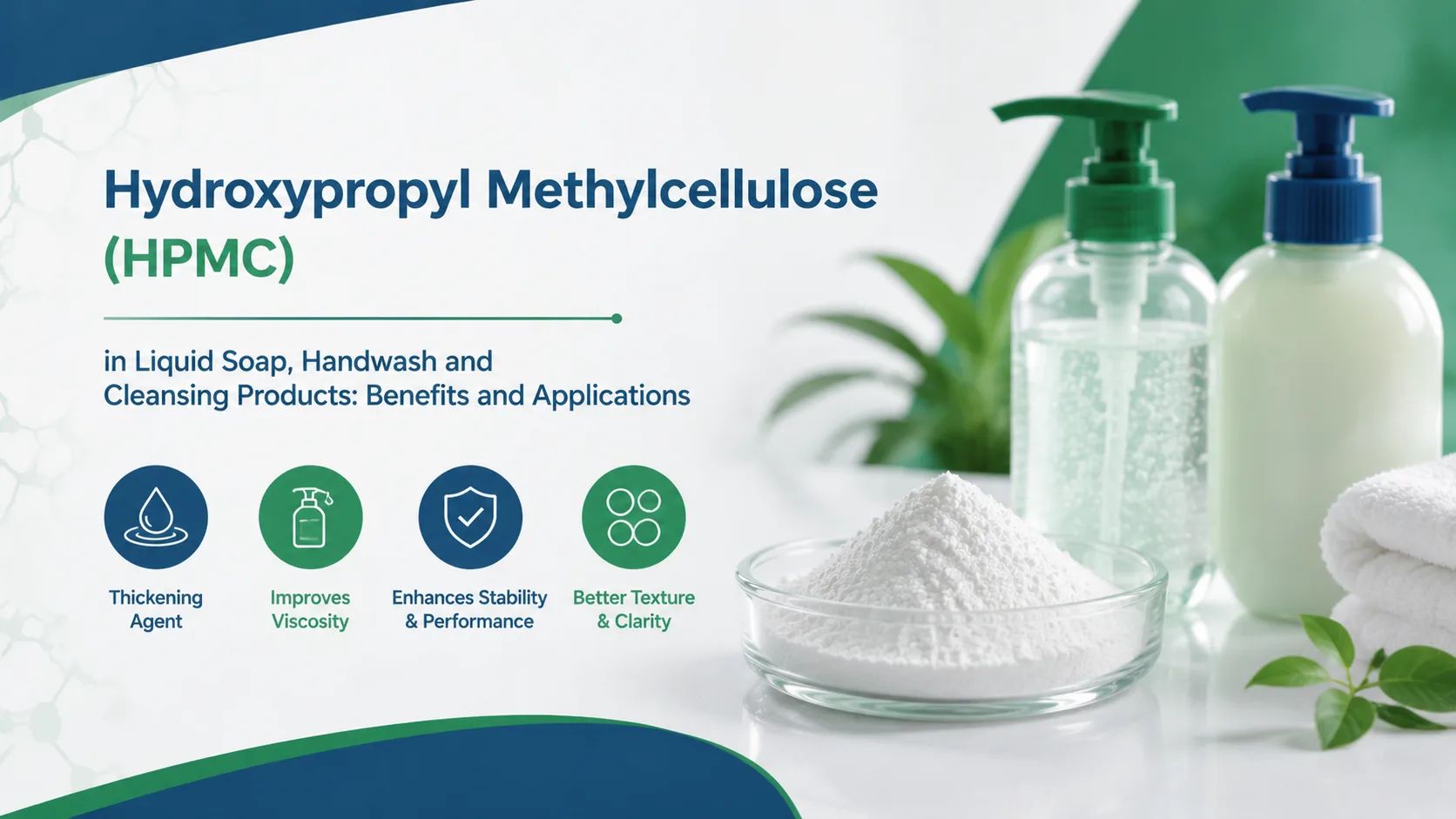
Hydroxypropyl Methylcellulose (HPMC) in Liquid Soap, Handwash and Cleansing Products: Benefits and Applications
Hydroxypropyl Methylcellulose, known as HPMC or Hypromellose, is a nonionic cellulose ether widely used as a rheology modifier in liquid soap, handwash and cleansing products.
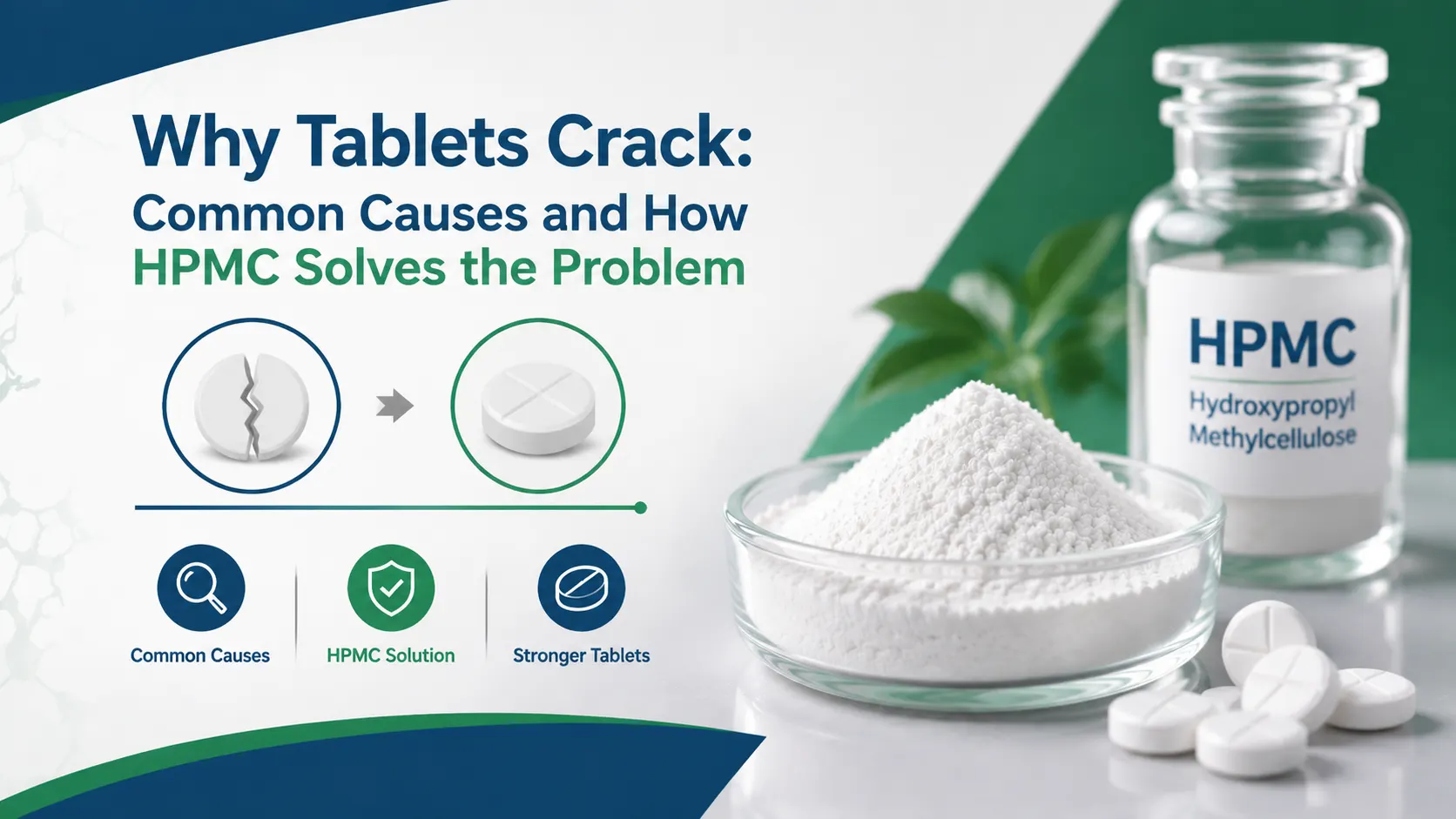
Why Tablets Crack: Common Causes and How HPMC Solves the Problem
Cracked tablets, technically described as capping, lamination or chipping, are among the most common quality defects in tablet manufacturing, and HPMC offers a practical formulation-based solution.
Hydroxypropyl Methylcellulose (Hypromellose) Applications with Different Pharmaceutical HPMC Grades
Hydroxypropyl Methylcellulose, widely known as HPMC or Hypromellose, is a semi-synthetic cellulose ether derived from natural plant cellulose and is one of the most widely used excipients in pharmaceutical formulation today.
Polyethylene Glycol 1000 (PEG 1000 / Macrogol 1000): Properties, Applications, Comparison and Sourcing Guide
Polyethylene Glycol 1000, also known as PEG 1000 or Macrogol 1000, is a medium molecular weight polyethylene glycol with broad pharmaceutical applications.
Polyethylene Glycol 400 (Macrogol 400): Properties, Applications, Compliance and Sourcing Guide
Polyethylene Glycol 400, also known as PEG 400 or Macrogol 400, is a low molecular weight, water-soluble polyethylene glycol with broad pharmaceutical applications.
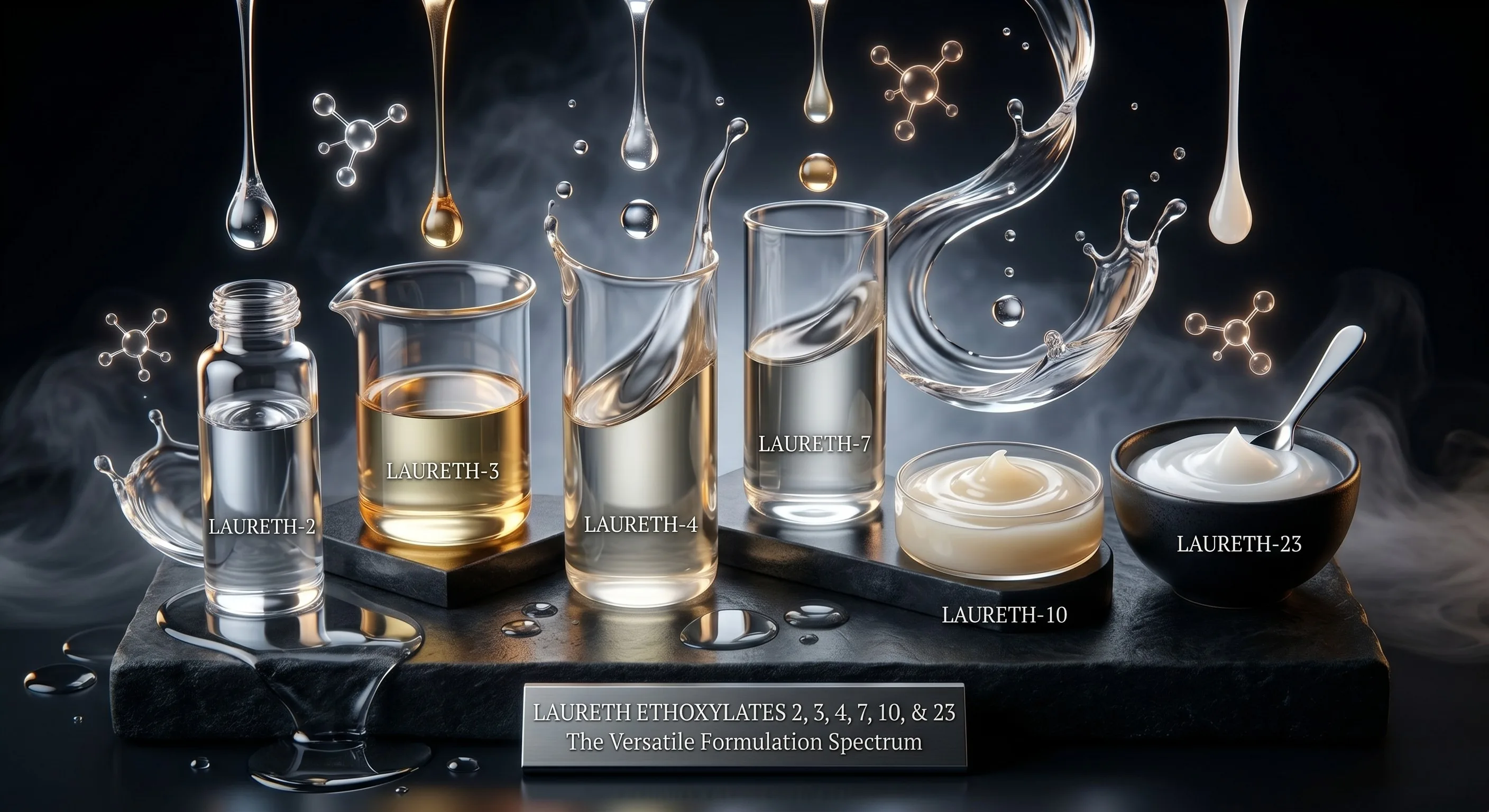
Laureth-2, Laureth-3, Laureth-4, Laureth-7, Laureth-10 & Laureth-23: A Complete Guide to Lauryl Alcohol Ethoxylates for Industrial and Personal Care Formulations
Lauryl alcohol ethoxylates - including Laureth-2, Laureth-3, Laureth-4, Laureth-7, Laureth-10 and Laureth-23 - are versatile non-ionic surfactants and emulsifiers widely used across personal care, detergent, textile, agro-chemical, paint and adhesive industries.
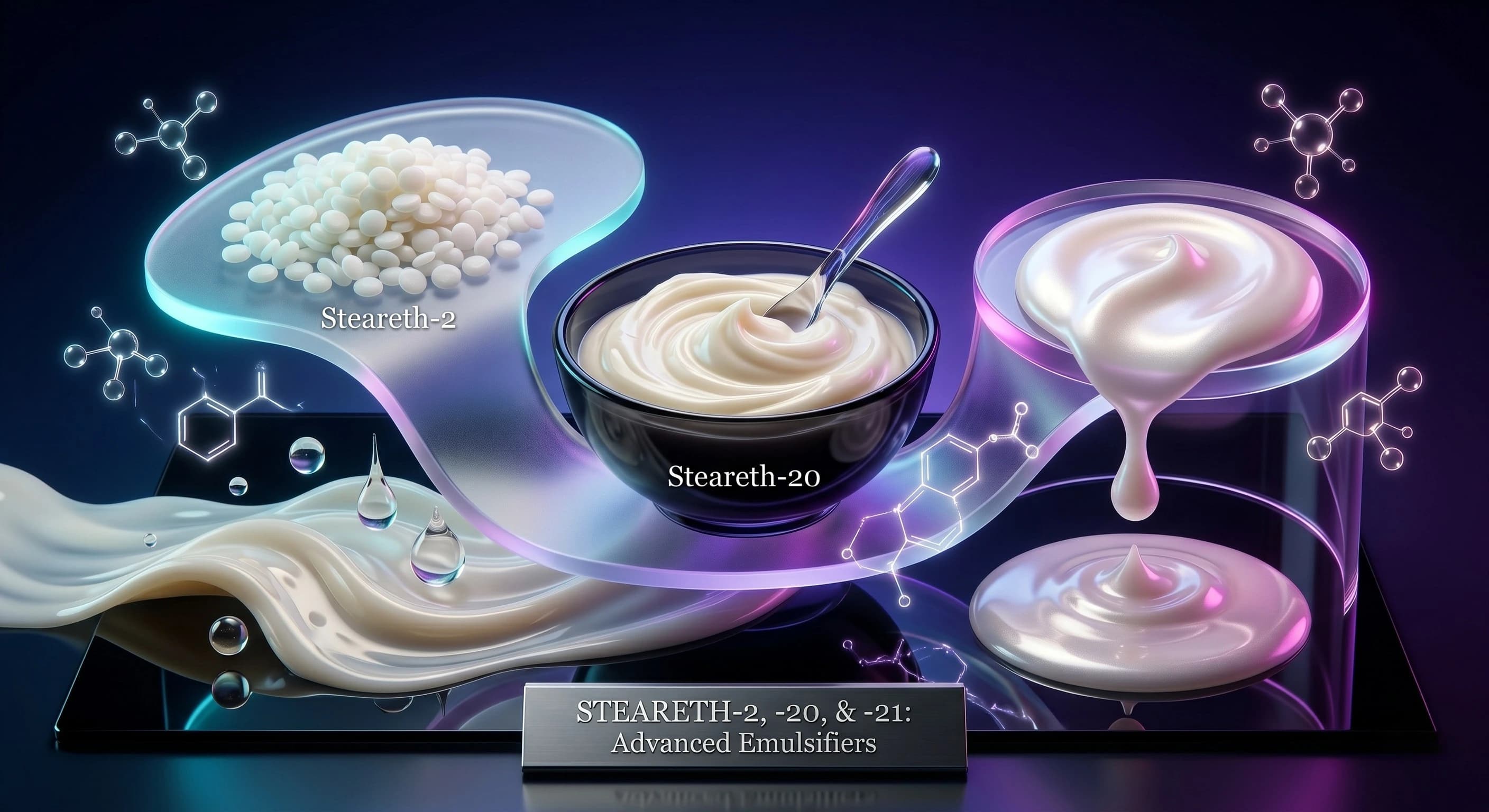
Steareth-2, Steareth-20 and Steareth-21: The Emulsifier Trio Powering Modern Personal Care Formulations
Steareth-2, Steareth-20 and steareth-21 are polyoxyethylene ethers of stearyl alcohol widely used as solid/waxy emulsifiers in personal care, cosmetics and detergent industries across the USA, Europe, Russia and the Middle East.
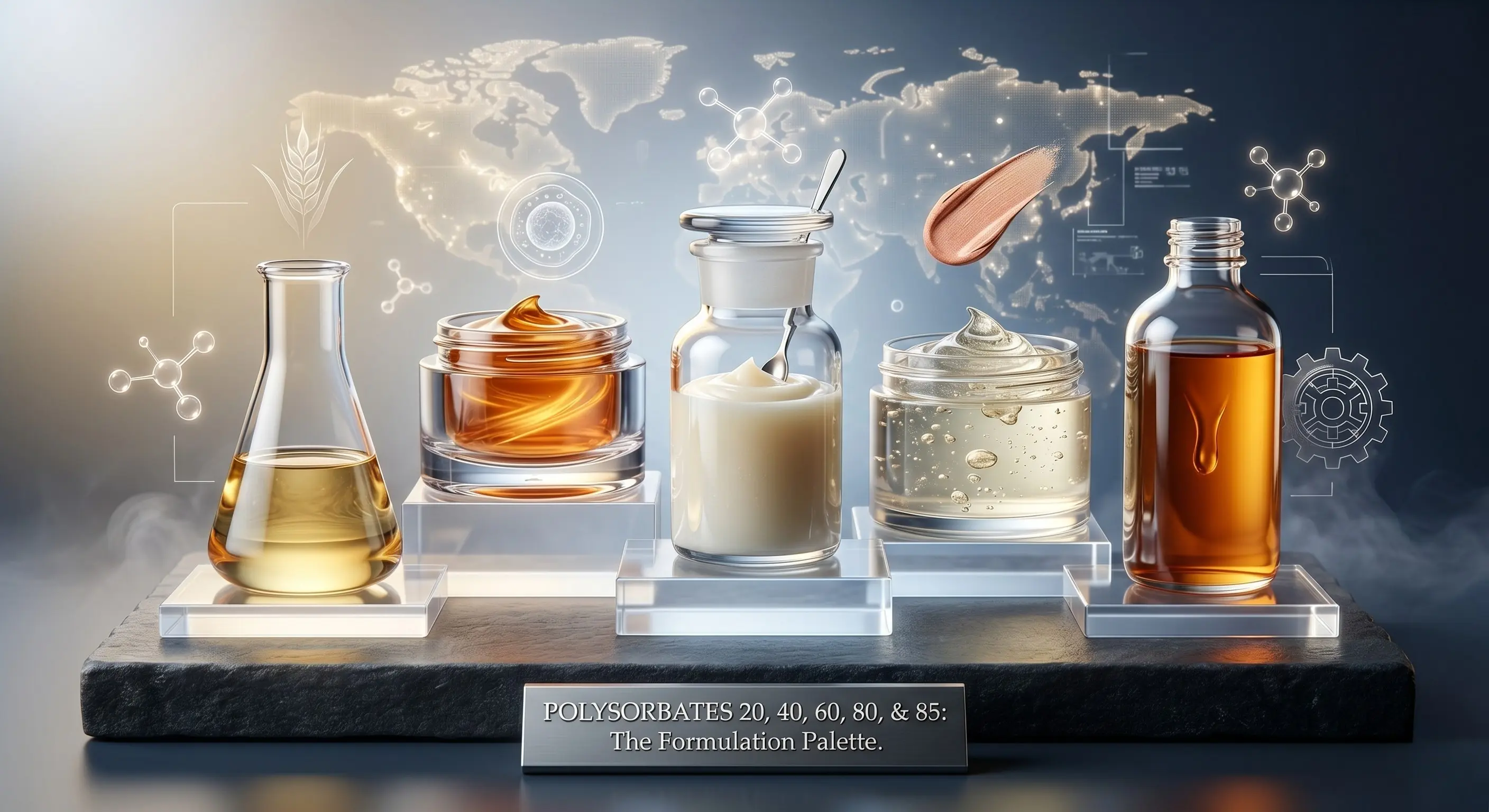
Polysorbate 20, 40, 60, 80 & 85: Applications, Industrial Uses & Global Market Relevance
Polysorbates are a versatile family of non-ionic surfactants widely used across personal care, agrochemicals, oil & gas, lubricants, detergents and polishes industries. Each grade - Polysorbate 20, 40, 60, 80 and 85 - carries a unique fatty acid composition, which defines its HLB value, solubility behavior and functional role in formulations.
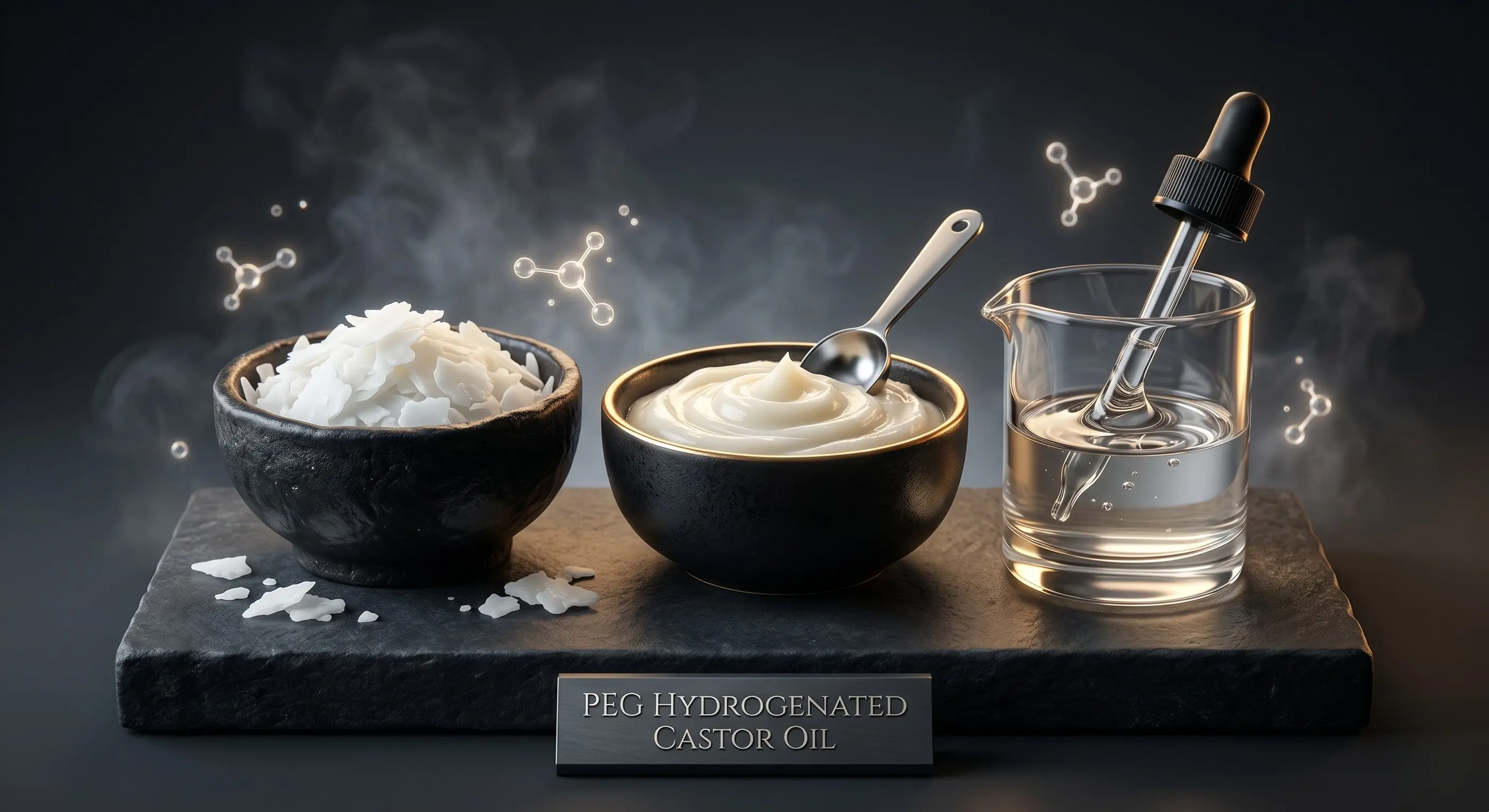
PEG Hydrogenated Castor Oil: Grades, Applications & Global Industry Uses
PEG Hydrogenated Castor Oil is a versatile, multifunctional ingredient widely used across personal care, agrochemical, detergent, leather and industrial sectors. Available in multiple ethoxylation grades - PEG 7, PEG 40, PEG 60 and PEG 80 - each variant offers distinct emulsification, solubilization and stabilization properties suited for specific formulation needs.
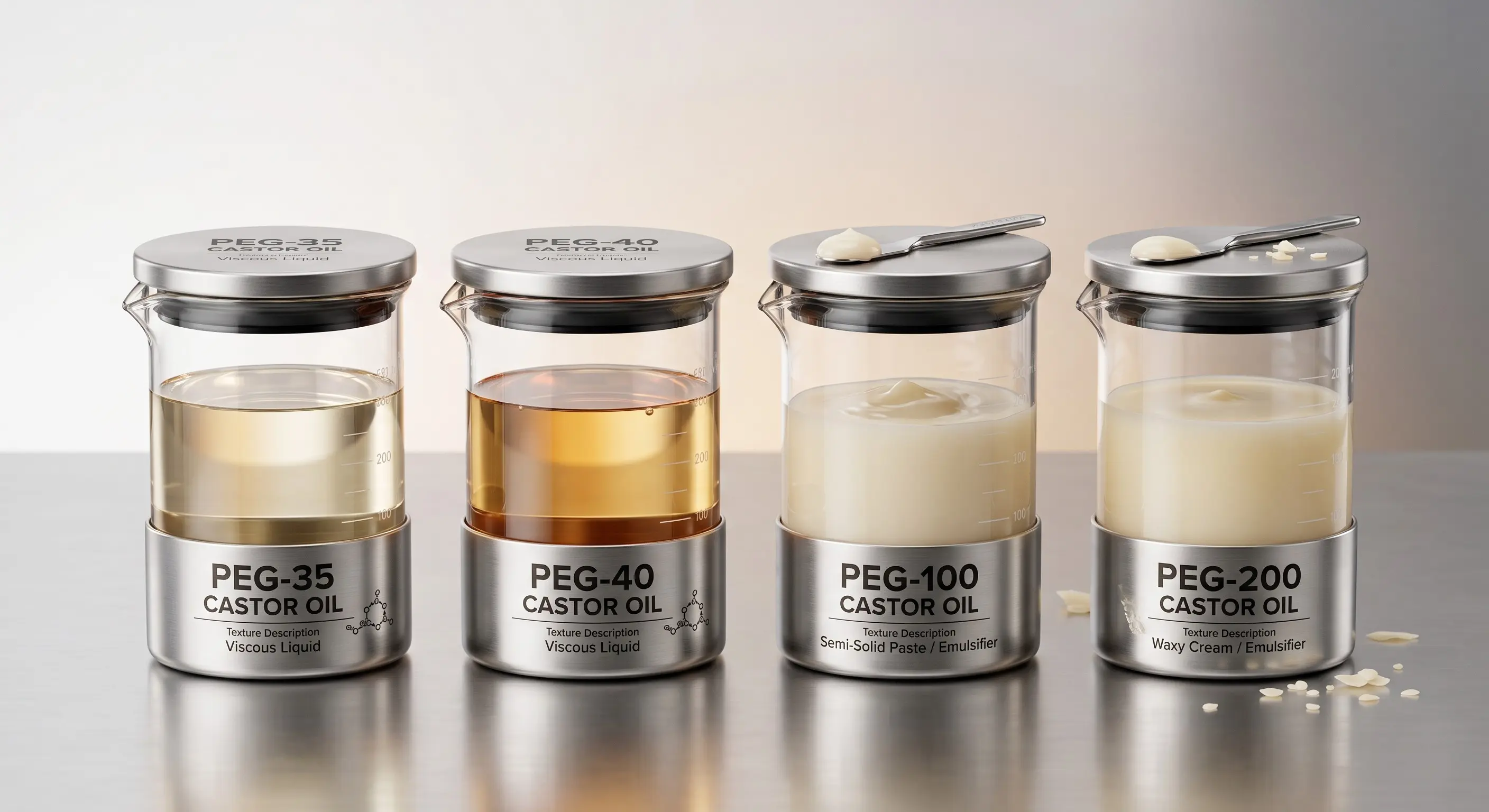
PEG 35, 40, 100 & 200 Castor Oil - Grade-Wise Applications across Global Industries
PEG Castor Oil ethoxylates - spanning PEG 35 Castor Oil, PEG 40 Castor Oil, PEG 100 Castor Oil and PEG 200 Castor Oil - are versatile non-ionic surfactants derived from the ethoxylation of natural castor oil, each offering a distinct HLB value and physical state suited to specific industrial demands.
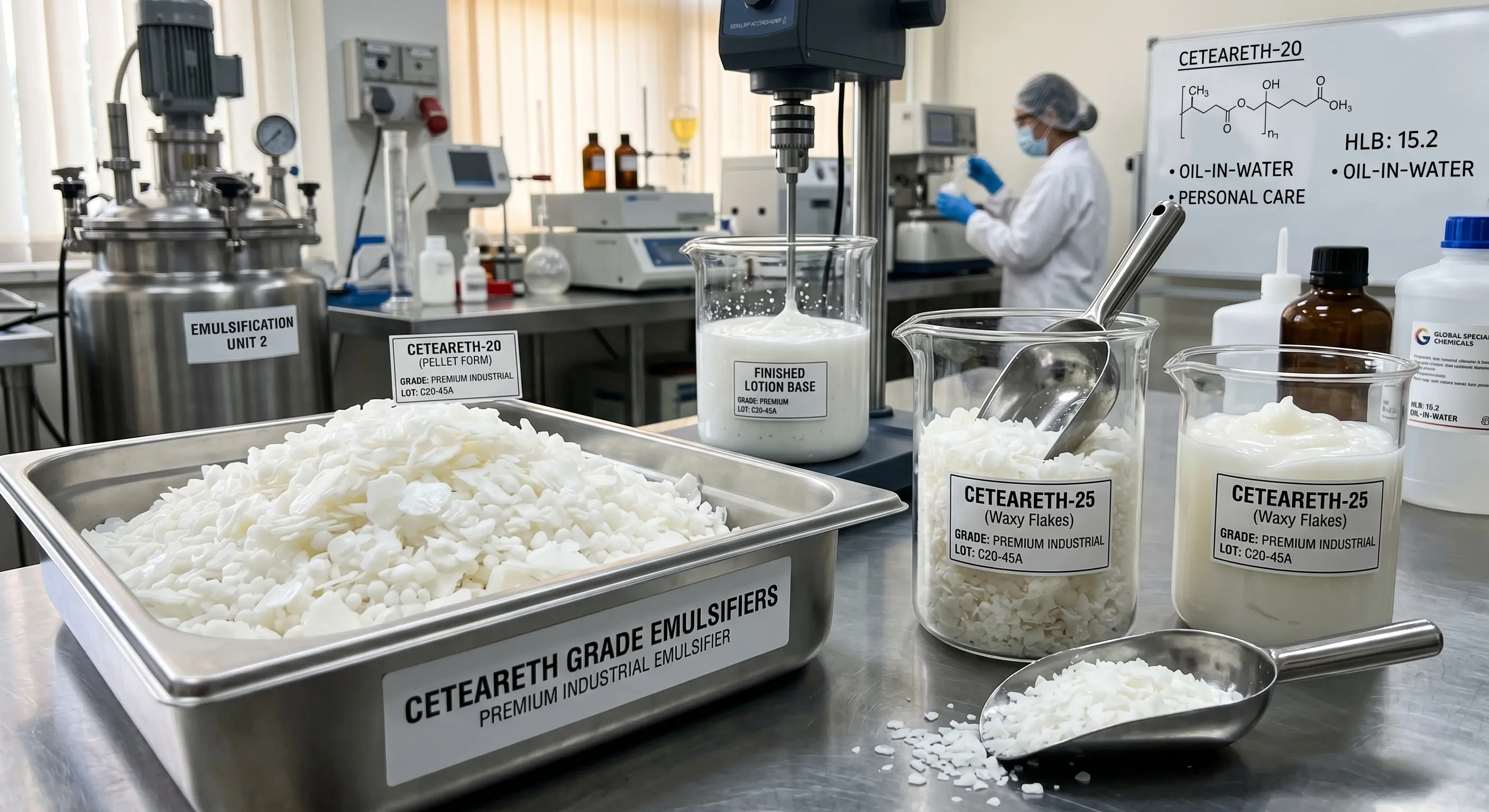
Ceteareth Grade Emulsifiers: The Multi-Grade Chemistry Powering Personal Care, Industrial and Agrochemical Formulations Globally
Ceteareth emulsifiers - spanning grades Ceteareth-20, Ceteareth-25, Ceteareth-30, Ceteareth-50 and Ceteareth-80 - are non-ionic ethoxylated fatty alcohol surfactants with versatile functional roles across personal care, paint, adhesives, detergent, leather, agrochemical and polish industries.
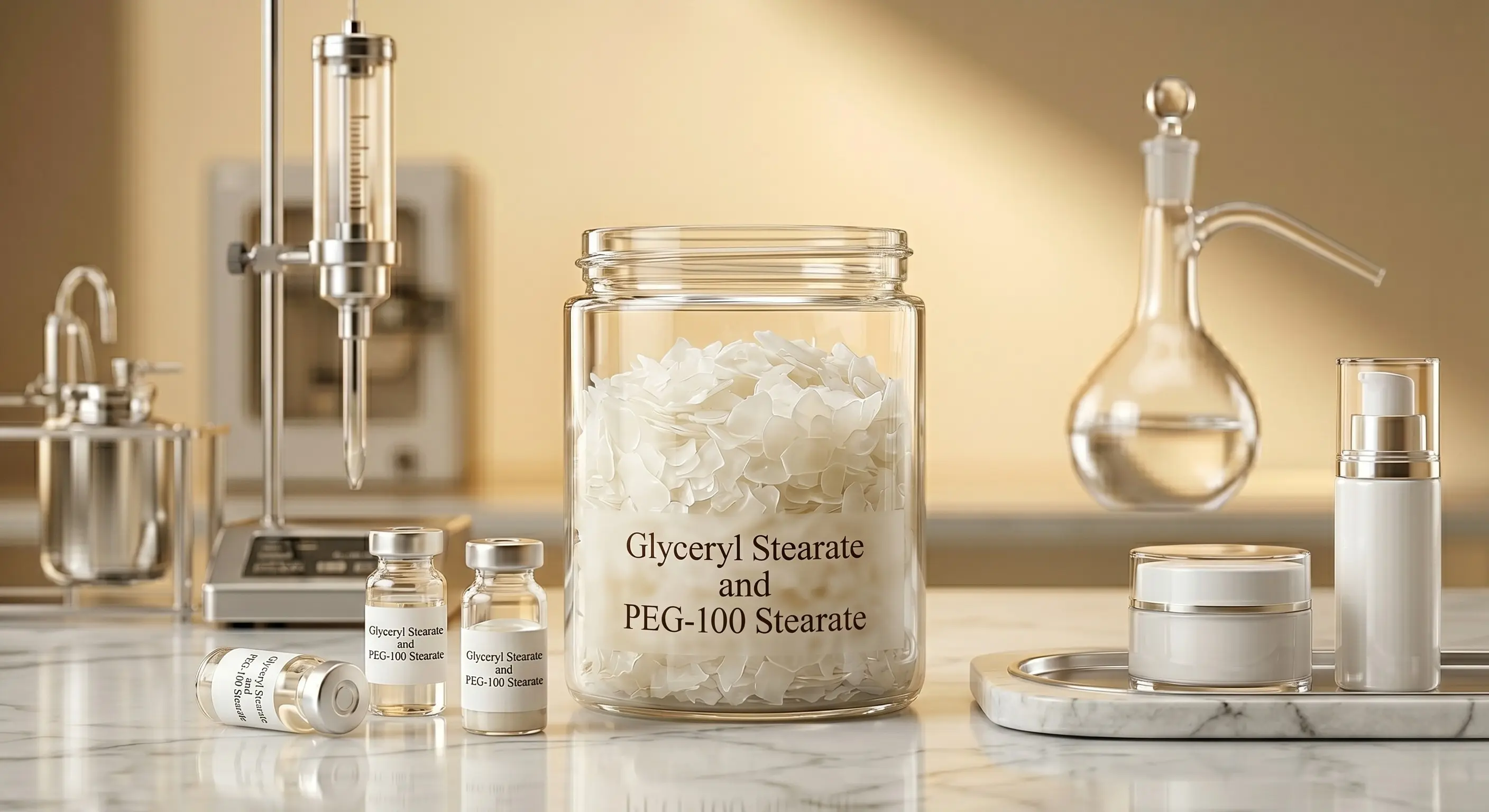
Glyceryl Stearate and PEG-100 Stearate: The Self-Emulsifying Blend Redefining Modern Emulsion Formulation
Glyceryl Stearate and PEG-100 Stearate form a high-performance, self-emulsifying blend widely used in personal care, sun care and color cosmetics across Europe, the USA, Australia and the Middle East. The acid-stable nature of this ingredient system makes it uniquely suited for formulations containing AHAs and BHAs, enabling stable oil-in-water emulsions across a broad pH range.
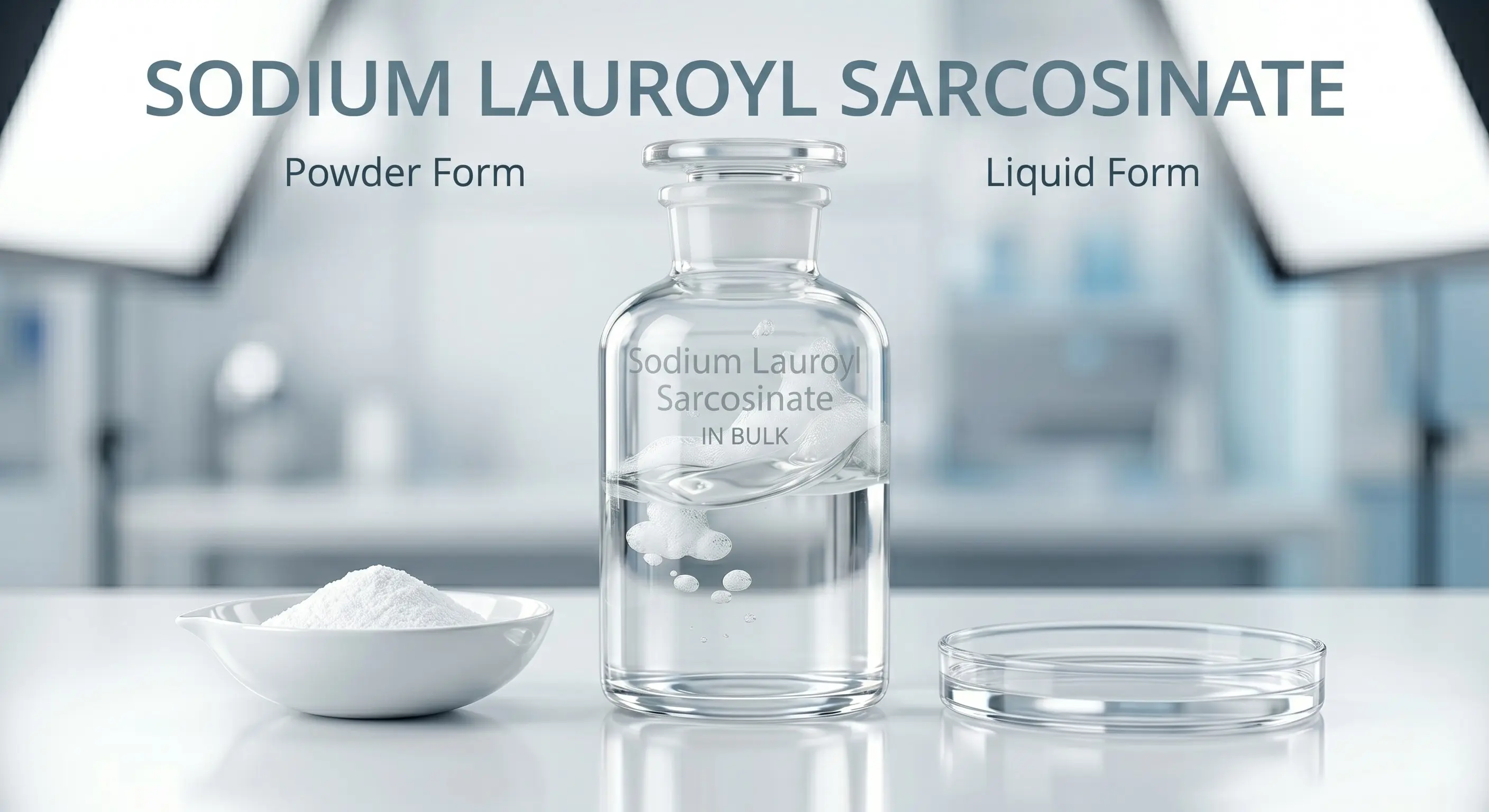
Sodium Lauroyl Sarcosinate: The Mild Surfactant Redefining Clean Beauty and Industrial Performance
Sodium Lauroyl Sarcosinate is a gentle, amino acid-derived anionic surfactant gaining rapid traction across personal care, detergent and oil & gas industries in markets including Europe, the USA, Australia and the Middle East. Available in both liquid (30% active) and powder (95% active) forms, it delivers outstanding foaming, stability and mildness - making it the preferred sulfate-free alternative for formulation chemists and product developers worldwide.
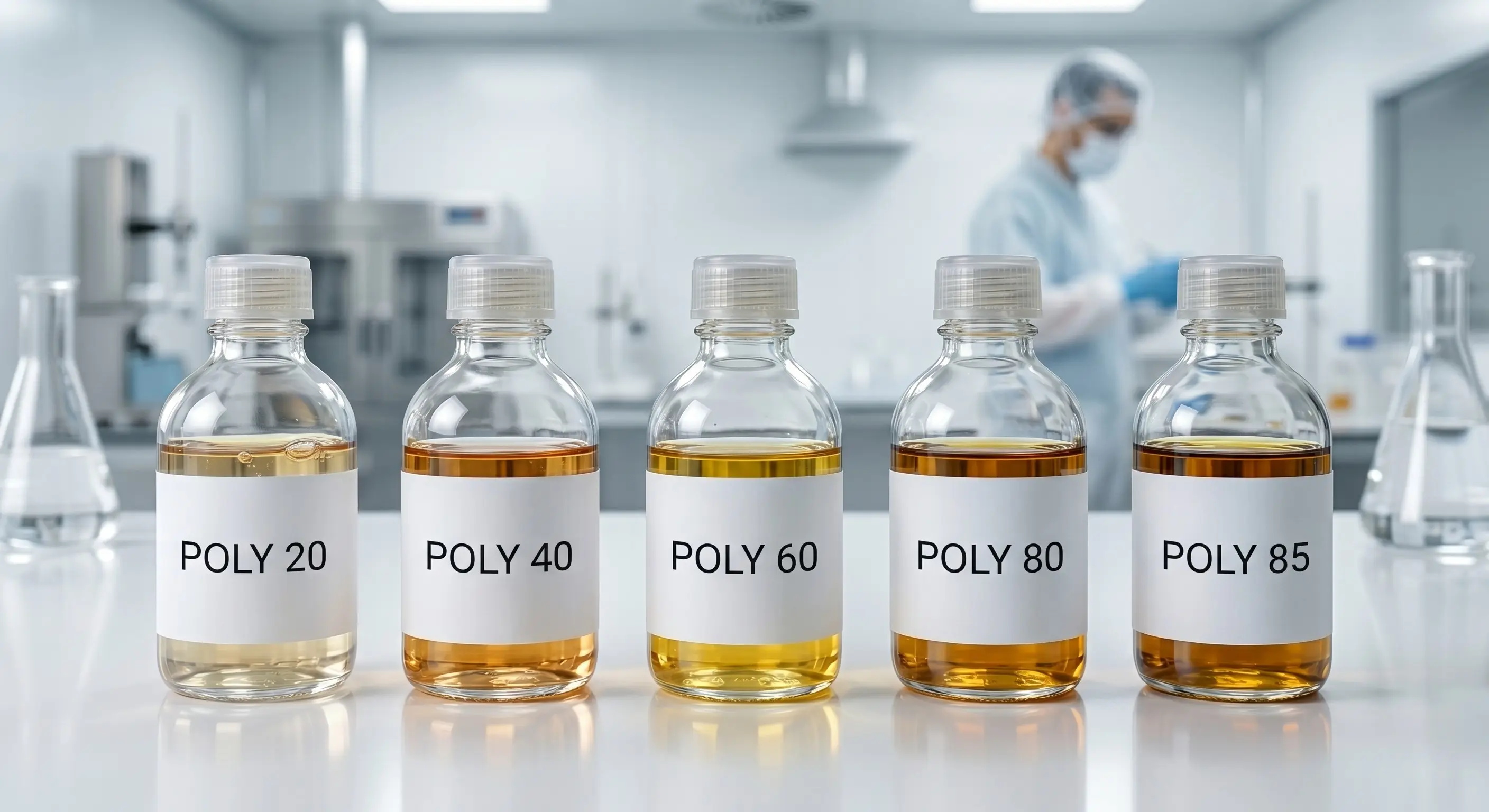
Polysorbate in Pharmaceutical Formulations: A Complete Guide to Grades 20, 40, 60, 80 & 85
Polysorbates are non-ionic surfactants widely used across pharmaceutical formulations worldwide for their emulsifying, solubilizing and stabilizing properties. From oral liquids to parenteral injectables and topical creams, each polysorbate grade - 20, 40, 60, 80 and 85 - offers distinct functional advantages based on its fatty acid composition and HLB value.
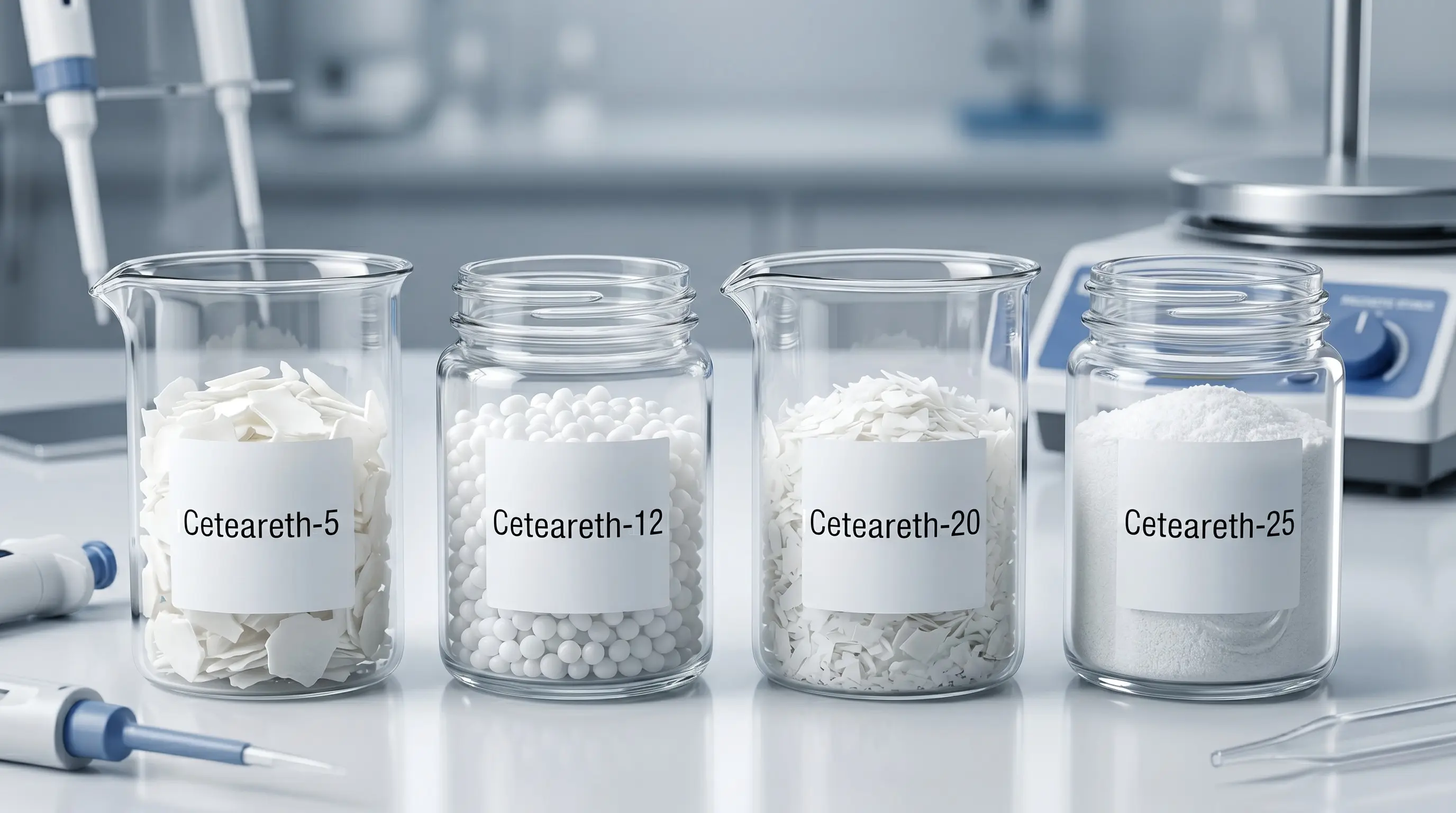
Ceteareth-5, 12, 20 & 25: Pharmaceutical-Grade Emulsifiers Powering Global Topical Formulations
Ceteareth grades - Ceteareth-5, Ceteareth-12, Ceteareth-20 and Ceteareth-25 - are non-ionic polyethylene glycol ethers of cetostearyl alcohol widely used in pharmaceutical and dermatological formulations across Europe, the USA, Russia and the Middle East. Each grade offers a distinct hydrophilic-lipophilic balance (HLB), enabling formulators to precisely engineer emulsion type, viscosity and stability.
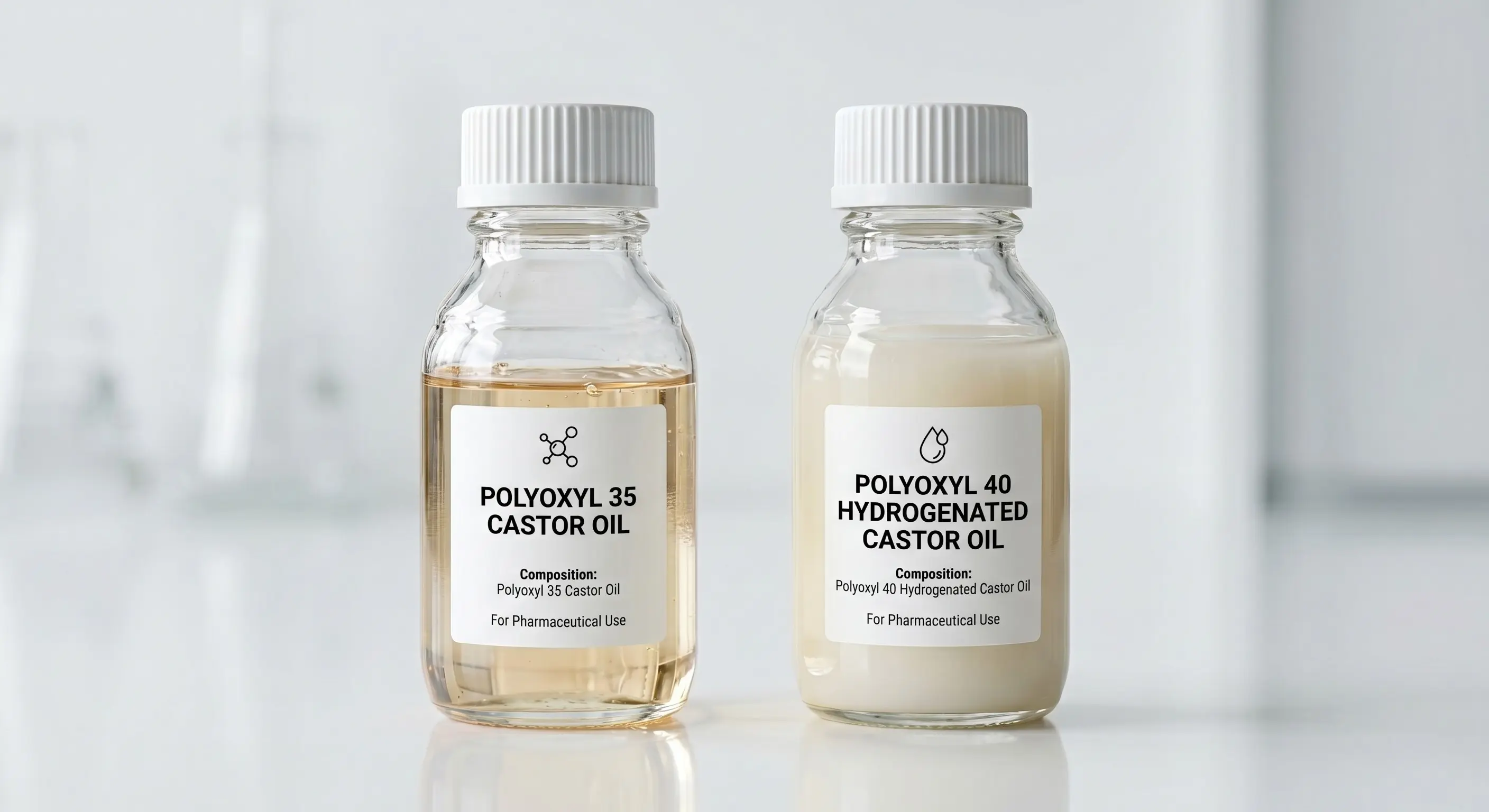
Polyoxyl 35 Castor Oil and Polyoxyl 40 Hydrogenated Castor Oil: Pharmaceutical Applications, Global Demand and Formulation Advantages
Polyoxyl 35 Castor Oil and Polyoxyl 40 Hydrogenated Castor Oil are non-ionic surfactant excipients derived from castor oil through ethylene oxide reactions, widely used in pharmaceutical formulations across the USA, Europe, Russia and the Middle East.
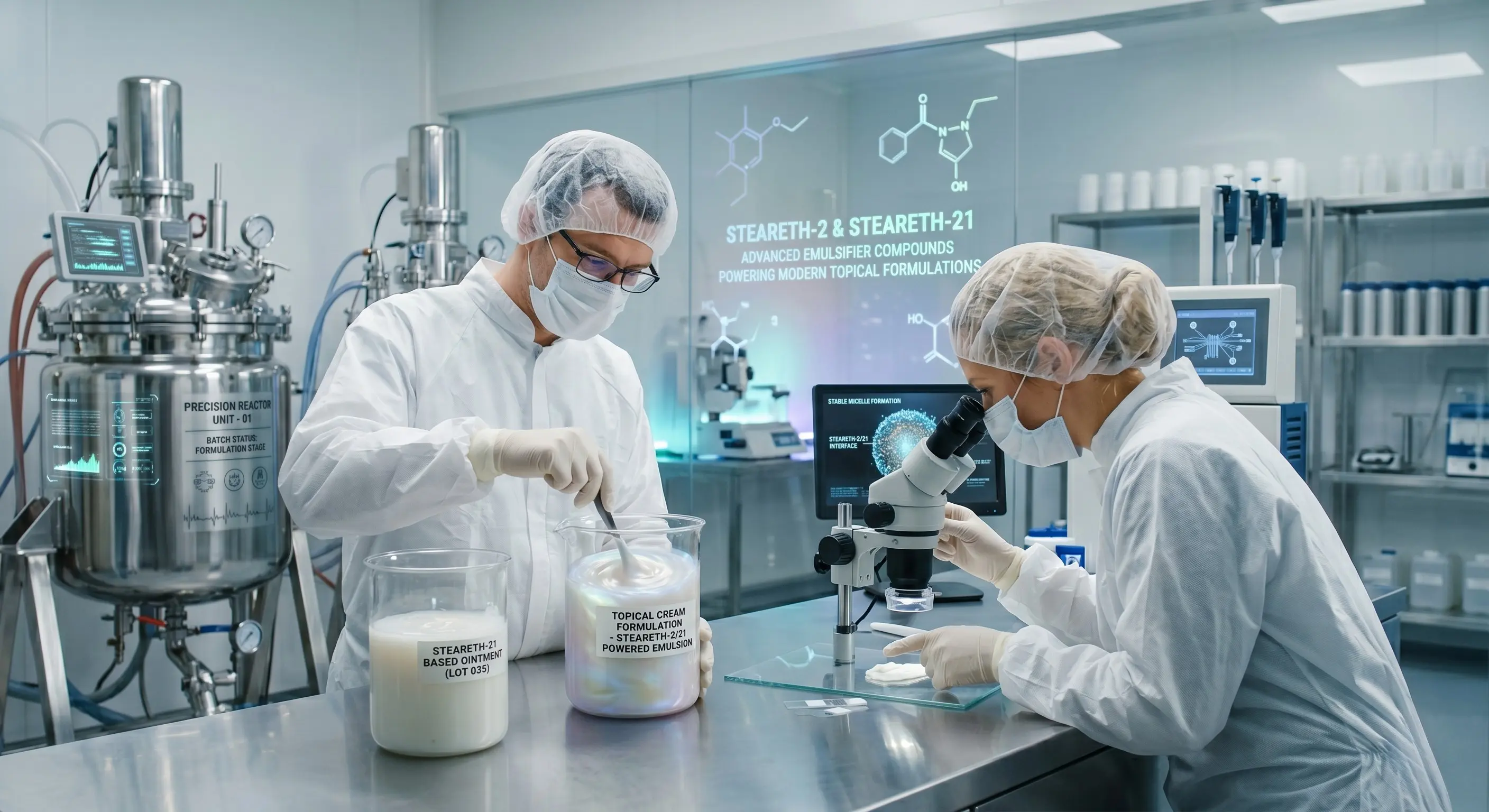
Steareth-2 and Steareth-21: The Pharmaceutical-Grade Emulsifier Duo Powering Topical Formulations Globally
Steareth-2 and Steareth-21 are two complementary non-ionic emulsifiers derived from stearyl alcohol through ethoxylation, widely used in pharmaceutical, dermatological and personal care formulations across Europe, the USA, Russia and the Middle East.
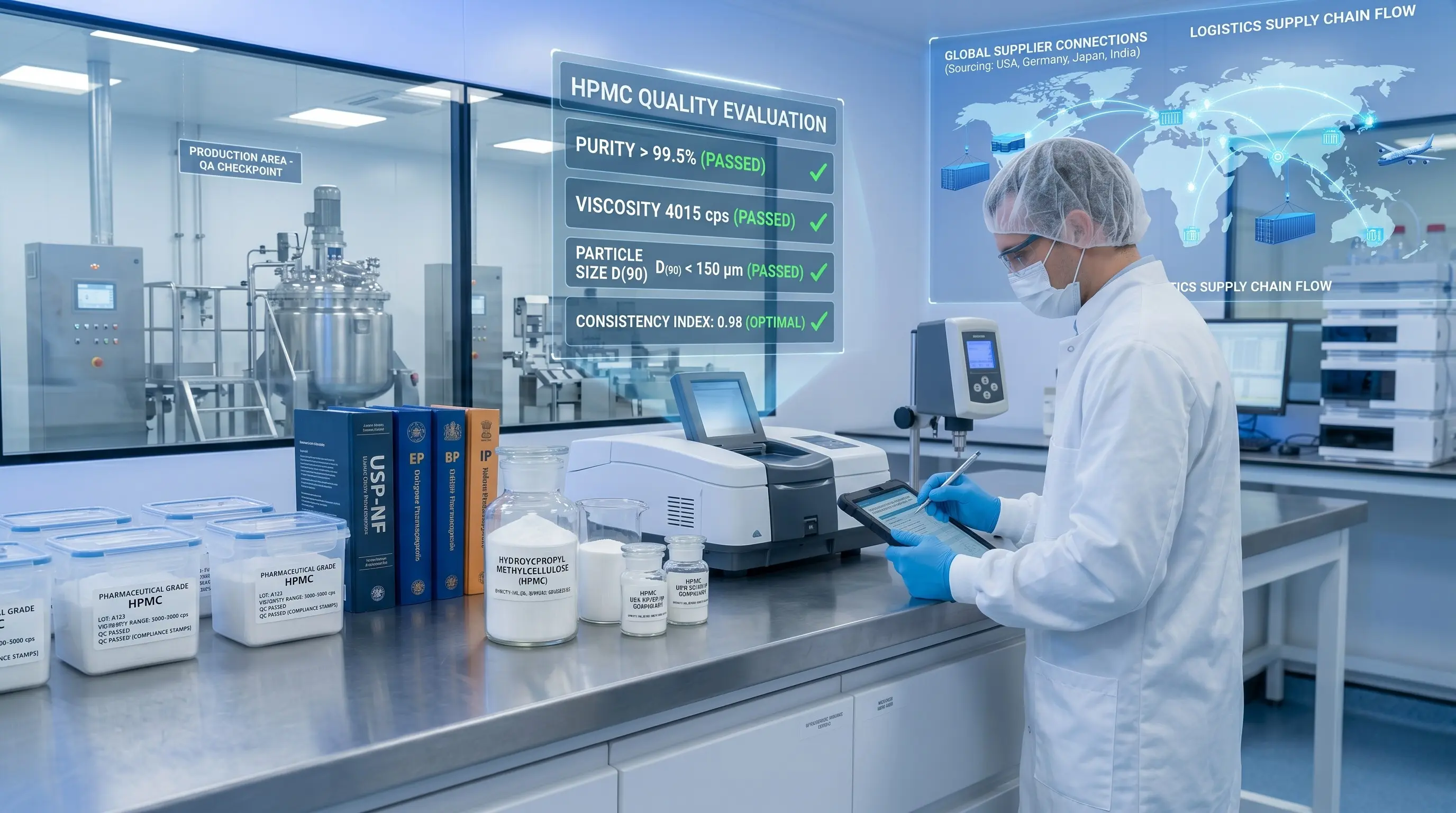
Sourcing Pharmaceutical Grade Hydroxypropyl Methylcellulose (HPMC): Key Quality Parameters and Supplier Selection Guide
Sourcing Pharmaceutical Grade Hydroxypropyl Methylcellulose (HPMC) requires careful evaluation of quality parameters such as viscosity consistency, substitution type, impurity profile, and compliance with global pharmacopeial standards like USP-NF, EP, BP, and IP. Pharmaceutical companies must also assess supplier capabilities, including regulatory documentation (DMF, CoA), manufacturing certifications, and technical support.
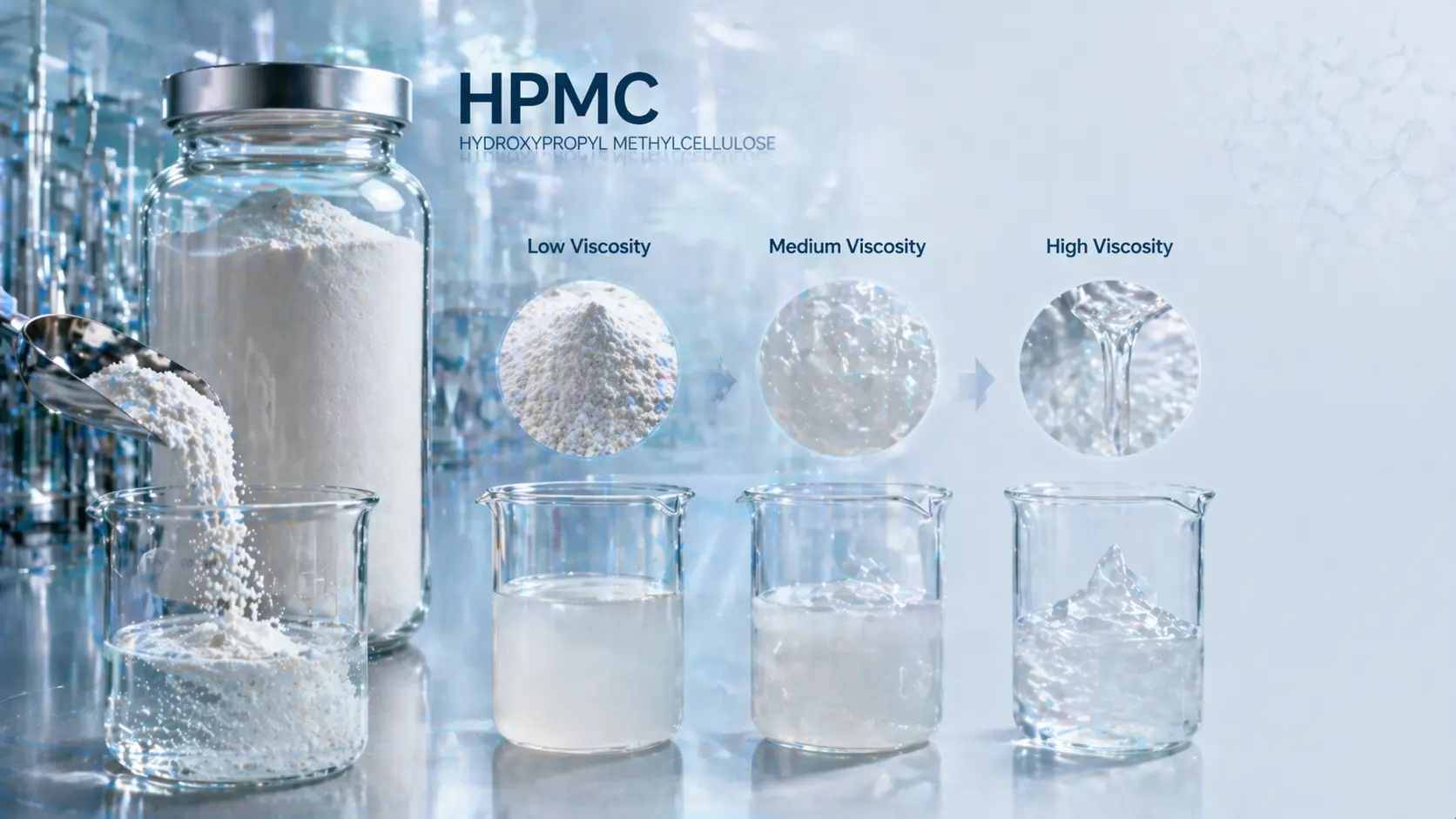
Hydroxypropyl Methylcellulose (HPMC) Grades and Viscosity Levels in Pharmaceuticals
Hydroxypropyl Methylcellulose (HPMC) is a critical pharmaceutical excipient available in multiple grades and viscosity levels, ranging from low viscosity (3 cps) to ultra-high viscosity (200000 cps). These variations determine its functionality across drug formulations, including film coating, binding, thickening, and controlled drug release.
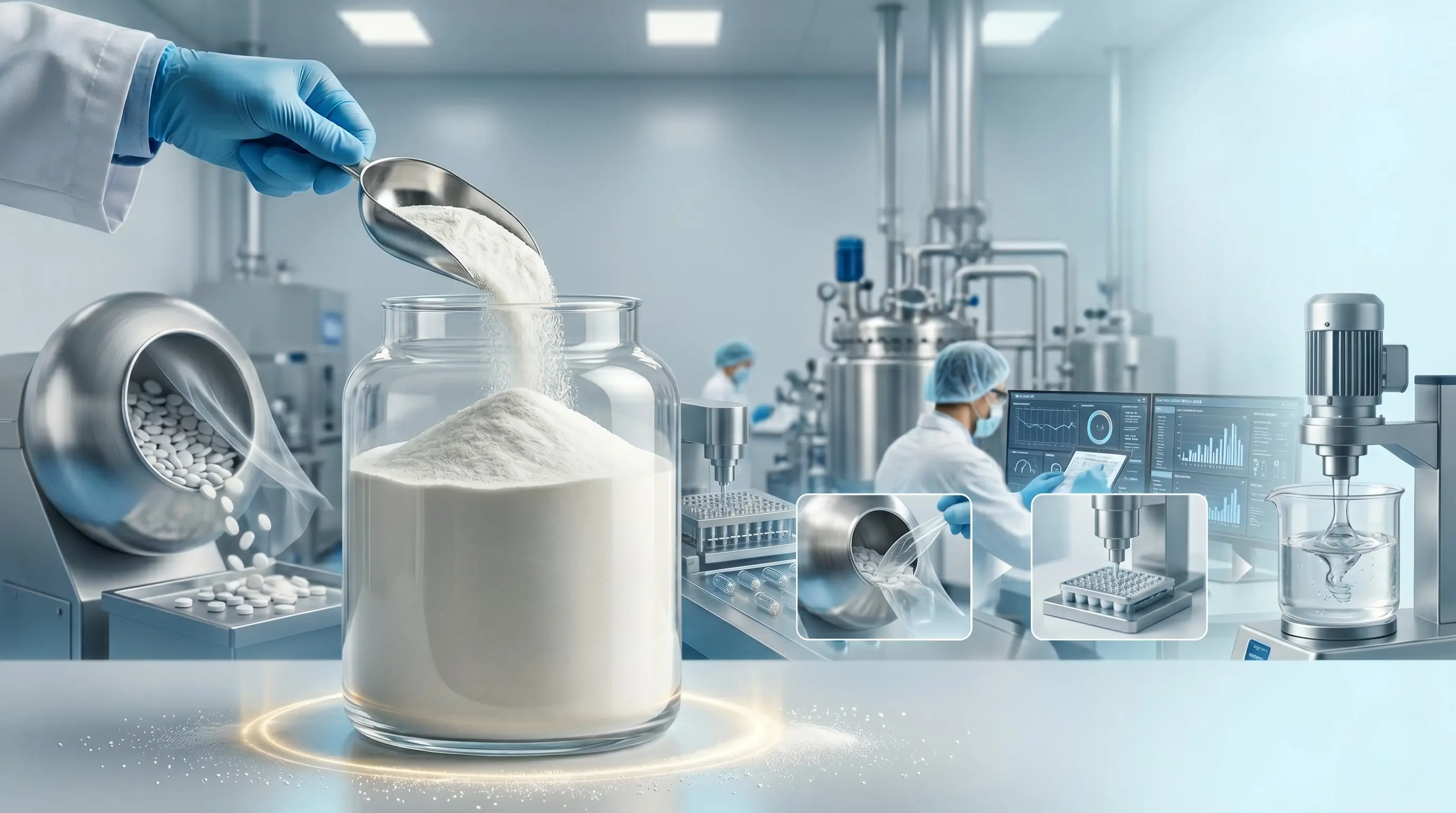
What Is Pharmaceutical Grade HPMC and How Is It Used in Drug Formulations?
Pharmaceutical Grade Hydroxypropyl Methylcellulose (HPMC) is a widely used excipient known for its versatility, safety, and functionality in drug formulations. It acts as a binder, film former, thickener, and controlled-release agent across tablets, capsules, and liquid dosage forms.
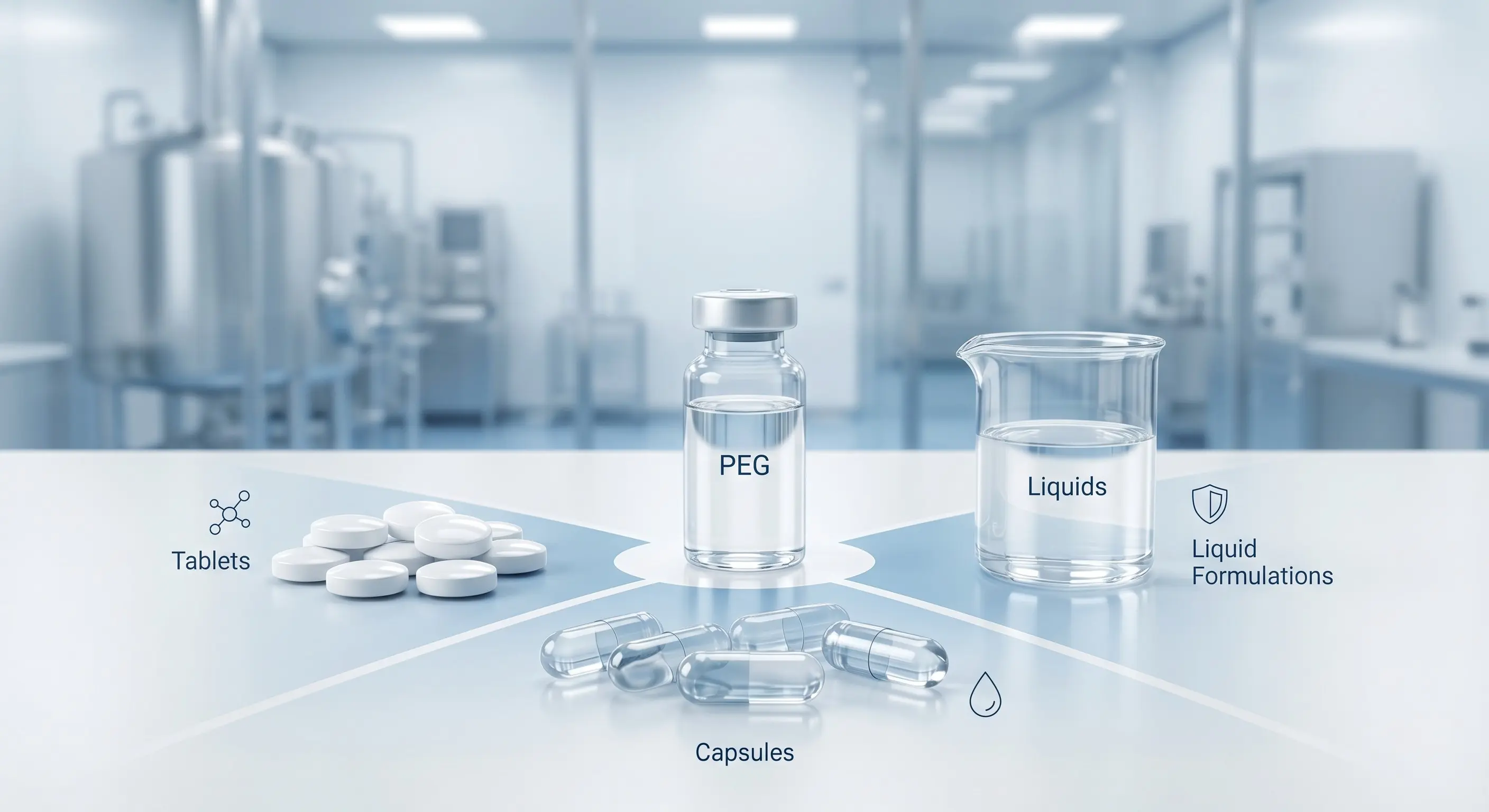
PEG as an Excipient: Functions in Tablets, Capsules, and Liquid Formulations
Polyethylene Glycol (PEG) is a versatile pharmaceutical excipient widely used in tablets, capsules, and liquid formulations due to its solubility, biocompatibility, and functional adaptability across molecular weights. It serves multiple roles including solubilizer, binder, plasticizer, lubricant, and drug delivery enhancer. PEG improves bioavailability of poorly soluble drugs, stabilizes formulations, and enhances patient compliance.
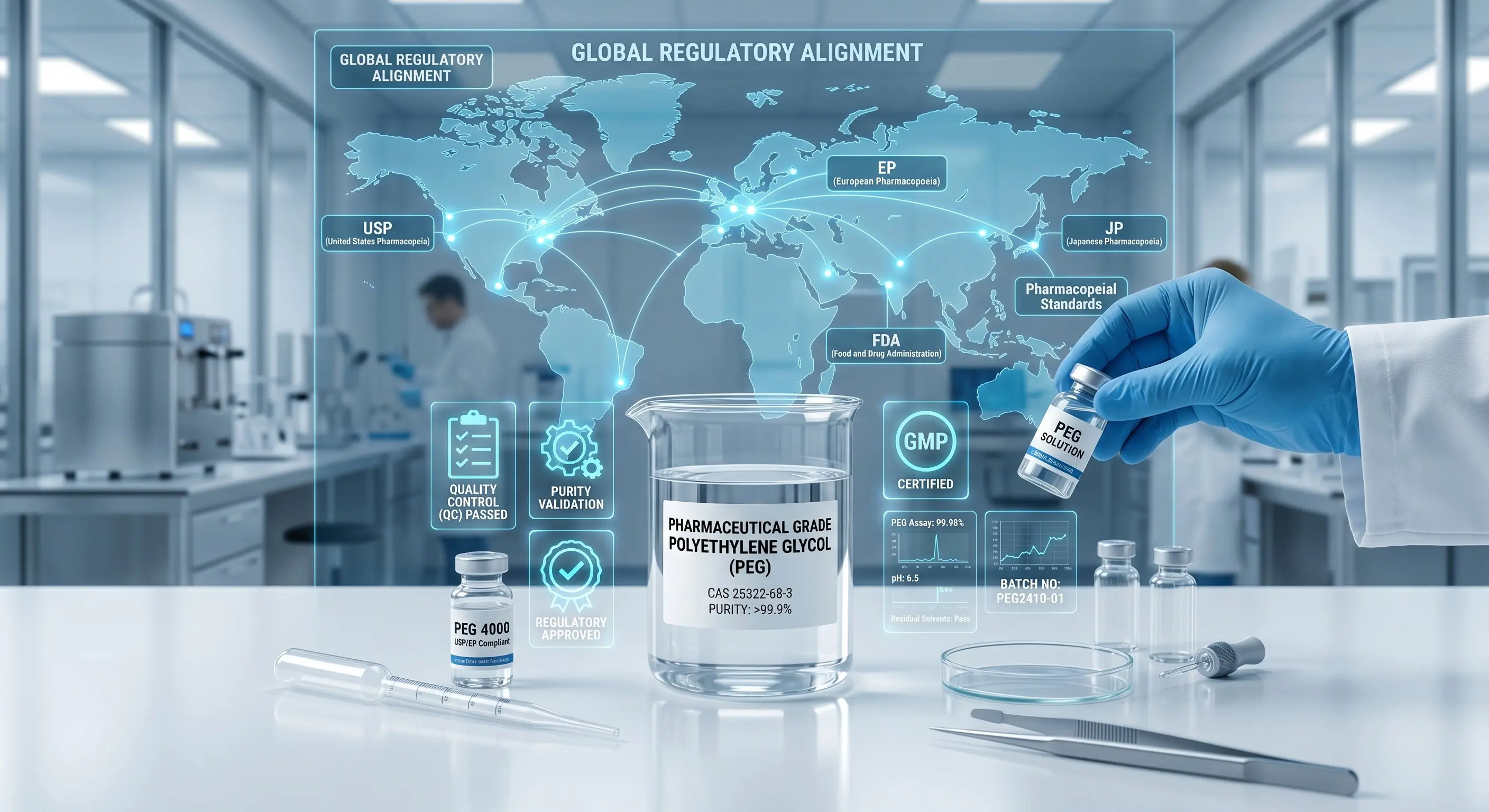
Pharmaceutical Grade Polyethylene Glycol (PEG): Regulatory Guidelines & Global Pharmacopeial Standards
Pharmaceutical Grade Polyethylene Glycol (PEG) must comply with stringent global pharmacopeial standards such as USP, USP-NF, European Pharmacopoeia (Ph. Eur/EP), British Pharmacopoeia (BP), Indian Pharmacopoeia (IP), and Japanese Pharmacopoeia (JP). These standards define strict requirements for identity, purity, molecular weight distribution, impurity limits (especially ethylene glycol and diethylene glycol), and testing methods. Regulatory frameworks ensure PEGs safety as a pharmaceutical excipient used in oral, topical, and injectable formulations.
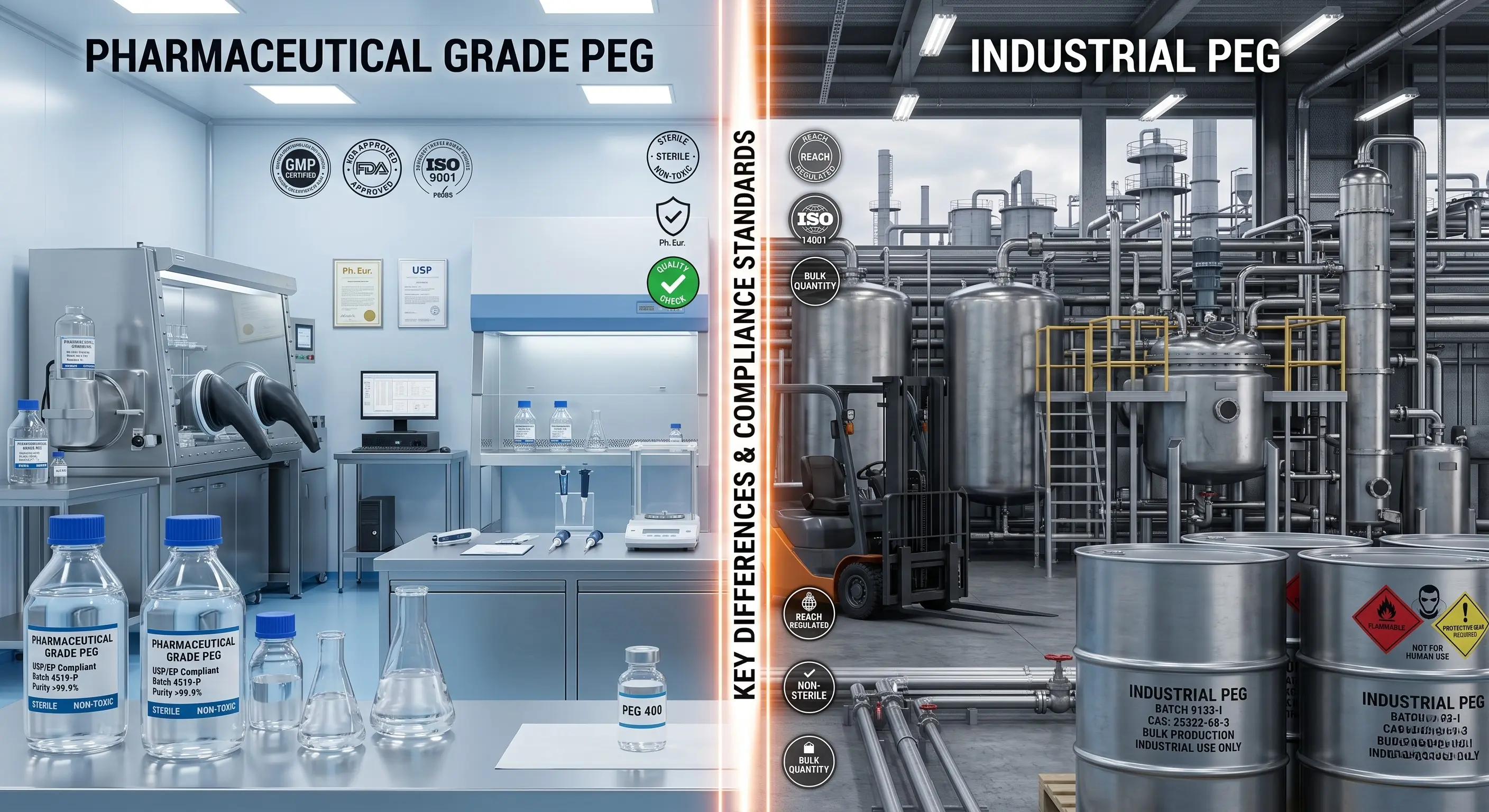
Pharmaceutical Grade Polyethylene Glycol (PEG) vs Industrial PEG: Key Differences and Compliance Standards
Pharmaceutical Grade Polyethylene Glycol (PEG) and Industrial PEG differ significantly in purity, regulatory compliance, safety, and application scope. While pharmaceutical-grade PEG is highly purified and compliant with global standards such as USP, EP, and FDA, industrial PEG is produced for technical applications with less stringent impurity controls.

Key Specialty Chemicals Used in Leather Processing Industry
The leather processing industry has evolved significantly over the years, utilizing advanced chemical formulations to improve the quality and durability of leather products. Specialty chemicals are integral to modern leather processing, offering enhanced performance at various stages, from cleaning and degreasing to finishing and conditioning.
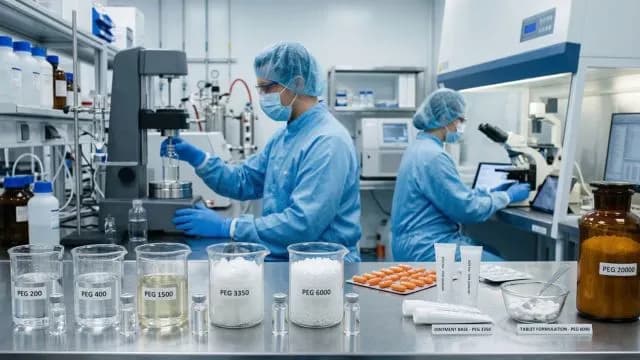
Role of Different Grades of Polyethylene Glycols (PEG 200 to PEG 20000) in the Pharmaceutical Industry
Polyethylene glycol (PEG) is a polymer of ethylene glycol and is used in a variety of industries, with a significant presence in the pharmaceutical sector. PEG has unique properties such as solubility in water, biocompatibility, and the ability to form stable drug formulations.

The Sulfate-Free Revolution: Why Sodium Lauroyl Sarcosinate is the Future
Ditch the harsh sulfates without losing the lather. Discover how NaLS provides mildness, foam density, and skin-barrier protection.
Overcoming Bioavailability Challenges: The Strategic Selection of Pharma-Grade PEGs
As the Indian pharmaceutical sector pivots toward complex generics, mastering solubility with high-purity Macrogols is the key to therapeutic equivalence.

Precision Agriculture: Enhancing Pesticide Efficacy with Specialty Surfactants
Modern Indian farming requires more than just active ingredients; it requires high-performance delivery systems to ensure every drop counts.

Dermaceuticals: Elevating Skin Care with Clinical-Grade Emulsifiers
The convergence of dermatology and cosmetics is demanding higher stability and better skin feel, achievable only through specialized non-ionic surfactants.