
Polyethylene Glycol 1000 (PEG 1000 / Macrogol 1000): Properties, Applications, Comparison and Sourcing Guide




AI Summary
Polyethylene Glycol 1000, also known as PEG 1000 or Macrogol 1000, is a medium molecular weight polyethylene glycol with a nominal average molecular weight of approximately 1000 g per mol (CAS Number 25322 68 3). Unlike liquid grades such as PEG 400, PEG 1000 appears as a soft, white, waxy solid at room temperature with a melting range of approximately 37 to 40 degree C, giving it a controlled melting behavior close to body temperature. This property makes PEG 1000 a preferred hydrophilic base for suppositories and ointments, a solubilizer and wetting agent for poorly water soluble active pharmaceutical ingredients, and a binder or granulation aid in tablet and capsule manufacturing. It is manufactured and supplied to meet pharmacopeial monographs including USP NF, European Pharmacopoeia (EP), British Pharmacopoeia (BP), Indian Pharmacopoeia (IP) and Japanese Pharmacopoeia (JP). This guide explains how PEG 1000 performs across ointment, suppository and tablet formulations, how it compares against neighboring grades such as PEG 400, PEG 1500, PEG 3350 and PEG 10000, and how to select a reliable Polyethylene Glycol 1000 manufacturer, supplier and exporter, including Pharcos Speciality Ltd, an India based producer of pharmaceutical grade PEG under the Pharcogol brand.
What Is Polyethylene Glycol 1000
Polyethylene Glycol 1000, commonly abbreviated as PEG 1000 and referred to in pharmacopeial literature as Macrogol 1000, is a medium molecular weight member of the polyethylene glycol family formed through the controlled polymerization of ethylene oxide with water. The number 1000 indicates the nominal average molecular weight of the polymer chain, which typically falls in the range of 950 to 1050 g per mol.
At this chain length, PEG transitions from the liquid state seen in lower grades such as PEG 400 or PEG 600 into a soft, waxy solid. This physical form, combined with a melting point close to normal body temperature, is the defining reason PEG 1000 is chosen for pharmaceutical bases where controlled softening or melting behavior is required, such as suppositories and ointments.
Alternative names and designations used across regions and pharmacopeias include:
- Polyethylene Glycol 1000 (common pharmaceutical name)
- Macrogol 1000 (European Pharmacopoeia and British Pharmacopoeia terminology)
- PEG 1000 NF (United States National Formulary designation)
- Poly(ethylene glycol) or Poly(oxyethylene) 1000 (general chemical naming)
 WhatsApp Now
Physical and Chemical Properties of PEG 1000
The table below summarizes reference properties for PEG 1000 drawn from pharmacopeial and chemical reference sources.
| Property | Typical Value |
|---|---|
| CAS Number | 25322 68 3 |
| Average Molecular Weight | 950 to 1050 g per mol (nominal 1000) |
| Appearance | Soft, white to off white waxy solid |
| Melting Range | Approximately 33 to 40 degree C |
| pH (100 g per L aqueous solution, 20 degree C) | 4.5 to 7.5 |
| Hydroxyl Value | Approximately 107 to 118 |
| Water Solubility | Freely soluble, forms a clear aqueous solution |
| Solvent Compatibility | Soluble in water and most polar organic solvents; limited compatibility with mineral oils and fats |
| Physical State at Room Temperature | Soft solid or paste, unlike the liquid state of PEG 200 to PEG 600 |
| Odor | Practically odorless |
Two properties make PEG 1000 particularly relevant for pharmaceutical formulation work:
- Melting point near body temperature: the 33 to 40 degree C melting range allows PEG 1000 based suppositories and ointment bases to remain solid at room temperature but soften or melt reliably once applied, supporting predictable drug release.
- High hydroxyl functionality relative to chain length: the terminal hydroxyl groups support strong hydrogen bonding with water and with many active pharmaceutical ingredients, which is central to its role as a solubilizer and wetting agent.
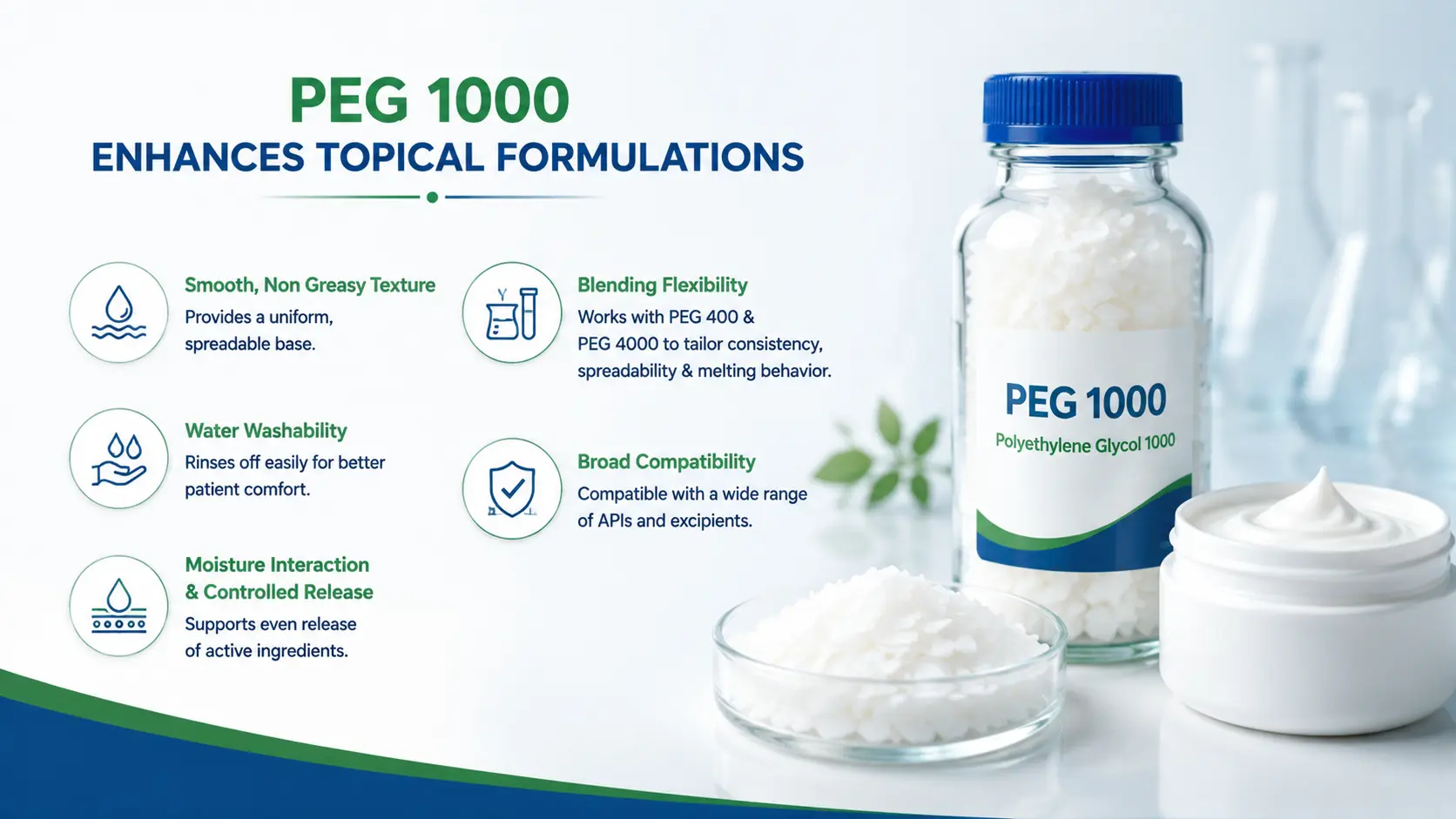
How PEG 1000 Improves Ointment and Topical Formulations
PEG 1000 is widely used as a hydrophilic base in ointments, creams and other topical preparations, particularly in water washable ointment bases where a non greasy, easily removable formulation is preferred over petrolatum based systems.
Key contributions of PEG 1000 in topical formulations:
- Smooth, non greasy texture: its soft solid consistency blends well with active ingredients and other excipients to give a uniform, spreadable base.
- Water washability: unlike hydrocarbon based ointment bases, PEG based ointments rinse away easily with water, which improves patient comfort and compliance for skin applications.
- Moisture interaction and controlled release: the hydrophilic backbone allows the base to interact with skin moisture, supporting even release of the active ingredient at the application site.
- Blending flexibility: PEG 1000 is frequently combined with a liquid grade such as PEG 400 and a harder solid grade such as PEG 4000 to fine tune the final consistency, spreadability and melting behavior of the ointment base to the exact specification required.
- Compatibility: it demonstrates broad compatibility with a wide range of active pharmaceutical ingredients and co excipients, reducing the risk of physical or chemical interaction issues during formulation.
The Role of Polyethylene Glycol 1000 in Suppository Manufacturing
Suppository bases must satisfy a narrow set of requirements: they need to remain solid during storage and handling, yet melt or dissolve reliably at body temperature to release the active ingredient. PEG 1000 fits this requirement closely because its melting range sits just above typical room temperature and close to body temperature.
Why formulators select PEG 1000 for suppository bases:
- Its defined melting range of approximately 33 to 40 degree C supports predictable softening behavior once inserted, reducing variability in drug release timing.
- PEG based suppository bases dissolve in body fluids rather than relying solely on melting, which can support more consistent release compared to purely fat based bases in certain formulations.
- PEG 1000 is frequently blended with higher molecular weight PEG grades such as PEG 4000 or PEG 6000 to raise the melting point for hot climate stability, or with lower grades such as PEG 400 to soften the base, giving formulators precise control over hardness and melt behavior.
- Being water soluble, PEG based suppositories generally have a longer shelf life and better resistance to rancidity compared to natural fat based suppository bases.
- PEG 1000 based bases are compatible with a wide range of APIs used in rectal and vaginal suppository products.
PEG 1000 as a Tablet Binder: Benefits for Solid Dosage Formulations
Within solid oral dosage forms, PEG 1000 contributes to both the manufacturing process and the final tablet or capsule performance.
Point wise benefits of PEG 1000 as a binder and processing aid:
- Granulation binder: PEG 1000 can be used in wet granulation to bind fine powder particles into uniform granules, improving flow and compressibility ahead of tableting.
- Direct compression aid: its plastic, waxy nature under compression pressure can support tablet cohesion in direct compression formulations.
- Processing lubricant: PEG 1000 can reduce friction between granules and tooling surfaces during compression, supporting smoother tablet ejection.
- Carrier matrix in solid dispersions: PEG 1000 is used as a carrier polymer in hot melt based solid dispersion techniques, where a poorly soluble drug is dispersed within the PEG matrix to improve its dissolution rate once the tablet is ingested.
- Compatibility with modified release systems: because of its water solubility, PEG 1000 can be formulated into matrices that support faster, more predictable drug release compared to purely hydrophobic binders.
Summary Table: PEG 1000 Functional Roles
| PEG 1000 Functions | Formulation Type | Key Benefit |
|---|---|---|
| Hydrophilic Base | Ointments, creams, topical gels | Smooth texture, water washability, moisture interaction |
| Suppository Base | Rectal and vaginal suppositories | Controlled melting near body temperature, predictable release |
| Solubilizer and Wetting Agent | Solid dispersions, oral formulations | Improves dissolution of poorly water soluble APIs |
| Tablet Binder and Granulation Aid | Tablets, capsules | Improves granule formation, flow and compressibility |
| Processing Lubricant | Direct compression, roller compaction | Reduces friction during tablet manufacturing |
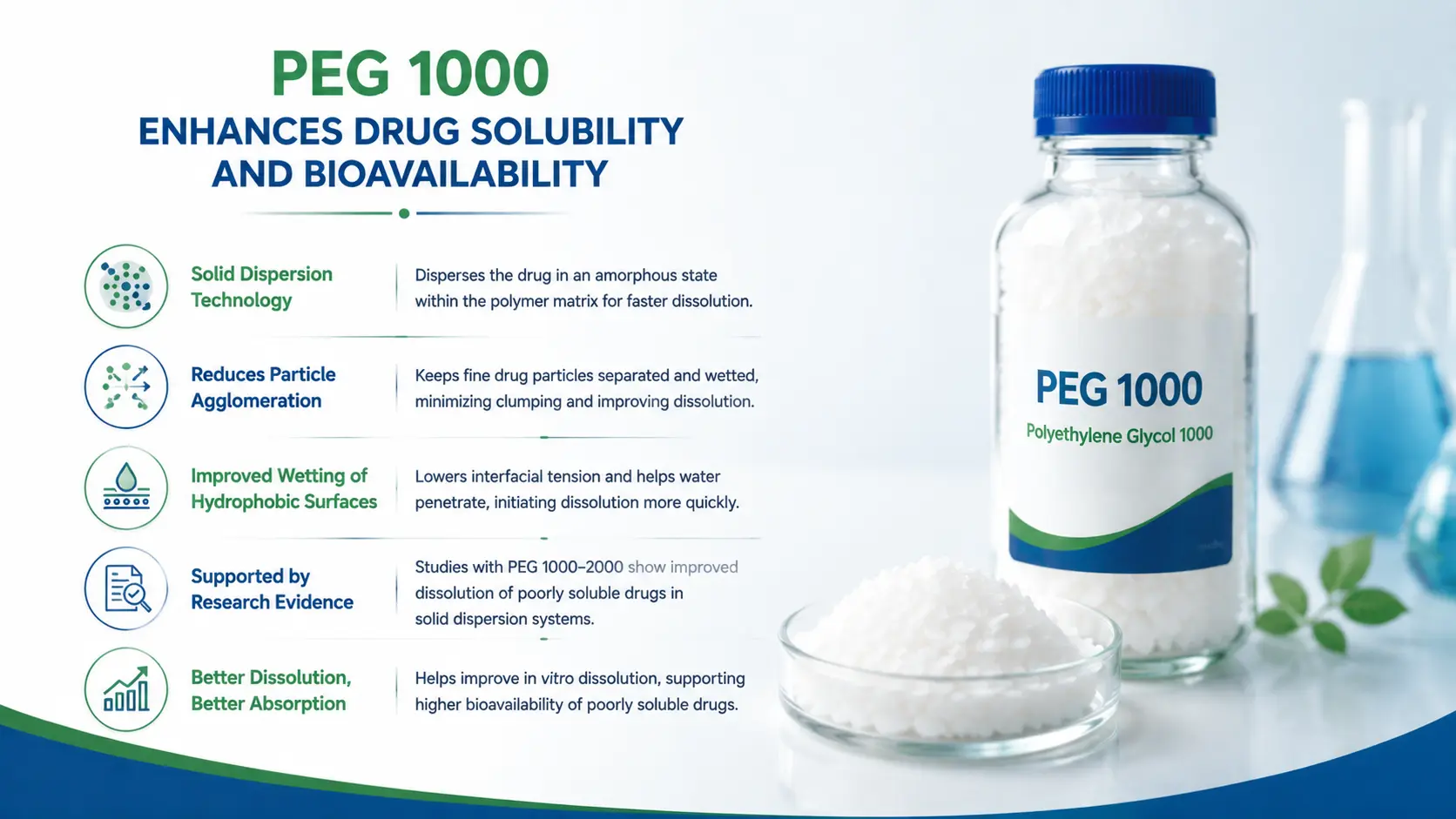
How PEG 1000 Enhances Drug Solubility and Bioavailability
A significant proportion of active pharmaceutical ingredients under development fall into the Biopharmaceutics Classification System categories associated with poor aqueous solubility, which directly limits how effectively the body absorbs them. PEG 1000 addresses this challenge through several mechanisms documented in pharmaceutical research:
- Solid dispersion technology: when a poorly soluble drug is melted or dissolved together with PEG 1000 and allowed to solidify, the drug can be distributed within the polymer matrix in a more amorphous, higher energy state, which generally dissolves faster than the original crystalline drug.
- Reduced particle agglomeration: PEG 1000 helps keep fine drug particles separated and wetted, reducing clumping that would otherwise slow dissolution.
- Improved wetting of hydrophobic surfaces: its hydrophilic character lowers the interfacial tension between a hydrophobic drug particle and the surrounding aqueous medium, helping water penetrate and initiate dissolution more quickly.
- Supporting research evidence: peer reviewed pharmaceutical research, including studies published in journals indexed with the United States National Library of Medicine, has examined PEG grades in the 1000 to 2000 range as carriers for solid dispersion systems, reporting improved dissolution behavior for poorly soluble model drugs when combined with these polymers.
For formulators, this makes PEG 1000 a practical tool for improving the in vitro dissolution profile of a drug candidate during early formulation development, ahead of more complex bioavailability enhancement strategies.
Our Other Product
Pharmaceutical Grade HPMCWhy Pharmaceutical Manufacturers Choose PEG 1000 as a Hydrophilic Base
Bringing together the properties and applications above, pharmaceutical manufacturers consistently select PEG 1000 for a specific combination of reasons:
- Predictable physical behavior: a defined, narrow melting range supports consistent manufacturing and consistent in use performance across batches.
- Multi functional value: the same material can serve as a base, a binder, a solubilizer and a processing aid, simplifying formulation development and excipient sourcing.
- Regulatory familiarity: PEG 1000 is described in major pharmacopeial monographs, and its safety profile is well documented across decades of pharmaceutical use, which supports smoother regulatory review.
- Blendability: it mixes readily with both lower molecular weight liquid PEG grades and higher molecular weight solid PEG grades, giving formulators fine control over the final product consistency.
- Chemical inertness: PEG 1000 is broadly compatible with a wide range of APIs and co excipients, reducing the risk of unwanted interactions during formulation and storage.
PEG 1000 vs PEG 400: Which Grade Is Best for Your Pharmaceutical Application
| Parameter | PEG 1000 | PEG 400 |
|---|---|---|
| Average Molecular Weight | 950 to 1050 g per mol | 380 to 420 g per mol |
| Physical State | Soft, white waxy solid | Clear, colorless viscous liquid |
| Melting Range | Approximately 33 to 40 degree C | Approximately 4 to 8 degree C |
| Primary Role | Suppository and ointment base, tablet binder, solubilizer | Solvent for poorly water soluble drugs, plasticizer, humectant |
| Typical Dosage Forms | Suppositories, ointments, solid dispersions, tablets | Oral solutions, soft gel capsules, injectables, film coatings |
Which grade fits your application: choose PEG 400 when the formulation calls for a liquid solvent, a co solvent for injectables, or a plasticizer for film coating systems. Choose PEG 1000 when the formulation requires a semisolid base with a defined melting behavior, such as a suppository or ointment, or when a solid carrier matrix is needed for a solid dispersion or tablet binder application. Many formulations use both grades together, blending liquid PEG 400 with solid PEG 1000 to fine tune consistency.
PEG 1000 vs PEG 1500: Key Differences, Properties and Uses
| Parameter | PEG 1000 | PEG 1500 |
|---|---|---|
| Average Molecular Weight | 950 to 1050 g per mol | Approximately 1400 to 1600 g per mol |
| Physical State | Soft, white waxy solid | White to off white waxy solid, slightly firmer |
| Melting Range | Approximately 33 to 40 degree C | Approximately 43 to 49 degree C |
| Hydroxyl Value | Approximately 107 to 118 | Lower than PEG 1000, reflecting the longer chain length |
| Typical Use | Suppository and ointment base with a softer melt profile, blending grade | Suppository and cream base requiring a slightly firmer consistency and higher melting point |
Practical distinction: PEG 1000 and PEG 1500 are close neighbors in the PEG series, and both are described in pharmaceutical literature as being suited to ointment, suppository and cream vehicles where a melting point near body temperature is desired. The main practical difference is that PEG 1500 has a somewhat higher melting range, making it useful where a firmer base or greater resistance to softening in warm storage conditions is required. Formulators often trial both grades, or blend them, to reach a target hardness and melt profile for a specific suppository or ointment formulation.
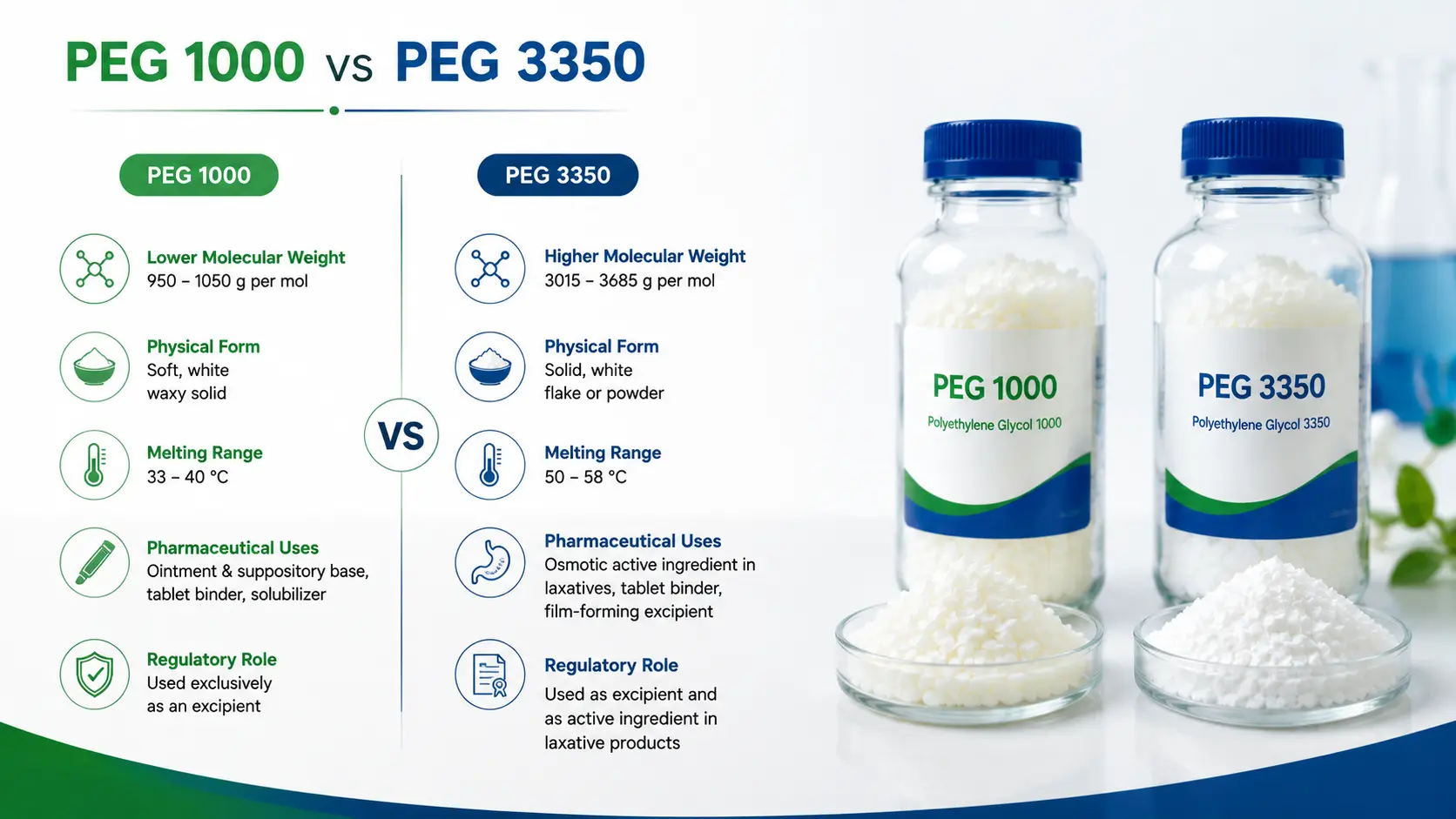
PEG 1000 vs PEG 3350: Understanding Their Pharmaceutical Applications
| Parameter | PEG 1000 | PEG 3350 |
|---|---|---|
| Average Molecular Weight | 950 to 1050 g per mol | Approximately 3015 to 3685 g per mol |
| Physical State | Soft, white waxy solid | Solid, white flake or powder |
| Melting Range | Approximately 33 to 40 degree C | Approximately 50 to 58 degree C |
| Primary Pharmaceutical Role | Suppository and ointment base, tablet binder, solubilizer | Osmotic active ingredient in oral laxative products, tablet binder, film forming excipient |
| Regulatory Note | Used exclusively as an excipient | Used both as an excipient and, at defined purity and molecular weight control, as an active ingredient in laxative products regulated under separate monographs |
Key takeaway: PEG 1000 is used purely as a functional excipient across ointment, suppository and solid dosage applications. PEG 3350, in addition to excipient roles such as tablet binding and film coating, is separately recognized in several pharmacopeias as the active pharmaceutical ingredient in osmotic laxative products, which means PEG 3350 intended for that use is subject to tighter molecular weight distribution control and additional monograph requirements compared to PEG 1000.
PEG 1000 vs PEG 10000: Choosing Between Medium and High Molecular Weight Grades
| Parameter | PEG 1000 | PEG 10000 |
|---|---|---|
| Average Molecular Weight | 950 to 1050 g per mol | Approximately 9000 to 11000 g per mol |
| Physical State | Soft, white waxy solid | Hard, white flaky solid |
| Melting Range | Approximately 33 to 40 degree C | Approximately 60 to 65 degree C |
| Typical Use | Suppository and ointment base, tablet binder, solubilizer | High viscosity thickener, tablet coating and matrix systems, industrial and specialty formulation carrier |
Which one to choose: PEG 1000 is the practical choice wherever a formulation needs a base or binder that softens near body temperature, such as suppositories and ointments. PEG 10000, being firmer and higher melting, is generally selected for applications that need a more rigid solid matrix, higher viscosity in solution, or slower dissolution behavior, such as certain controlled release coating systems. Buyers researching a Polyethylene Glycol 10000 manufacturer or Polyethylene Glycol 10000 supplier for such applications can typically source this grade alongside neighboring high molecular weight PEG grades, such as PEG 8000 and PEG 20000, from an established PEG manufacturer with custom molecular weight development capability.
Pharmacopeial Standards and Regulatory Compliance
Pharmaceutical grade PEG 1000 is expected to comply with recognized pharmacopeial monographs before it can be used in regulated drug manufacturing.
| Standard | Full Name | Governing Body |
|---|---|---|
| USP NF | United States Pharmacopeia and National Formulary | United States Pharmacopeial Convention |
| EP (Ph. Eur.) | European Pharmacopoeia | European Directorate for the Quality of Medicines (EDQM) |
| BP | British Pharmacopoeia | Medicines and Healthcare products Regulatory Agency (MHRA), United Kingdom |
| IP | Indian Pharmacopoeia | Indian Pharmacopoeia Commission, Ministry of Health and Family Welfare, Government of India |
| JP | Japanese Pharmacopoeia | Ministry of Health, Labour and Welfare, Japan |
Under these monographs, PEG 1000 is typically tested for identification by infrared spectroscopy, appearance, pH, hydroxyl value, viscosity or melting range, water content, residual ethylene oxide and dioxane, heavy metals and microbial limits where applicable. PEG grades, including PEG 1000, also appear in the United States FDA Inactive Ingredient Database, which formulators reference when confirming that an excipient has prior use history in approved drug products for a given route of administration. Ph. Eur., EP and BP designations are commonly used interchangeably in trade and compliance documentation, and material meeting EP specifications is generally also acceptable against BP requirements, though the specific monograph version applicable to the target market should always be confirmed directly.
International buyers should also note that polyethylene glycols are registered under frameworks such as the European Union REACH regulation, administered by the European Chemicals Agency (ECHA), which governs safe manufacture, import and use within the European Economic Area.
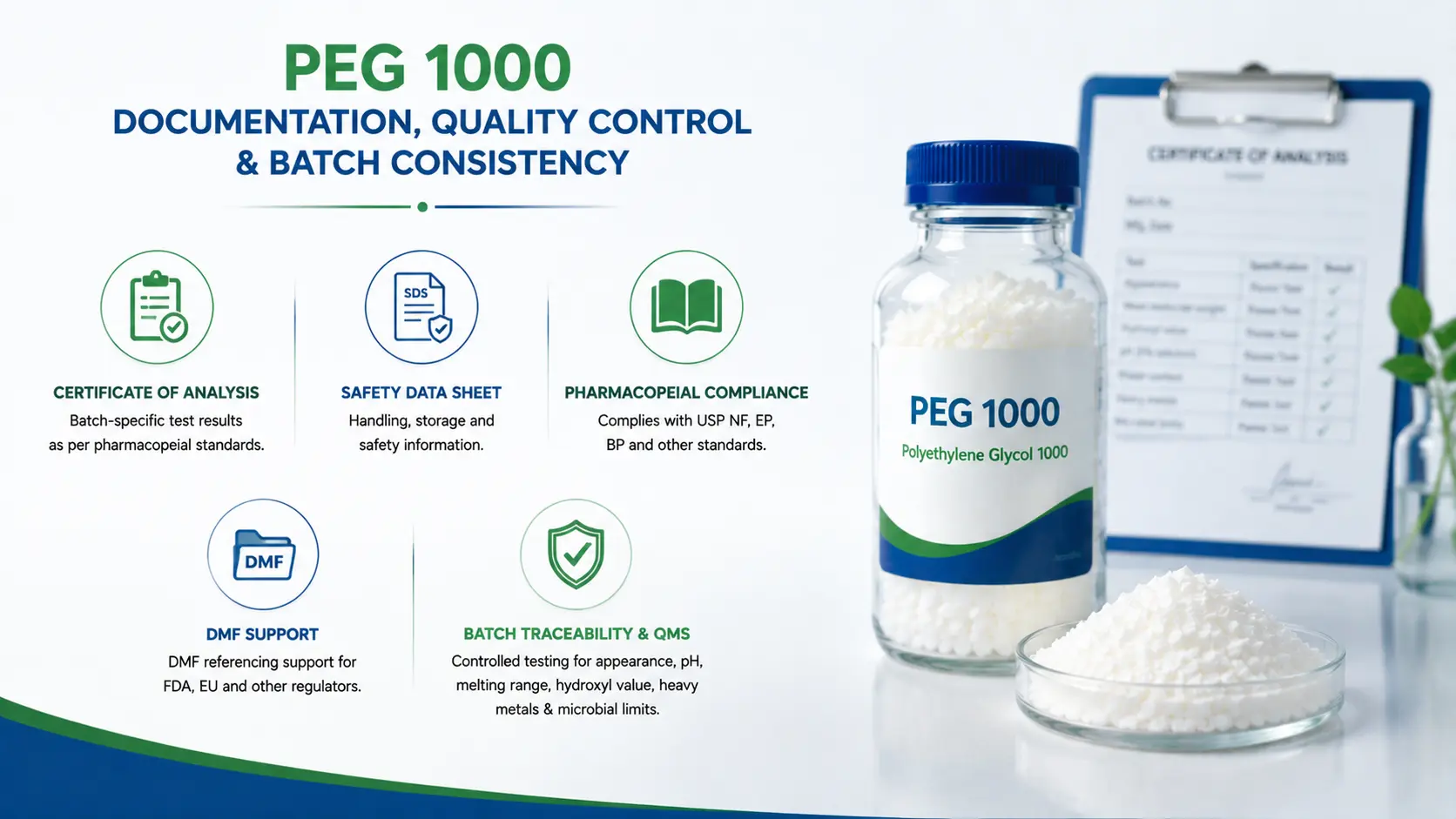
PEG 1000 Documentation, Quality Control and Batch Consistency
For pharmaceutical buyers, the paperwork behind a PEG 1000 shipment is as important as the material itself. A qualified pharma grade PEG 1000 manufacturer should be able to provide:
- Certificate of Analysis (CoA) confirming batch specific test results against the applicable pharmacopeial monograph.
- Material Safety Data Sheet (MSDS or SDS) detailing handling, storage and safety information.
- Pharmacopeial compliance reports referencing USP NF, EP, BP or other applicable standards.
- Drug Master File (DMF) referencing support, where required, for regulatory submissions to authorities such as the US FDA or European regulators.
- Batch traceability through a documented Quality Management System (QMS), covering appearance, pH, viscosity or melting range, hydroxyl value, heavy metals and microbial limits for every batch produced.
Consistent batch to batch quality is particularly important for PEG 1000 given its dual role as both a physical base (where melting behavior must stay within a narrow range) and a functional excipient (where hydroxyl value and purity affect solubilizing performance).
Safety, Storage and Handling of PEG 1000
PEG 1000 is widely regarded in pharmaceutical literature as having a favorable safety profile, consistent with the broader polyethylene glycol family, which has a long history of use in approved drug and personal care products.
Key safety and handling points:
- PEG 1000 is generally recognized as low in oral and dermal toxicity when used within established formulation guidelines and concentration limits appropriate to the intended route of administration.
- It is chemically inert toward most active pharmaceutical ingredients and co excipients, though compatibility testing is still recommended for new formulations, particularly with moisture sensitive or oxidation sensitive actives.
- Storage: PEG 1000 should be stored in a cool, dry, well ventilated area away from direct sunlight and heat sources, with containers kept tightly closed to prevent moisture absorption, since PEG is hygroscopic.
- Shelf life: under recommended storage conditions, PEG 1000 typically carries a shelf life of approximately 2 to 3 years, though this should always be confirmed against the specific supplier certificate of analysis and retest date.
- Like other polyethylene glycols, prolonged exposure to air and heat can lead to slow formation of trace aldehydes or peroxides, which is why proper packaging and stock rotation form part of standard pharmaceutical quality practice.
- A current Material Safety Data Sheet should always be consulted for detailed handling, spill response and personal protective equipment guidance specific to the grade and supplier.
 Call Us Now!
Why Choose Pharcos Speciality Ltd for PEG 1000 Sourcing
Pharcos Speciality Ltd, based in Gujarat, India, manufactures pharmaceutical grade Polyethylene Glycol 1000 under its Pharcogol product line, serving as a Polyethylene Glycol 1000 manufacturer, Polyethylene Glycol 1000 exporter and wholesale PEG 1000 supplier to pharmaceutical companies, bulk buyers, dealers and distributors across global markets.
What sets Pharcos apart as a PEG 1000 manufacturer and supplier:
- Pharmacopeial compliance: Pharcogol 1000 is manufactured and tested to meet USP NF, EP and BP specifications, with support for IP, JP and other regional standards upon request.
- Documentation ready for regulatory use: a complete package including Certificate of Analysis, Material Safety Data Sheet, pharmacopeial compliance reports and DMF referencing support for US FDA and EU regulatory filings.
- Dedicated manufacturing facility: stringent in process quality controls and batch to batch consistency, backed by a documented Quality Management System.
- In house R&D: a technical team focused on purity optimization, particle morphology and novel pharmaceutical applications, including custom molecular weight profiles and blended PEG grades for specific formulation needs, relevant for buyers exploring adjacent grades such as PEG 1500 or PEG 10000.
- Global export network: established supply relationships and logistics expertise spanning North America, Europe, the Middle East, Southeast Asia and Africa, including handling procedures suited to temperature sensitive, waxy solid grade PEGs.
- Flexible order quantities: minimum order quantities scaled for both research and development trials and full commercial bulk requirements, with customizable drum packaging.
- Full PEG portfolio: beyond PEG 1000, Pharcos supplies the broader Pharcogol range including PEG 200, PEG 300, PEG 400, PEG 600, PEG 800, PEG 3350, PEG 4000, PEG 6000, PEG 8000 and PEG 20000, along with PEG ester derivatives, allowing formulators to source multiple grades from a single qualified partner.
For buyers evaluating a Polyethylene Glycol 1000 distributor or looking to qualify a new PEG 1000 exporter, the Pharcos technical team is available to provide samples, specification sheets and compatibility data to support formulation trials and regulatory documentation.
Our Other Product
Cosmetic Raw Materials (Emulsifiers, Surfactants, Emollients)Conclusion
Polyethylene Glycol 1000 occupies a distinct and valuable position within the polyethylene glycol family. Its soft, waxy solid form and melting range close to body temperature make it the excipient of choice for suppository and ointment bases, while its solubilizing and binding properties extend its usefulness into solid dosage manufacturing and solid dispersion technology for poorly water soluble drugs. Compared with neighboring grades such as PEG 400, PEG 1500, PEG 3350 and PEG 10000, PEG 1000 offers a specific combination of physical behavior and functional versatility that continues to make it a standard choice across pharmacopeial monographs including USP NF, EP, BP, IP and JP.
For pharmaceutical companies and bulk buyers, the reliability of the supply partner matters as much as the chemistry itself. Working with an established, GMP aligned Polyethylene Glycol 1000 manufacturer such as Pharcos Speciality Ltd helps ensure that every batch meets the purity, melting behavior and documentation standards required for regulated pharmaceutical manufacturing. The Pharcos technical and sales teams are available to support sample requests, specification reviews and bulk or wholesale polyethylene glycol 1000 supply agreements across the full Pharcogol product range.
Note: This article is intended for general technical and informational purposes. Formulators and manufacturers should always refer to the current edition of the applicable pharmacopeial monograph and relevant regulatory guidance for their target market before finalizing product specifications.
Frequently Asked Questions on PEG 1000
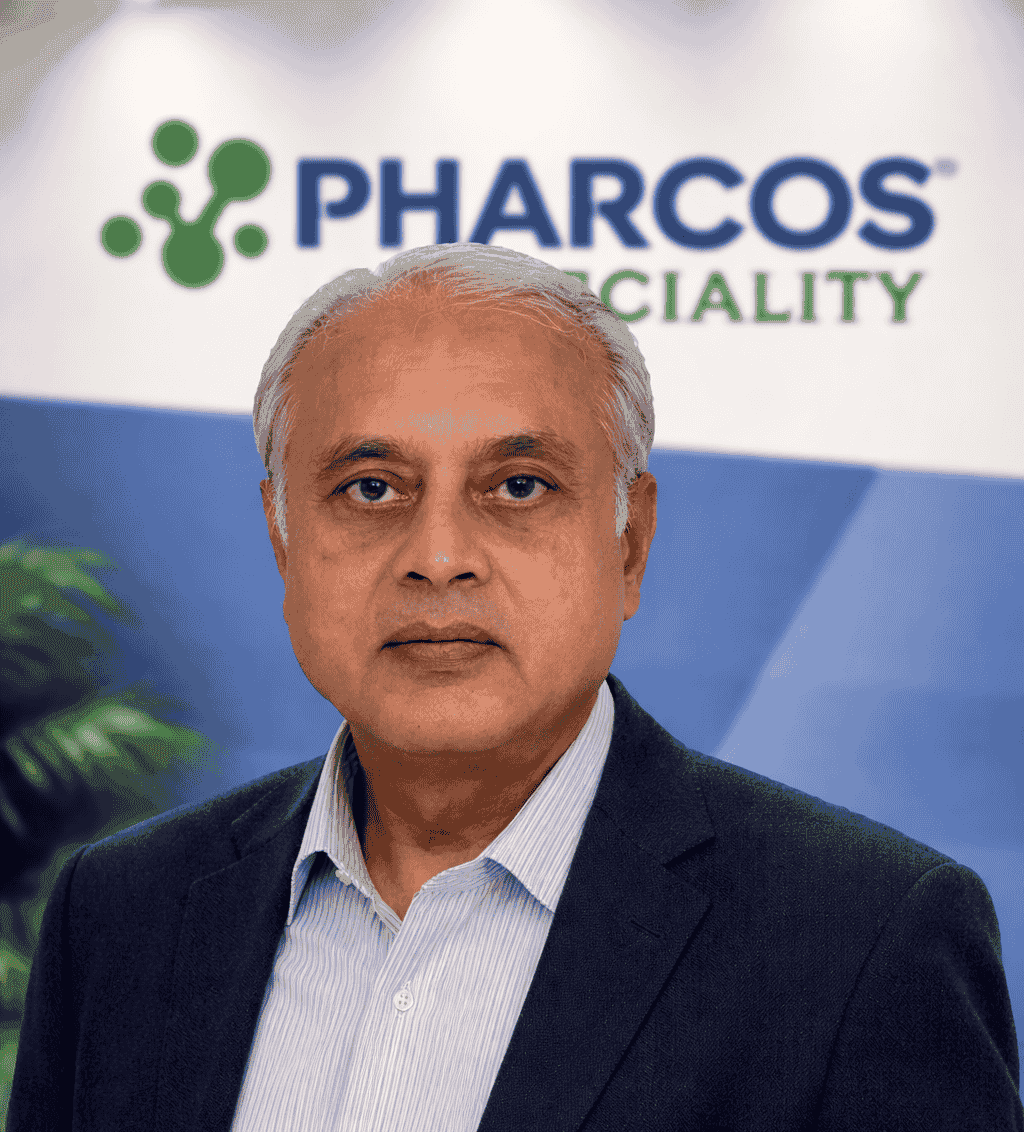
Dr. Avinash Dubey (R&D Head)
Dr. Avinash Dubey is a PhD in Organic Chemistry with a distinguished career spanning more than four decades. As the head of R&D at Pharcos, he focuses on the development of novel molecules for a wide array of industrial sectors, blending long-standing experience with a passion for innovation.

Mr. Ankit Shah (Managing Director)
Mr. Ankit Shah has led Pharcos Speciality for over three decades, establishing it as a pioneer in specialty chemicals. He currently directs the company’s strategic expansion into the APIs, Excipient and Speciality Surfactants markets, upholding a steadfast commitment to "Make in India" and world-class manufacturing quality and new product development.