
Polyethylene Glycol 400 (Macrogol 400): Properties, Applications, Compliance and Sourcing Guide




AI Summary
Polyethylene Glycol 400, also known as PEG 400 or Macrogol 400, is a low molecular weight, water soluble polyethylene glycol with an average molecular weight of 380 to 420 g per mol (CAS Number 25322 68 3). It is a clear, colorless, viscous liquid that is completely miscible with water and most organic solvents. In pharmaceutical manufacturing, PEG 400 performs three primary functions: it acts as a solvent for poorly water soluble drugs to improve solubility and bioavailability, it works as a plasticizer in film coatings for tablets and capsules to improve flexibility and stability, and it serves as a humectant in topical creams and ointments to retain moisture. PEG 400 is manufactured and supplied to pharmacopeial standards including USP NF, European Pharmacopoeia (EP), British Pharmacopoeia (BP), Indian Pharmacopoeia (IP) and Japanese Pharmacopoeia (JP), and is generally regarded as low in toxicity when used according to established formulation guidelines. This guide covers its chemistry, applications, comparison with other PEG grades, regulatory standards, safety considerations and how to select a reliable pharma grade PEG 400 manufacturer and exporter, including Pharcos Speciality Ltd, an India based supplier of pharmaceutical grade PEG 400 under the Pharcogol brand.
 Call Us Now!
What Is Polyethylene Glycol 400
Polyethylene Glycol 400, commonly abbreviated as PEG 400 and also referred to by its pharmacopeial name Macrogol 400, belongs to a family of polyether compounds formed by the polymerization of ethylene oxide with water. The number 400 refers to the average molecular weight of the polymer chain, which typically falls between 380 and 420 g per mol depending on the reference standard used.
Because of this relatively short chain length, PEG 400 exists as a liquid at room temperature, unlike higher molecular weight grades such as PEG 3350, PEG 4000, PEG 6000 or PEG 8000, which are solid, wax like or flake forms. This liquid state, combined with strong hydrogen bonding capacity, gives PEG 400 its defining characteristics: excellent water solubility, broad solvency for organic and polar compounds, low volatility and low toxicity relative to many industrial solvents.
PEG 400 is officially recognized under several names across pharmacopeias and regulatory frameworks:
- Polyethylene Glycol 400 (common pharmaceutical name)
- Macrogol 400 (European Pharmacopoeia and British Pharmacopoeia terminology)
- PEG 8 (based on the approximate number of repeating ethylene oxide units)
- Poly(ethylene glycol) or Poly(oxyethylene) (IUPAC style naming)
Physical and Chemical Properties of PEG 400
The table below summarizes the key physical and chemical properties of PEG 400 as reported by pharmacopeial and chemical reference sources.
| PEG 400 Property | Typical Value |
|---|---|
| CAS Number | 25322 68 3 |
| Average Molecular Weight | 380 to 420 g per mol |
| Appearance | Clear, colorless to almost colorless viscous liquid |
| Density (20 degree C) | Approximately 1.12 to 1.13 g per cm3 |
| Melting Point | Approximately 4 to 8 degree C |
| pH (100 g per L aqueous solution, 20 degree C) | 5.0 to 7.0 |
| Hydroxyl Value | Approximately 267 to 295 |
| Water Solubility | Completely miscible in all proportions |
| Solvent Compatibility | Miscible with most organic solvents including alcohols, glycols and glycol ethers; largely immiscible with fats and mineral oils |
| Flash Point | Above 200 degree C |
| Odor | Practically odorless |
Two structural features explain most of PEG 400 practical behavior in formulation work:
- Hydrophilic backbone: the repeating ether oxygen groups form hydrogen bonds with water molecules, which is why PEG 400 dissolves completely in water at any ratio and helps water soluble as well as some lipophilic actives disperse evenly in a formulation.
- Terminal hydroxyl groups: the two end hydroxyl groups allow PEG 400 to be further reacted or esterified, which is why derivative ingredients such as PEG 400 monostearate and PEG 400 distearate exist as separate product grades for surfactant and emulsifier applications.
How PEG 400 Is Manufactured?
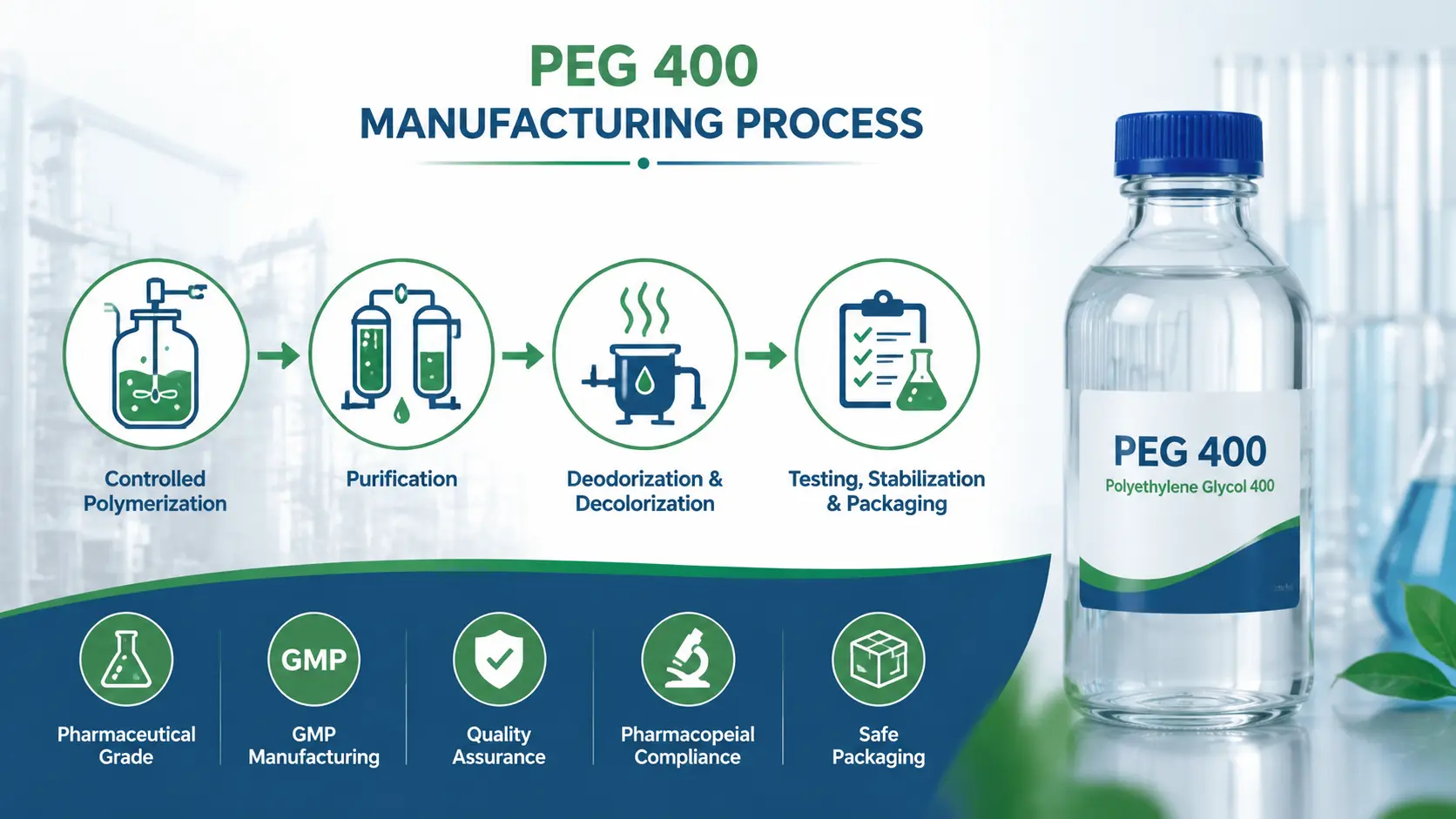
Industrially, PEG 400 is produced through the controlled polymerization of ethylene oxide, typically initiated with water or a small diol molecule under alkaline catalysis. The reaction is carefully monitored to stop the chain growth at the target average molecular weight range of 380 to 420 g per mol, since even small deviations in reaction time or catalyst concentration can shift the final molecular weight distribution and, in turn, the viscosity, hydroxyl value and solvency of the finished product.
For pharmaceutical grade material, manufacturing does not stop at polymerization. Reputable producers add several additional quality control stages:
- Purification to remove residual ethylene oxide, aldehydes, peroxides and heavy metal traces that can form during polymerization or storage.
- Deodorization and decolorization to achieve the clear, practically odorless liquid required for pharmaceutical and topical use.
- Batch testing against pharmacopeial monographs (USP NF, EP, BP, IP, JP) for parameters such as hydroxyl value, pH, water content, heavy metals and microbial limits.
- Stabilization and packaging under conditions that limit oxidation, since PEG solutions can slowly form peroxides and aldehydes if exposed to air and heat over long periods.
This is why sourcing PEG 400 from an established polyethylene glycol 400 factory with documented GMP practices, rather than an industrial grade supplier, matters for pharmaceutical buyers.
Our Other Product
PEG 1450 (Polyethylene Glycol 1450)PEG 400 Applications in Pharmaceutical Formulations
PEG 400 is one of the most versatile excipients used across oral, topical and parenteral pharmaceutical dosage forms. Its three principal functions, as also listed on Pharcos product documentation, are explained below.
PEG 400 as a Solvent for Poorly Water Soluble Drugs
A large share of active pharmaceutical ingredients under development today have poor aqueous solubility, which directly limits how well the body can absorb them. PEG 400 addresses this challenge in several ways:
- It co dissolves hydrophobic drug molecules alongside water, forming a homogeneous solution rather than a suspension.
- It reduces the surface tension of the aqueous phase, helping wet and disperse fine drug particles.
- It is used in soft gelatin capsules, oral solutions, and certain injectable formulations as a co solvent alongside water, ethanol or propylene glycol.
- By improving dissolution rate, it directly supports better bioavailability and more consistent therapeutic response.
Common dosage forms: oral solutions and suspensions, soft and hard gelatin capsules, certain parenteral and injectable preparations, and oral tablet formulations where solubility enhancement is required during manufacturing.
Polyethylene Glycol 400 as a Plasticizer in Film Coatings
Film coating is applied to tablets and capsules for reasons ranging from taste masking to controlled release to simple product identification. The polymer films used in coating, such as hydroxypropyl methylcellulose based systems, tend to be brittle on their own. PEG 400 is incorporated as a plasticizer to:
- Increase the flexibility and elongation of the coating film, reducing the risk of cracking during drying, handling or storage.
- Improve the adhesion of the film layer to the tablet core or capsule shell.
- Enhance the overall gloss and finish of the coated product.
- Support consistent coating thickness during high speed pan coating operations.
Polyethylene Glycol 400 as a Humectant in Topical Formulations
In creams, ointments, gels and other topical preparations, PEG 400 functions as a humectant, meaning it helps the product attract and retain moisture at the skin surface. Benefits in this role include:
- Preventing premature drying out of semi solid formulations during storage and use.
- Improving spreadability and skin feel of creams and ointments.
- Acting as a co solvent for both water soluble and certain oil soluble ingredients within the same topical base.
- Contributing to a smoother, more stable emulsion when combined with other emollients and emulsifiers.
Summary Table: PEG 400 Functions and Where They Are Used
| PEG 400 Function | Mechanism | Typical Formulation |
|---|---|---|
| Solvent | Improves solubility and dissolution of poorly water soluble drugs | Oral solutions, soft gel capsules, injectables |
| Plasticizer | Increases flexibility and adhesion of polymer coating films | Film coated tablets and capsules |
| Humectant | Attracts and holds moisture at the application site | Topical creams, ointments, gels |
PEG 400 Compared with Other Polyethylene Glycol Grades
Buyers often ask how PEG 400 differs from neighboring grades such as PEG 200, PEG 300, PEG 600, PEG 3350 or PEG 4000. The comparison below is based on average molecular weight and resulting physical state, which is the main factor that determines suitability for a given application.
| PEG Grade | Average Molecular Weight | Physical State at Room Temperature | Typical Use |
|---|---|---|---|
| PEG 200 | 190 to 210 g per mol | Liquid | Solvent, low viscosity formulations |
| PEG 300 | 285 to 315 g per mol | Liquid | Solvent, co solvent in liquid dosage forms |
| PEG 400 | 380 to 420 g per mol | Liquid | Solvent, plasticizer, humectant |
| PEG 600 | 570 to 630 g per mol | Liquid to semi solid | Ointment and suppository bases |
| PEG 3350 | 3015 to 3685 g per mol | Solid (flake or powder) | Oral laxative preparations, tablet binders |
| PEG 4000 | 3500 to 4500 g per mol | Solid (flake or powder) | Suppository bases, tablet coatings |
| PEG 6000 | 5400 to 6600 g per mol | Solid (flake or powder) | Ointment bases, solid dispersions |
| PEG 8000 | 7000 to 9000 g per mol | Solid (flake or powder) | Tablet binders, controlled release matrices |
As a general rule, lower molecular weight PEG grades (200 to 600) remain liquid and are chosen primarily as solvents, co solvents and plasticizers, while higher molecular weight grades (3350 and above) are solid at room temperature and are chosen for tablet binding, suppository bases and controlled release applications. PEG 400 sits at a practical midpoint within the liquid range, which is part of why it is one of the most widely requested grades among pharmaceutical formulators.
Pharmacopeial Standards and Regulatory Compliance
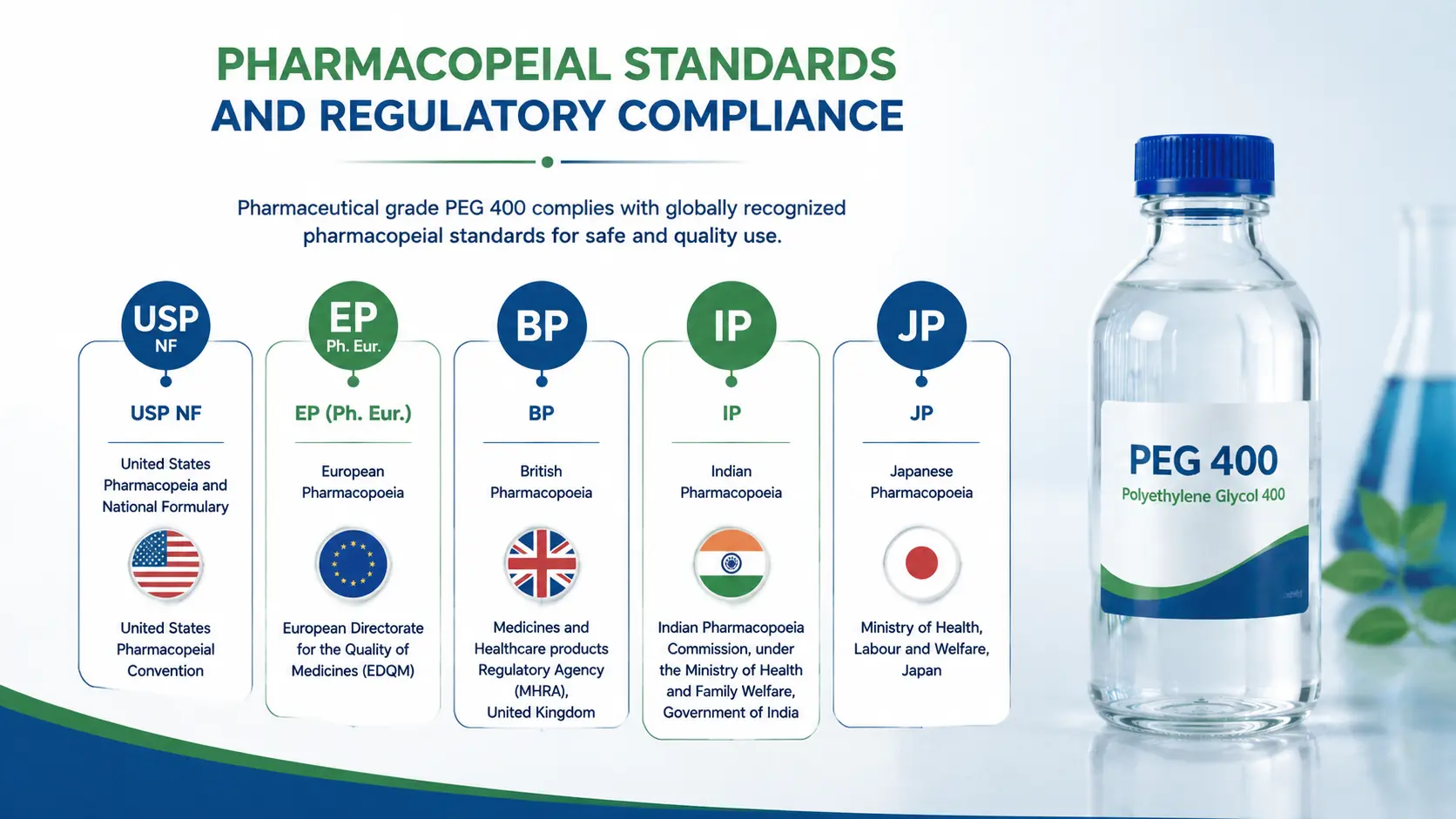
Pharmaceutical grade PEG 400 is expected to comply with one or more recognized pharmacopeial monographs before it can be used in drug manufacturing. The main standards referenced globally are summarized below.
| Standard | Full Name | Governing Body |
|---|---|---|
| USP NF | United States Pharmacopeia and National Formulary | United States Pharmacopeial Convention |
| EP (Ph. Eur.) | European Pharmacopoeia | European Directorate for the Quality of Medicines (EDQM) |
| BP | British Pharmacopoeia | Medicines and Healthcare products Regulatory Agency (MHRA), United Kingdom |
| IP | Indian Pharmacopoeia | Indian Pharmacopoeia Commission, under the Ministry of Health and Family Welfare, Government of India |
| JP | Japanese Pharmacopoeia | Ministry of Health, Labour and Welfare, Japan |
In these monographs, PEG 400 is generally tested for parameters such as appearance, identification by infrared spectroscopy, pH, hydroxyl value, viscosity, water content, residual ethylene oxide and dioxane, heavy metals, and microbial limits where relevant. Because Ph. Eur., EP and BP are closely aligned and are often used interchangeably in trade documentation, a product compliant with EP is typically also acceptable against BP requirements, though buyers should always confirm against the specific monograph version applicable to their market.
For United States regulatory purposes, PEG 400 also appears in the FDA Inactive Ingredient Database, which lists excipients, including their approved routes of administration, that have already been used in FDA approved drug products. Formulators frequently consult this database, alongside the relevant pharmacopeial monograph, when selecting PEG 400 for a new or generic formulation, since prior inclusion in an approved product can simplify certain regulatory submissions.
Buyers importing or exporting PEG 400 internationally should also be aware that the substance is registered under frameworks such as the European Union REACH regulation through the European Chemicals Agency (ECHA), which governs its safe manufacture, import and use within the European Economic Area.
Our Other Product
PEG 1000 (Polyethylene Glycol 1000)Safety, Toxicity and Handling of PEG 400
PEG 400 is widely regarded across pharmaceutical literature as having a favorable safety profile compared to many other pharmaceutical solvents, which is a major reason for its broad adoption. That said, appropriate handling guidance still applies.
Key safety points:
- PEG 400 is practically non volatile and has a high flash point, which reduces certain handling risks compared to lower boiling point solvents such as ethanol or isopropanol.
- Oral and dermal toxicity of PEG 400 is considered low in standard formulation concentrations, and it is generally recognized as safe for use in approved pharmaceutical and cosmetic applications when used according to established guidelines and concentration limits.
- Very high oral doses of low molecular weight PEG grades have been associated with mild gastrointestinal effects such as loose stools in some studies, which is consistent with the mechanism by which higher molecular weight PEG grades are used medically as osmotic laxatives.
- Direct application to broken or highly permeable skin, or use in very high concentration parenteral formulations, should follow specific pharmacopeial and regulatory guidance, since absorption characteristics differ from intact skin or standard oral use.
- Like other polyether compounds, PEG solutions can slowly develop trace aldehydes and peroxides on prolonged exposure to air and heat, which is why proper packaging, storage away from direct heat and light, and batch shelf life monitoring are part of standard quality practice.
- Material Safety Data Sheets (MSDS or SDS) should always be consulted for handling, storage, spill response and personal protective equipment recommendations specific to the grade and supplier being used.
Formulators developing new products, particularly injectable or high exposure topical products, are encouraged to review current pharmacopeial monographs and regional regulatory guidance documents directly, since permitted concentration limits can vary by route of administration and target patient population.
Polyethylene Glycol 400 in Personal Care and Other Industries
While the Pharcos Pharcogol 400 product line is positioned primarily for pharmaceutical use, PEG 400 chemistry is also relevant in adjacent industries, which is useful context for buyers evaluating multiple grades:
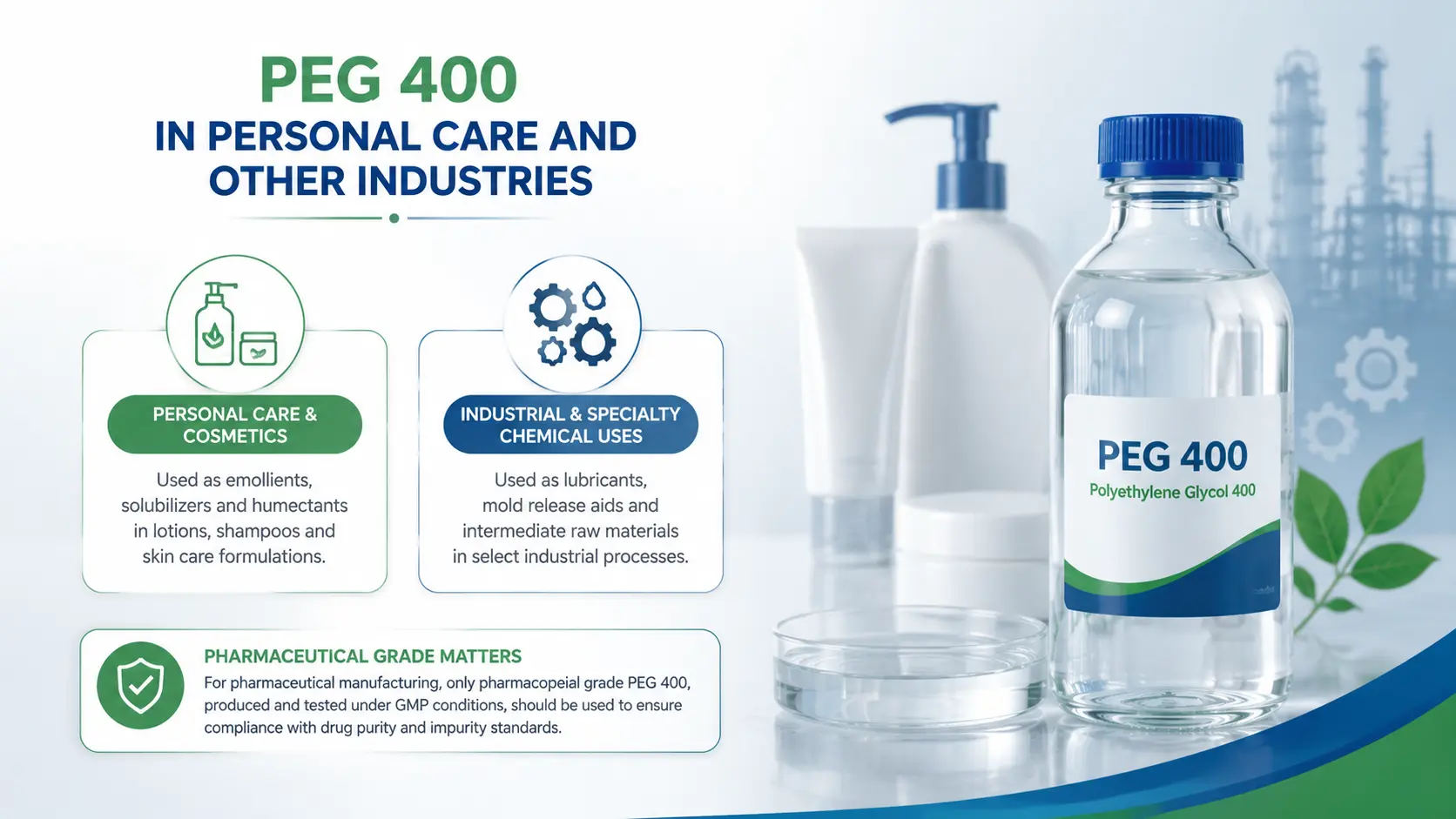
- Personal care and cosmetics: PEG 400 and its esters, such as PEG 400 monostearate and PEG 400 distearate, are used as emollients, solubilizers and humectants in lotions, shampoos and skin care formulations.
- Industrial and specialty chemical uses: lower and mid range PEG grades are used as lubricants, mold release aids and intermediate raw materials in select industrial processes, distinct from pharmaceutical grade material.
For pharmaceutical manufacturing, only pharmacopeial grade PEG 400, produced and tested under GMP conditions, should be used, since industrial grade material is not qualified against the impurity and purity limits required for drug products.
Why Choose Pharcos Speciality Ltd as Your PEG 400 Partner
Pharcos Speciality Ltd, based in Gujarat, India, manufactures pharmaceutical grade Polyethylene Glycol 400 under its Pharcogol product line, and serves as a Polyethylene Glycol 400 manufacturer, Polyethylene Glycol 400 exporter and wholesale Macrogol 400 supplier to pharmaceutical companies, bulk buyers, dealers and distributors across global markets.
What sets Pharcos apart as a PEG 400 supplier and Macrogol 400 exporter:
- Pharmacopeial compliance: Pharcogol 400 is manufactured to meet USP NF, EP, BP and other applicable pharmacopeial monographs including IP and JP references upon request.
- Quality certifications: manufacturing operations are aligned with WHO GMP, Excipact and FSSAI standards, supporting consistent quality across production batches.
- Dedicated R&D: an in house research and development team continuously works on process optimization, ensuring the product keeps pace with evolving pharmaceutical industry requirements.
- Two manufacturing units: operations across facilities in Mehsana and Daman, Gujarat, India, support reliable production capacity for bulk and wholesale orders.
- Global reach: Pharcos serves as a polyethylene glycol 400 manufacturer in India with export capability to pharmaceutical markets worldwide, backed by documentation support for regulatory and customs requirements.
- Full PEG portfolio: beyond PEG 400, Pharcos supplies the broader Pharcogol range including PEG 200, PEG 300, PEG 600, PEG 800, PEG 3350, PEG 4000, PEG 6000, PEG 8000, PEG 20000, and PEG ester derivatives such as PEG 400 monostearate and PEG 400 distearate, allowing formulators to source multiple grades from a single qualified partner.
For buyers evaluating a polyethylene glycol 400 distributor or seeking to qualify a new peg 400 supplier, Pharcos technical team is available to provide certificates of analysis, samples and specification sheets to support formulation trials and regulatory documentation.
 WhatsApp Now
Conclusion
Polyethylene Glycol 400 remains one of the most relied upon excipients in modern pharmaceutical formulation because it performs three distinct and valuable roles within a single, well characterized molecule: improving the solubility of difficult to dissolve drugs, adding flexibility and durability to tablet and capsule coatings, and helping topical products retain moisture and stability. Its low toxicity profile, complete water miscibility and broad compatibility with pharmacopeial standards including USP NF, EP, BP, IP and JP make it a dependable choice across oral, topical and parenteral dosage forms.
For pharmaceutical companies, formulators and bulk buyers evaluating sourcing options, the choice of supplier matters as much as the chemistry itself. Working with an established, GMP aligned manufacturer such as Pharcos Speciality Ltd helps ensure that every batch of PEG 400 delivered meets the purity, consistency and documentation standards required for regulated drug manufacturing. Pharcos technical and sales teams are available to support sample requests, specification reviews and bulk or wholesale supply agreements for pharmaceutical grade PEG 400 and the wider Pharcogol product range.
Note: This article is intended for general technical and informational purposes. Formulators and manufacturers should always refer to the current edition of the applicable pharmacopeial monograph and relevant regulatory guidance for their target market before finalizing product specifications.
Frequently Asked Questions
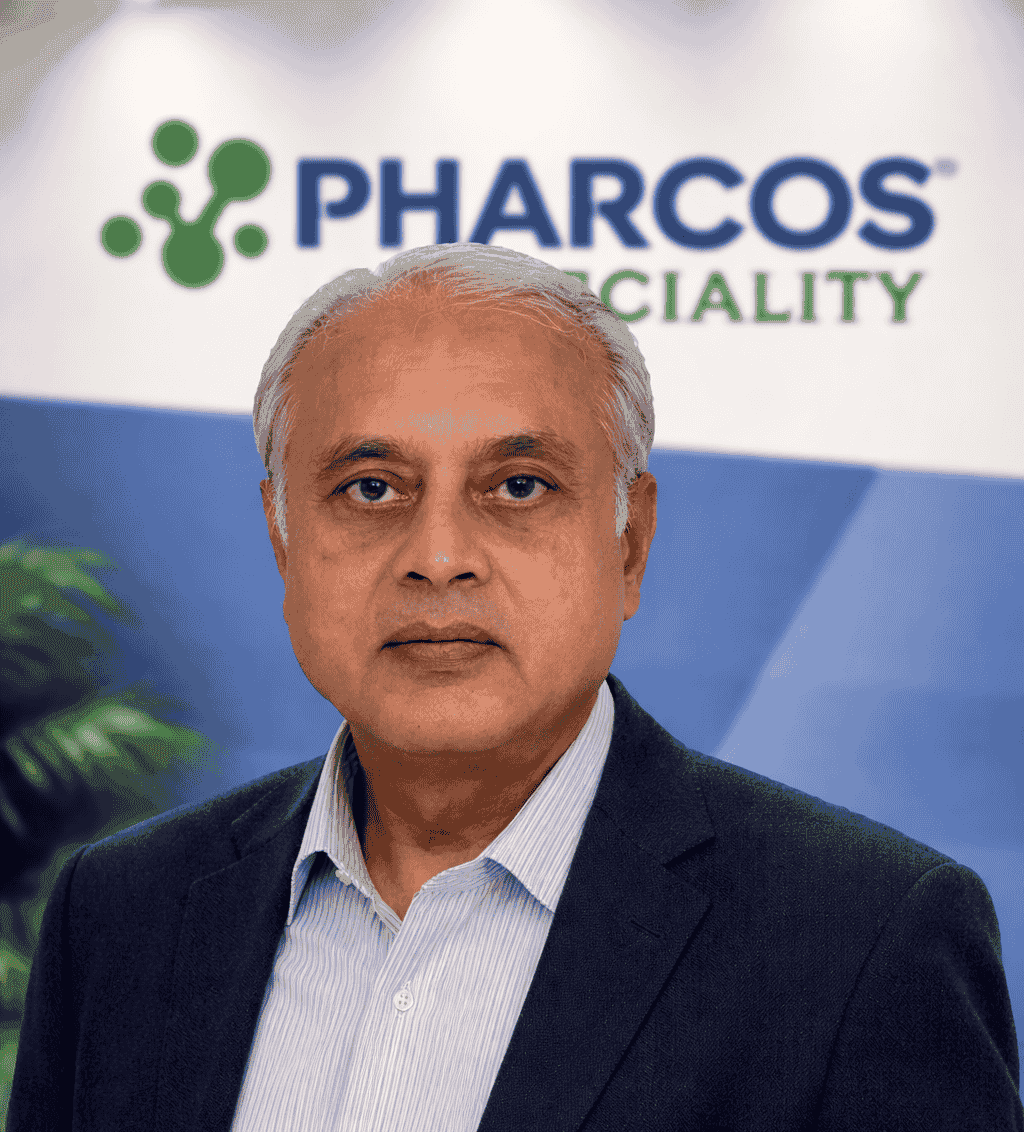
Dr. Avinash Dubey (R&D Head)
Dr. Avinash Dubey is a PhD in Organic Chemistry with a distinguished career spanning more than four decades. As the head of R&D at Pharcos, he focuses on the development of novel molecules for a wide array of industrial sectors, blending long-standing experience with a passion for innovation.

Mr. Ankit Shah (Managing Director)
Mr. Ankit Shah has led Pharcos Speciality for over three decades, establishing it as a pioneer in specialty chemicals. He currently directs the company’s strategic expansion into the APIs, Excipient and Speciality Surfactants markets, upholding a steadfast commitment to "Make in India" and world-class manufacturing quality and new product development.