
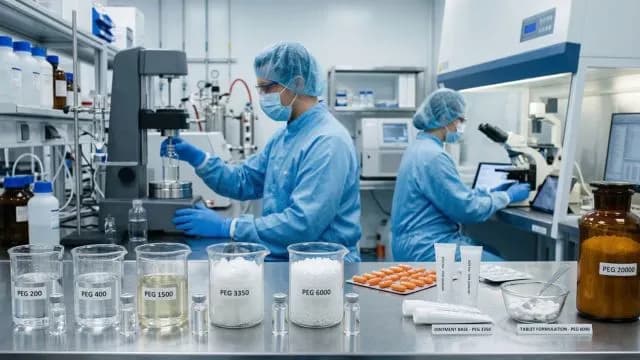
Role of Different Grades of Polyethylene Glycols (PEG 200 to PEG 20000) in the Pharmaceutical Industry




Polyethylene glycol (PEG) is a polymer of ethylene glycol and is used in a variety of industries, with a significant presence in the pharmaceutical sector. PEG has unique properties such as solubility in water, biocompatibility, and the ability to form stable drug formulations. Different grades of PEG are used in various pharmaceutical applications, depending on their molecular weight. These grades, ranging from PEG 200 to PEG 20000, offer varying viscosity, solubility, and stability properties.
This article explores the role of different grades of polyethylene glycols (200 to 20000) in the pharmaceutical industry, focusing on their uses in drug formulations, delivery systems, and other pharmaceutical applications.
 Email Us Today!
What is Polyethylene Glycol?
Polyethylene glycol (PEG) is a versatile compound used widely in the pharmaceutical industry. Its molecular structure consists of repeating units of ethylene oxide, and it is available in a wide range of molecular weights, each serving different functions in pharmaceutical formulations. PEG can be classified based on its molecular weight, with lower molecular weights like PEG 200 and PEG 400 being liquid and higher molecular weights such as PEG 6000 and PEG 20000 being solid or semi-solid. Each grade has specific applications, including serving as a solvent, emulsifier, stabilizer, or laxative in pharmaceutical formulations.
The Role of Polyethylene Glycols in Pharmaceuticals
PEG serves a variety of roles in pharmaceutical formulations:
- Solvent: PEG is used to dissolve poorly soluble drugs, enhancing their bioavailability.
- Excipient: It is used in tablet and capsule formulations as a binder and stabilizer.
- Laxative: Certain grades of PEG, particularly PEG 3350, are used in laxative formulations due to their osmotic properties.
- Lubricant: PEG is used as a lubricant in tablet manufacturing to prevent sticking during the compression process.
- Vehicle for Topical Products: PEG is used in creams, lotions, and ointments to deliver active ingredients and improve spreadability.
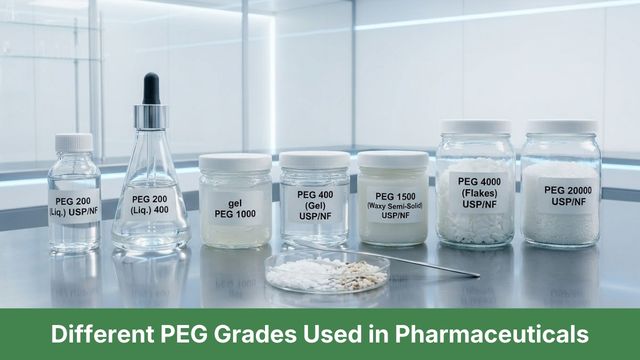
Exploring the Different Grades of Polyethylene Glycol in Pharmaceuticals
Polyethylene Glycol 200 (PEG 200)
PEG 200 is a low molecular weight liquid that serves as a solvent in pharmaceutical formulations. It is commonly used to dissolve active pharmaceutical ingredients (APIs) that are poorly soluble in water. PEG 200 is also used in oral solutions, syrups, and topical formulations such as creams and ointments. It helps in moisturizing and enhancing the solubility of certain drugs.
Polyethylene Glycol 300 (PEG 300)
PEG 300 has a higher molecular weight than PEG 200 and is a more viscous liquid. It is used in pharmaceutical formulations where slightly higher viscosity is needed compared to PEG 200. It is utilized in oral solutions, topical emulsions, and drug delivery systems. It also works as a lubricant and plasticizer in tablet coatings.
Polyethylene Glycol 400 (PEG 400)
Polyethylene Glycol 400 is a widely used grade in the pharmaceutical industry. It is used in oral solutions, creams, ointments, and topical gels. Its higher viscosity makes it suitable as a binder in tablets, as a solvent for poorly soluble drugs, and as a lubricant in tablet manufacturing. It also helps in stabilizing formulations.
Our Other Product
Personal Care IngredientsPolyethylene Glycol 600 (PEG 600)
PEG 600 is a semi-viscous liquid used in the pharmaceutical industry primarily in oral suspensions and tablet formulations. It serves as a binder, solvent, and plasticizer. PEG 600 also helps improve the spreadability of topical formulations and is commonly used in creams, ointments, and gels.
Polyethylene Glycol 800 (PEG 800)
PEG 800 is a thicker liquid used in topical formulations, including creams and ointments. It serves as a moisturizer and emollient, enhancing the texture and consistency of cosmetic and pharmaceutical products. It is also used as a lubricant in tablet manufacturing and as a plasticizer.
Polyethylene Glycol 1000 (PEG 1000)
Polyethylene Glycol 1000 is a more viscous liquid used in tablet formulations as a binder. It also plays a crucial role in topical formulations, where it acts as a moisturizing agent and helps retain moisture in creams and lotions. PEG 1000 is widely used in oral solutions, syrups, and emulsions.
Polyethylene Glycol 1450 (PEG 1450)
PEG 1450 is used in pharmaceutical tablet formulations where higher viscosity is required. It serves as a binder, plasticizer, and lubricant in tablets and capsules. It is also used in oral and topical formulations, improving drug solubility and stability.
Polyethylene Glycol 1500 (PEG 1500)
PEG 1500 is a higher molecular weight PEG that is used in oral suspensions, emulsions, and tablets. It is known for its binding properties and is used as a lubricant and plasticizer in tablet formulations. It also helps stabilize APIs and improve bioavailability.
Polyethylene Glycol 3350 (PEG 3350)
Polyethylene Glycol 3350 is most commonly used as an osmotic laxative. It draws water into the colon, promoting bowel movement. It is often used in over-the-counter laxative products for relieving constipation. PEG 3350 is also used in oral solutions to improve dissolution and drug release profiles.
Polyethylene Glycol 4000 (PEG 4000)
PEG 4000 is a solid PEG used primarily in tablet and capsule formulations. It serves as a binder, lubricant, and coating agent. It also helps in the formation of sustained-release formulations, controlling the rate at which active ingredients are released into the body.
Polyethylene Glycol 6000 (PEG 6000)
Polyethylene Glycol 6000 is a high molecular weight PEG used primarily in tablet coatings and controlled-release formulations. It serves as a binder and lubricant, ensuring drug stability and controlled release over time. PEG 6000 also helps improve the compression of tablets during manufacturing.
Polyethylene Glycol 8000 (PEG 8000)
PEG 8000 is used in extended-release tablet formulations, where it plays a significant role in delaying drug release. It is also used in coatings and solid formulations for controlled-release drug delivery. PEG 8000 helps stabilize formulations and improve their viscosity.
Our Other Product
Pharmaceutical Grade Polyethylene Glycol (PEG)Polyethylene Glycol 10000 (PEG 10000)
Polyethylene Glycol 10000 is used in controlled-release pharmaceutical formulations due to its ability to regulate the dissolution rate of active ingredients. It also serves as a binder and lubricant in tablet manufacturing, helping to enhance tablet stability and uniformity.
Polyethylene Glycol 20000 (PEG 20000)
Polyethylene Glycol 20000 is used primarily in solid dosage forms, particularly in controlled-release formulations. It helps maintain the dissolution rate of active ingredients over time, ensuring sustained drug delivery. PEG 20000 is also used in coatings, where it provides stability and viscosity to the formulation.
 Get It Now!
Conclusion
Polyethylene glycols (PEGs) are essential excipients in the pharmaceutical industry, with varying grades tailored to different applications based on their molecular weight. From liquid grades like PEG 200 and PEG 400 to solid grades like PEG 6000 and PEG 20000, each PEG grade offers specific benefits, whether it’s as a solvent, binder, lubricant, plasticizer, or osmotic agent. These versatile properties make PEG an indispensable ingredient in the development of oral and topical formulations, controlled-release drug systems, laxatives, and many other pharmaceutical applications.
FAQs on Polyethylene Glycol (200 to 20000)
Dr. Avinash Dubey (R&D Head)
Dr. Avinash Dubey is a PhD in Organic Chemistry with a distinguished career spanning more than four decades. As the head of R&D at Pharcos, he focuses on the development of novel molecules for a wide array of industrial sectors, blending long-standing experience with a passion for innovation.

Mr. Ankit Shah (Managing Director)
Mr. Ankit Shah has led Pharcos Speciality for over three decades, establishing it as a pioneer in specialty chemicals. He currently directs the company’s strategic expansion into the APIs, Excipient and Speciality Surfactants markets, upholding a steadfast commitment to "Make in India" and world-class manufacturing quality and new product development.