
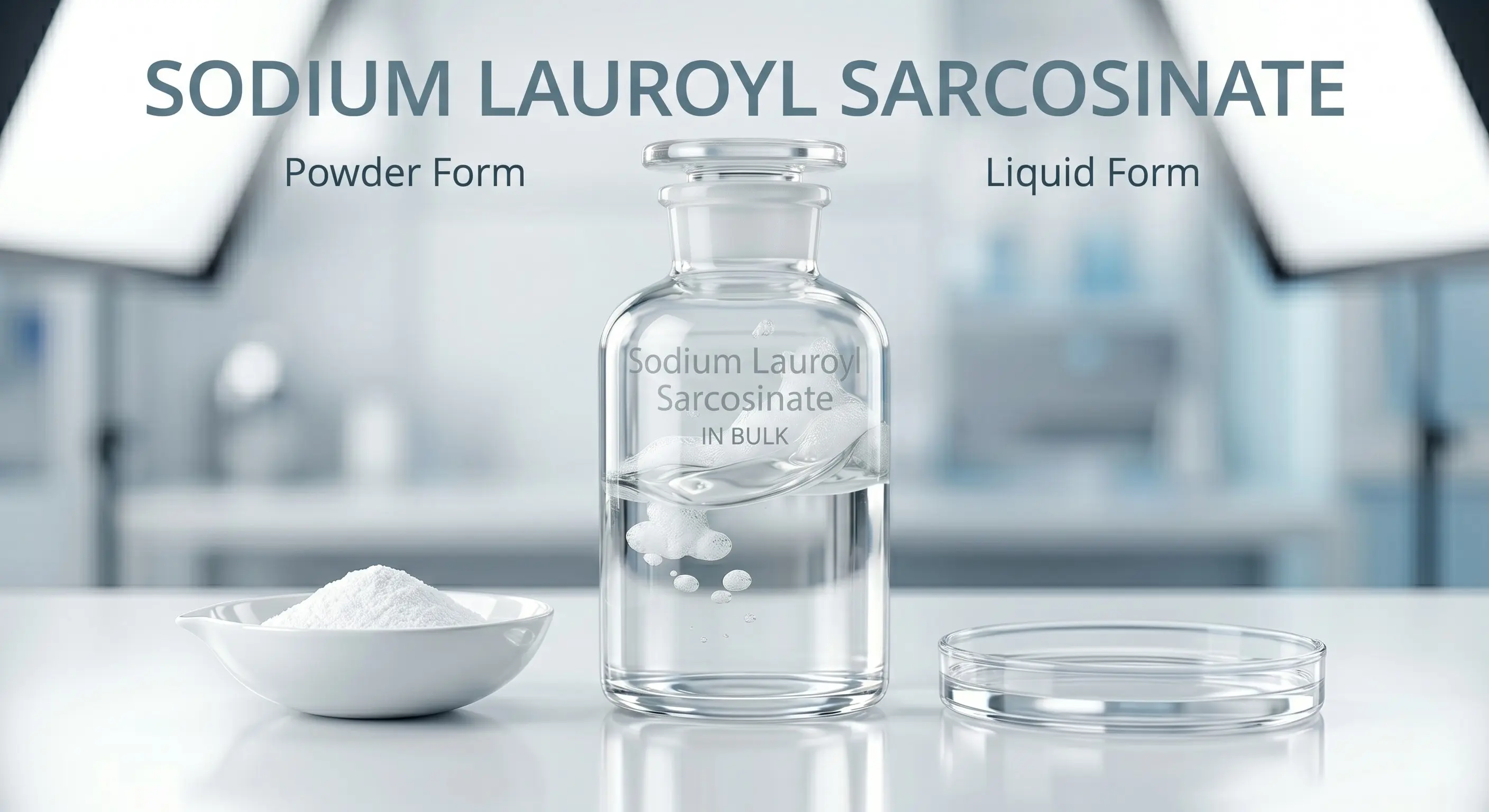
Sodium Lauroyl Sarcosinate: The Mild Surfactant Redefining Clean Beauty and Industrial Performance




AI Summary
Sodium Lauroyl Sarcosinate is a gentle, amino acid-derived anionic surfactant gaining rapid traction across personal care, detergent and oil & gas industries in markets including Europe, the USA, Australia and the Middle East. Available in both liquid (30% active) and powder (95% active) forms, it delivers outstanding foaming, stability and mildness - making it the preferred sulfate-free alternative for formulation chemists and product developers worldwide. This article explores its properties, diverse applications and the growing global demand shaping its adoption across multiple industries.
 WhatsApp Now
What Is Sodium Lauroyl Sarcosinate and Why Does It Matter?
As consumer awareness around ingredient transparency accelerates globally, formulators are under increasing pressure to replace harsh sulfates with gentler, more sustainable alternatives. Sodium Lauroyl Sarcosinate has emerged as a leading answer to this demand - a mild anionic surfactant derived from the naturally occurring amino acid sarcosine and lauric acid, a fatty acid typically sourced from coconut or palm oil.
With CAS Number 137-16-6, it is characterized by its excellent compatibility with skin and mucous membranes, its ability to maintain consistent foaming performance even in hard water and its stability across a wide pH range. These combined properties make it ideal for applications where gentle cleansing and rich lather are both non-negotiable - from premium sulfate-free shampoos to toothpastes, face washes and beyond.
Its amino acid origin is a key differentiator. Unlike petroleum-derived surfactants, Sodium Lauroyl Sarcosinate is biodegradable, skin-compatible and far less likely to trigger irritation - a profile that resonates strongly with regulatory and consumer trends across European and North American markets, where clean-label formulation standards are increasingly stringent.
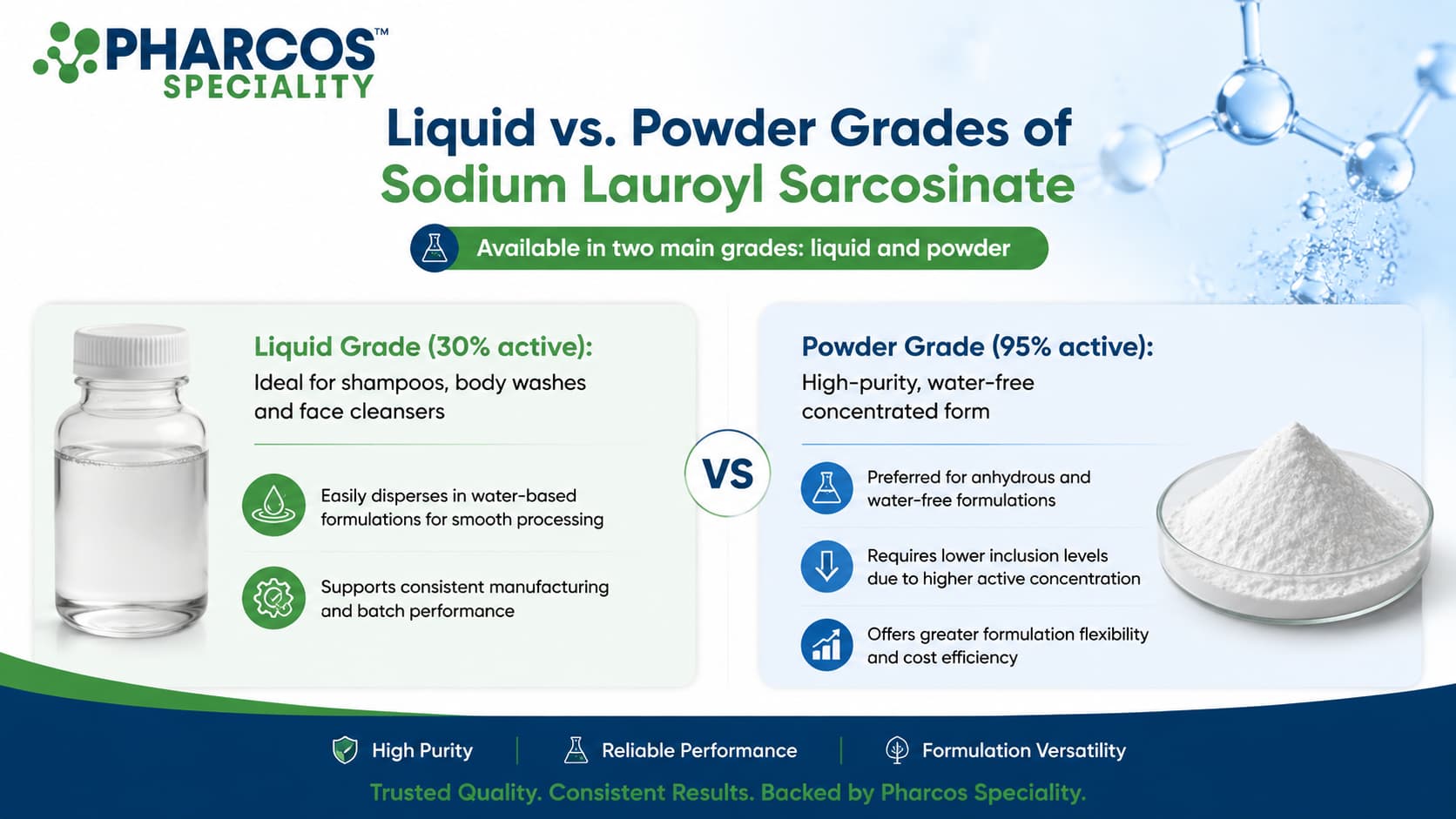
Liquid vs. Powder: Understanding the Two Grades
Sodium Lauroyl Sarcosinate is commercially available in two primary grades, each designed for distinct formulation needs.
The liquid form, typically supplied at 30% active concentration, is the workhorse grade for aqueous personal care and industrial formulations. It disperses easily in water-based systems, making it straightforward to incorporate into rinse-off products such as shampoos, body washes and face cleansers. Its liquid state supports efficient manufacturing workflows and consistent batch-to-batch performance.
The powder form, supplied at 95% active concentration, is a concentrated, water-free grade intended for applications where liquid carriers are either unnecessary or undesirable. This high-purity form is the preferred choice in water-free or anhydrous product categories. Because of its elevated active content, smaller inclusion rates are required to achieve the same functional effect as the liquid grade - offering formulators greater flexibility and cost efficiency in high-value product lines.
Sulfate-Free Shampoos and Hair Care: A Global Shift
The global pivot away from sodium lauryl sulfate (SLS) and sodium laureth sulfate (SLES) in hair care has been driven by a combination of dermatologist recommendations, consumer advocacy and retailer policies - particularly in the USA, UK and across continental Europe. Sodium Lauroyl Sarcosinate has positioned itself at the center of this transition.
In conventional liquid shampoos, the 30% active liquid grade provides rich, stable lather even in the hard water conditions common across many regions of Europe and the Middle East, where water mineral content can significantly diminish surfactant performance. Its ability to foam consistently in these conditions, without relying on sulfate-based boosters, is a notable technical advantage.
For the solid shampoo bar category - one of the fastest-growing sustainable beauty segments in markets like Australia, Germany and France - the 95% active powder grade is particularly well-suited. Powder-form surfactants are essential in solid formulation, as they eliminate water activity that would otherwise compromise product integrity. Sodium Lauroyl Sarcosinate in powder form also demonstrates excellent stability in the presence of sebum, ensuring that lather quality is maintained even when applied to unwashed or oily hair - a performance gap that many solid bar surfactants struggle to address.
Face Wash and Skin Cleansing: Mild, Effective and Irritation-Free
In facial cleansing applications, the tolerance threshold for irritation is significantly lower than in body or hair care. The skin barrier is more delicate and consumer sensitivity to redness, dryness or tightness after cleansing is a primary driver of product abandonment and negative reviews.
Sodium Lauroyl Sarcosinate addresses this directly. Its amino acid-derived structure makes it substantially milder than conventional anionic surfactants and clinical and consumer studies globally - including in markets like the USA and across the European Union - have consistently supported its suitability for sensitive and compromised skin types.
Both the liquid and powder grades find application in facial cleansing formats. The liquid grade is widely used in gel-to-foam cleansers, micellar washes and pump-format face washes. The powder grade serves the emerging market for facial cleansing powders - a format that has seen meaningful growth in South Korea, Japan, Australia and, increasingly, the Middle East, where travel-friendly and preservative-free product formats are appealing to modern consumers.
Our Other Product
Sodium Lauroyl Sarcosinate 30% Active (Liquid | Surfactants)Toothpaste: Where Foam Density and Mouthfeel Converge
Sodium Lauroyl Sarcosinate has a well-established role in oral care formulation, particularly in toothpaste. Consumers expect toothpaste to produce a specific foam texture that signals efficacy - and traditional formulations have long relied on SLS to deliver this. However, SLS has a documented link to increased incidence in susceptible individuals, prompting a growing segment of the oral care market to seek alternatives.
Both the liquid and powder grades of Sodium Lauroyl Sarcosinate are used in toothpaste. The powder grade, at 95% active concentration, is particularly valued for its contribution to mouthfeel and foam density - delivering a rich, pleasant cleansing sensation without the mucosal irritation associated with SLS. This makes it the preferred surfactant in sensitive gum, natural and pediatric toothpaste lines across Europe, Australia and the USA.
In markets across the Middle East, where halal certification and ingredient traceability are increasingly important in consumer purchasing decisions, the amino acid origin of Sodium Lauroyl Sarcosinate also carries growing appeal.
Industrial Applications: Corrosion Inhibition and Carpet Cleaning
Beyond personal care, Sodium Lauroyl Sarcosinate demonstrates functional versatility in industrial settings. In the oil and gas sector - particularly relevant to the Gulf region, including UAE, Saudi Arabia and Qatar - it is utilized as a corrosion inhibitor. Its ability to form a protective film on metal surfaces, reducing interaction between corrosive agents and pipeline infrastructure, makes it a practical additive in oilfield fluid formulations. The liquid grade, with its ease of incorporation into aqueous industrial systems, is the preferred choice for these applications.
In carpet cleaning formulations, Sodium Lauroyl Sarcosinate offers a distinct advantage: upon drying, it leaves a non-sticky, powdery residue rather than a tacky film. This behavior simplifies post-cleaning vacuuming and reduces resoiling - a practically important performance characteristic in commercial and residential carpet care products distributed across the USA, Australia and European markets.
Regulatory Landscape and Market Acceptance across Regions
Sodium Lauroyl Sarcosinate enjoys broad regulatory acceptance across key global markets. In the European Union, it is permitted under the Cosmetics Regulation (EC) No 1223/2009 and its safety profile has been reviewed by the Scientific Committee on Consumer Safety (SCCS). In the USA, it is recognized as safe for use in cosmetics and personal care products per FDA guidelines and CIR (Cosmetic Ingredient Review) assessments.
In Australia, the ingredient is accepted under the regulatory framework administered by the Therapeutic Goods Administration (TGA) for personal care products with therapeutic claims, as well as under standard cosmetics requirements. Across Middle Eastern markets, its plant-derived origin aligns with the growing demand for halal-certified ingredients.
This broad regulatory clearance, combined with its multi-functional utility and favorable sustainability profile, continues to drive adoption from small indie formulators to multinational FMCG brands.
 Call Us Now!
Pharcos Speciality Ltd.
Pharcos Speciality Ltd. is a specialty Chemicals Company dedicated to supplying high-performance ingredients to the personal care, detergent and oil & gas industries. With a focus on quality, technical reliability and customer-centric service, Pharcos offers a curated range of surfactants, active ingredients and specialty chemicals designed to meet the demands of modern formulation. Its Sodium Lauroyl Sarcosinate range - available in both liquid (30% active) and powder (95% active) grades - reflects the company's commitment to providing mild, effective and versatile raw materials that align with global clean beauty and industrial performance standards.
Our Other Product
PEG 4 Rapeseed Amide (Liquid | Surfactants)Conclusion
Sodium Lauroyl Sarcosinate represents a compelling convergence of mildness, performance and sustainability - qualities that are increasingly non-negotiable for formulators, brand owners and consumers across the USA, Europe, Australia and the Middle East. Whether deployed in a luxury sulfate-free shampoo, a sensitive-skin face wash, an SLS-free toothpaste, a solid beauty format or an industrial corrosion inhibitor, it consistently delivers across both personal care and industrial benchmarks. As regulatory standards tighten and consumer demand for gentle, clean-label formulations intensifies, the global relevance of this amino acid-derived surfactant is only set to grow. For formulators seeking a reliable, versatile and market-accepted alternative to conventional surfactants, Sodium Lauroyl Sarcosinate remains a first-choice ingredient.
FAQs on Sodium Lauroyl Sarcosinate
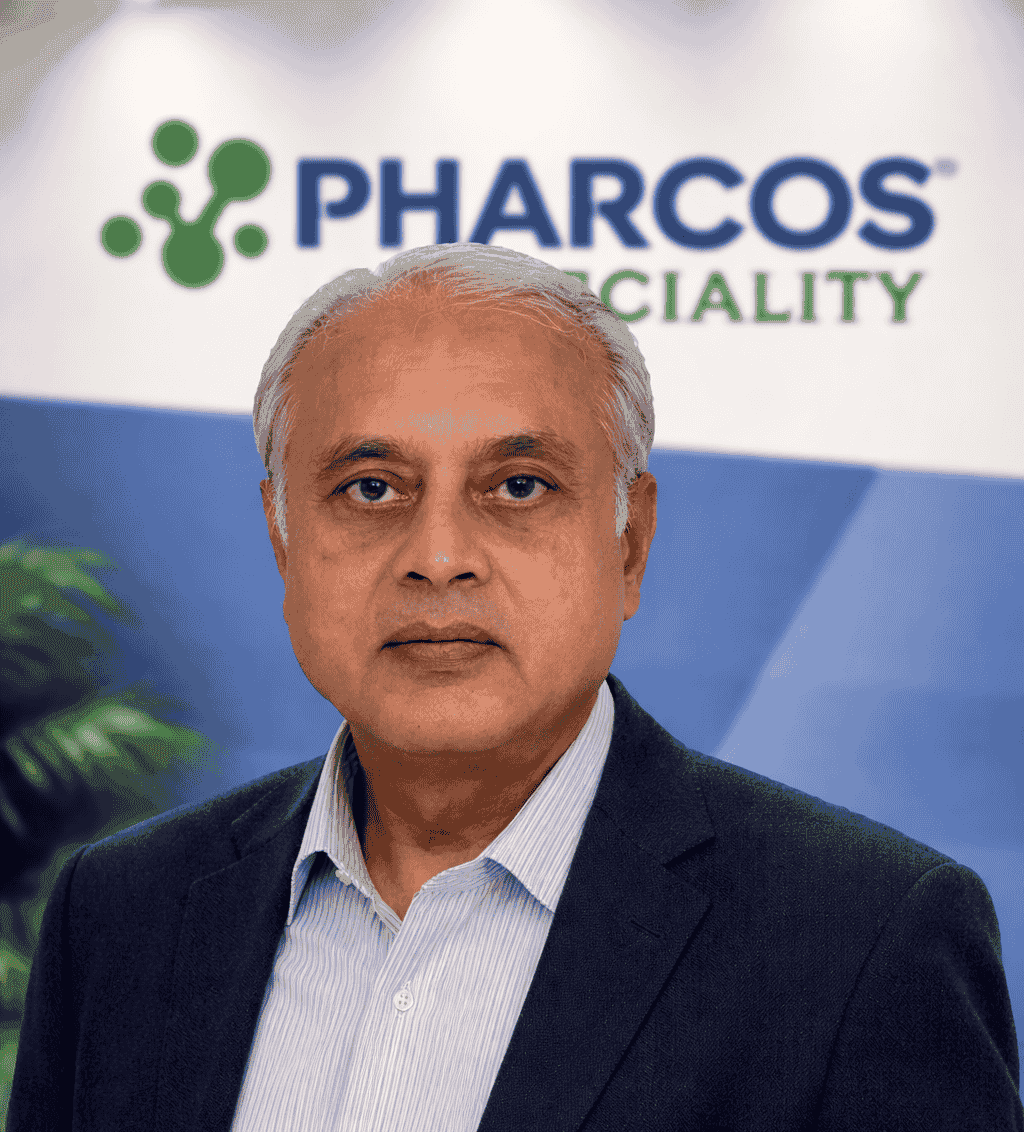
Dr. Avinash Dubey (R&D Head)
Dr. Avinash Dubey is a PhD in Organic Chemistry with a distinguished career spanning more than four decades. As the head of R&D at Pharcos, he focuses on the development of novel molecules for a wide array of industrial sectors, blending long-standing experience with a passion for innovation.
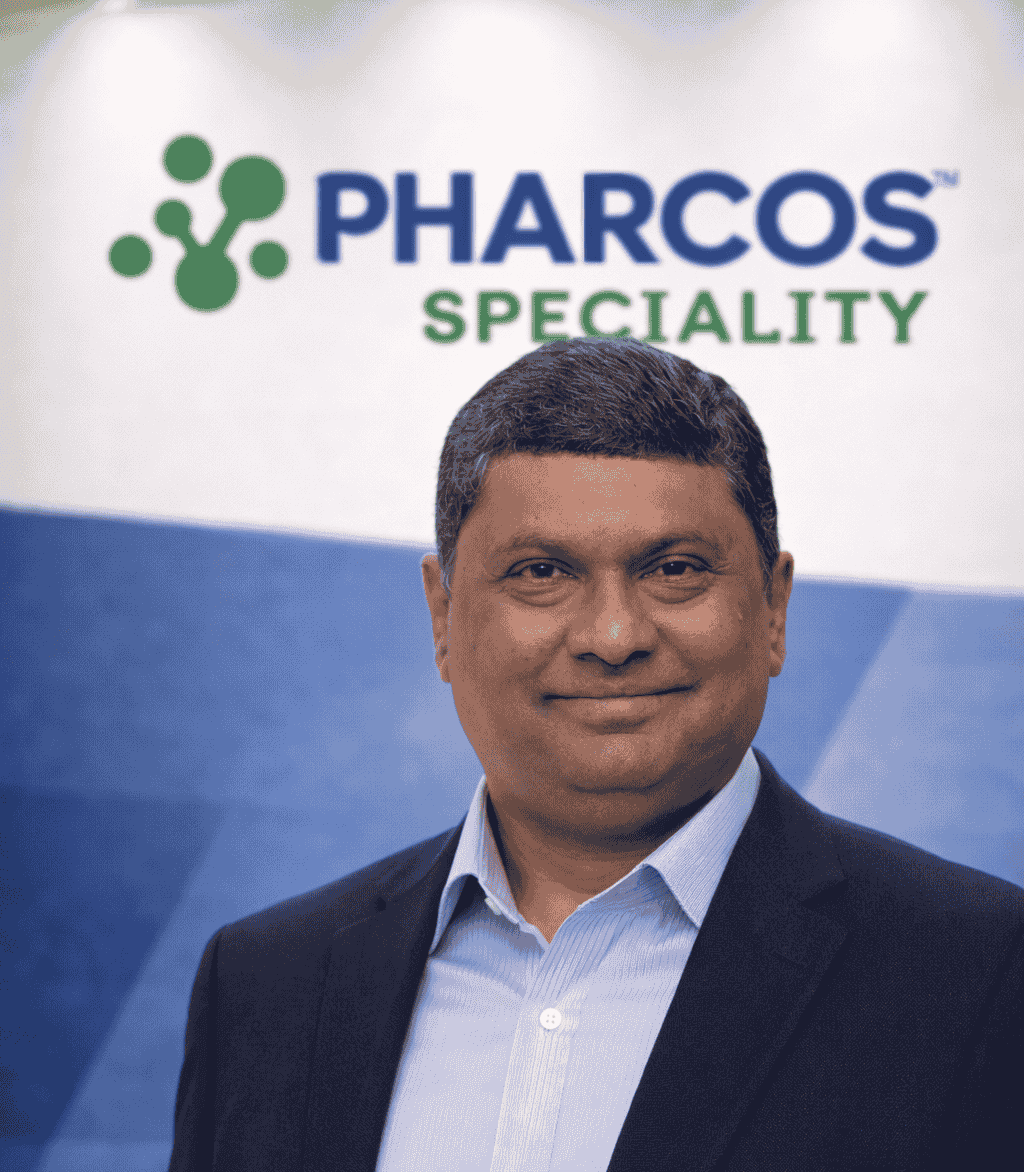
Mr. Ankit Shah (Managing Director)
Mr. Ankit Shah has led Pharcos Speciality for over three decades, establishing it as a pioneer in specialty chemicals. He currently directs the company’s strategic expansion into the APIs, Excipient and Speciality Surfactants markets, upholding a steadfast commitment to "Make in India" and world-class manufacturing quality and new product development.