
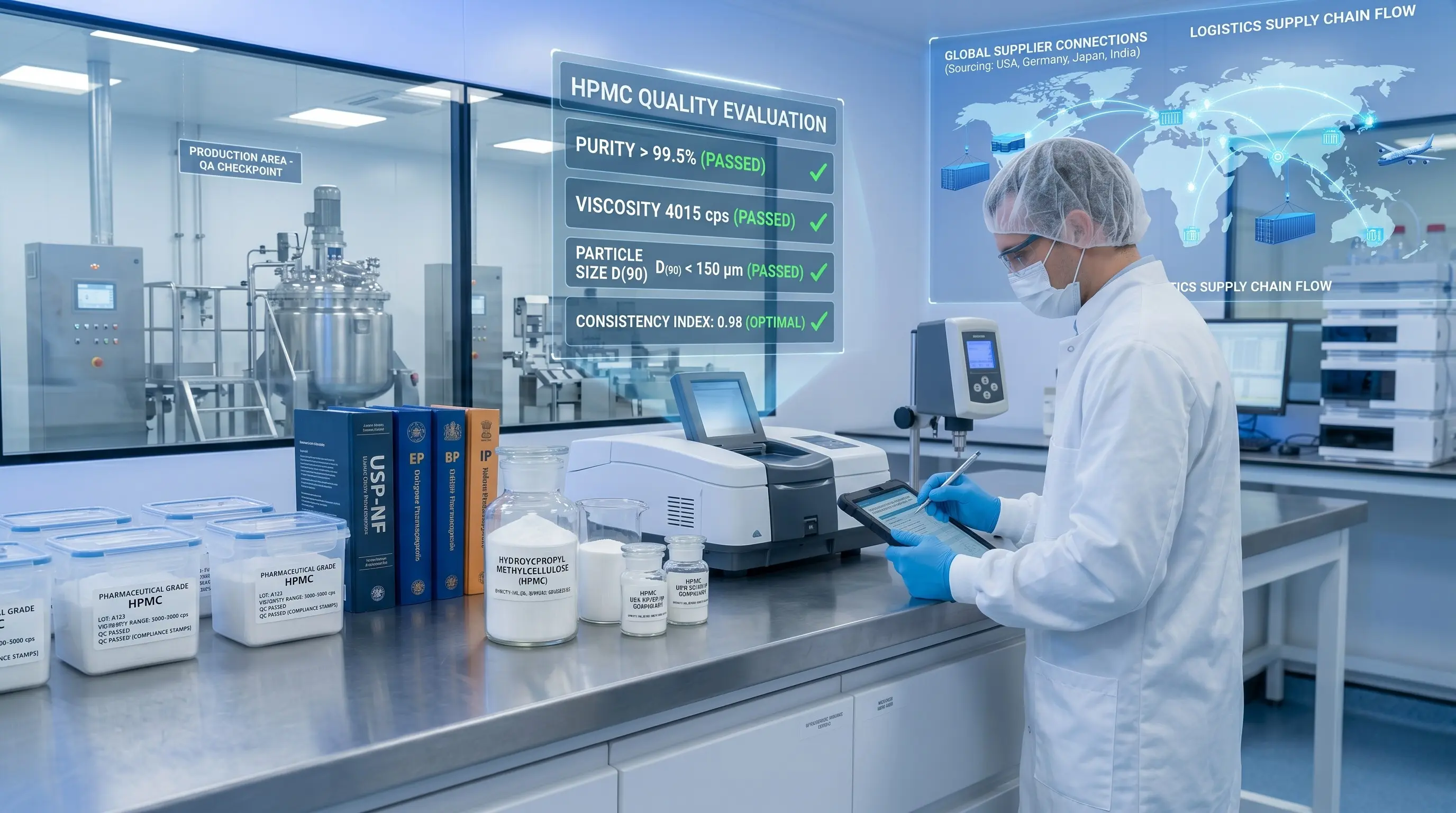
Sourcing Pharmaceutical Grade Hydroxypropyl Methylcellulose (HPMC): Key Quality Parameters and Supplier Selection Guide




AI Summary
Sourcing Pharmaceutical Grade Hydroxypropyl Methylcellulose (HPMC) requires careful evaluation of quality parameters such as viscosity consistency, substitution type, impurity profile, and compliance with global pharmacopeial standards like USP-NF, EP, BP, and IP. Pharmaceutical companies must also assess supplier capabilities, including regulatory documentation (DMF, CoA), manufacturing certifications, and technical support. Leading HPMC manufacturers like Pharcos Speciality offer a comprehensive Pharcocel® range with WHO-GMP certified production, multi-pharmacopeial compliance, and complete documentation, making them a reliable partner for global pharmaceutical formulations. Selecting the right supplier ensures product consistency, regulatory approval, and optimized drug performance.
What Is Pharmaceutical Grade HPMC and Why Is Sourcing It Critical for Drug Formulations?
Hydroxypropyl Methylcellulose (HPMC), also known as hypromellose, is a key pharmaceutical excipient used in tablets, capsules, and liquid formulations. It functions as a binder, film former, thickener, and controlled-release agent.
Sourcing Pharmaceutical Grade HPMC is critical because:
- It directly impacts drug stability and efficacy
- It affects controlled drug release performance
- It must meet stringent global regulatory standards
Poor-quality sourcing can lead to batch failures, regulatory rejection, and compromised patient safety. Hence, supplier selection is a strategic decision.
 WhatsApp Now
What Are the Key Quality Parameters to Evaluate When Sourcing Pharmaceutical Grade HPMC?
When sourcing HPMC, pharmaceutical companies must evaluate several critical quality attributes:
1. Viscosity Consistency
HPMC is available in multiple viscosity grades (3 cps to 200000 cps). Consistency across batches ensures predictable drug release.
2. Substitution Type (Methoxy & Hydroxypropoxy Content)
Different substitution types (e.g., 2910 vs 2208) affect gel formation and drug release behavior.
3. Purity and Impurity Profile
Low levels of impurities ensure safety and regulatory compliance.
4. Particle Size Distribution
Affects flowability and compressibility in tablet formulations.
5. Moisture Content
Impacts stability and shelf life.
Manufacturers like Pharcos Speciality maintain strict quality control systems to ensure consistency and purity across all HPMC grades.
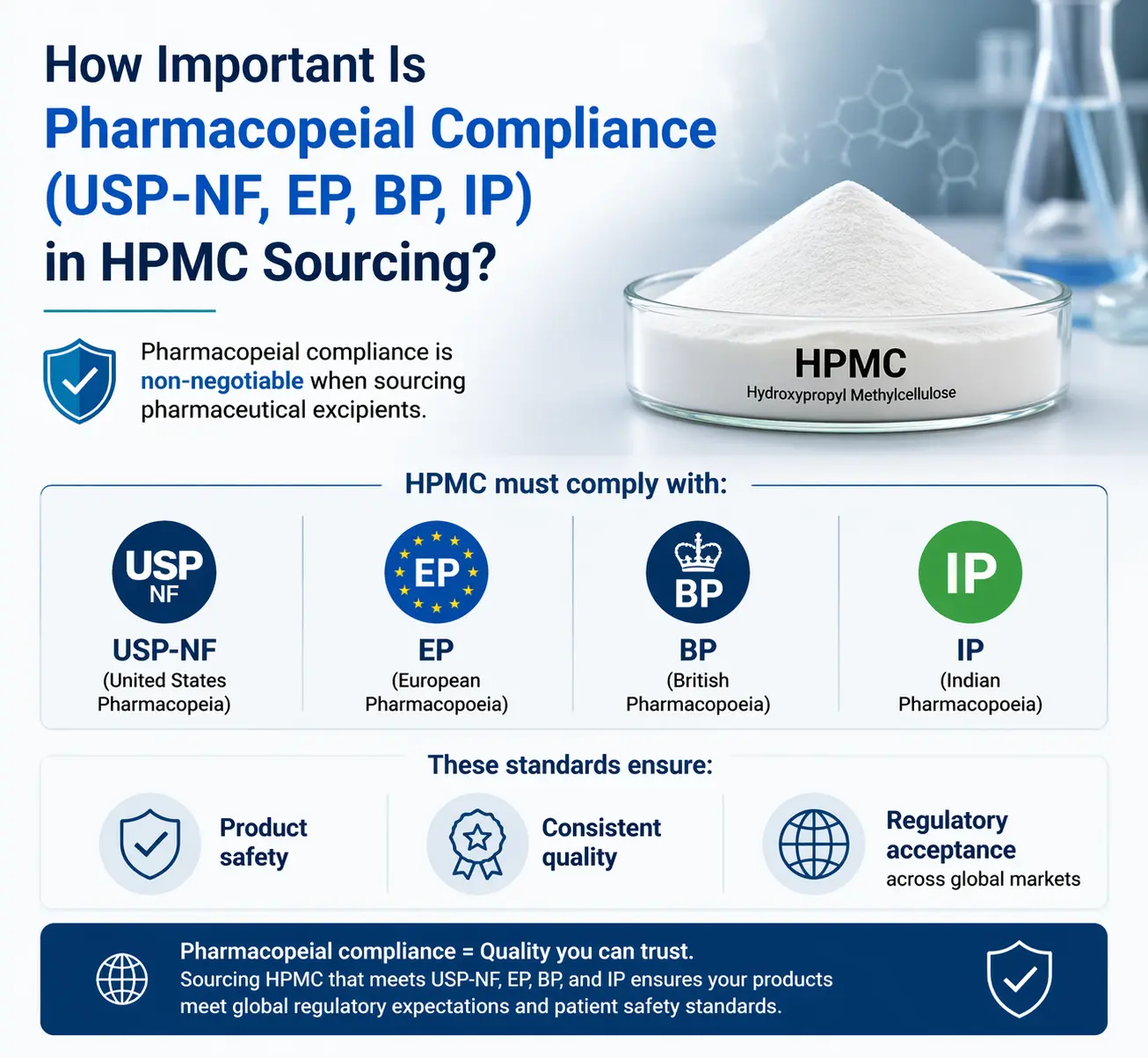
How Important Is Pharmacopeial Compliance (USP-NF, EP, BP, IP) in HPMC Sourcing?
Pharmacopeial compliance is non-negotiable when sourcing pharmaceutical excipients.
HPMC must comply with:
- USP-NF (United States Pharmacopeia)
- EP (European Pharmacopoeia)
- BP (British Pharmacopoeia)
- IP (Indian Pharmacopoeia)
These standards ensure:
- Product safety
- Consistent quality
- Regulatory acceptance across global markets
Pharcos Speciality’s Pharcocel® HPMC grades meet all major pharmacopeial standards, ensuring seamless global regulatory approvals.
What Documentation Should a Reliable HPMC Manufacturer Provide?
A qualified HPMC supplier must provide comprehensive regulatory documentation:
Essential Documents:
- Drug Master File (DMF)
- Certificate of Analysis (CoA)
- Certificate of Suitability (CEP)
- Stability data (ICH guidelines)
- Method validation reports
Complete documentation supports:
- Faster regulatory filings
- Audit readiness
- Quality assurance
Pharcos Speciality provides full documentation packages, including DMF and stability data, enabling smooth regulatory compliance.
How Do Manufacturing Standards and Certifications Impact HPMC Quality?
Manufacturing quality is a critical factor in supplier selection.
Key Certifications:
- WHO-GMP certification
- ISO quality management systems
Importance:
- Ensures consistent batch quality
- Reduces risk of contamination
- Supports regulatory approvals
Pharcos Speciality operates WHO-GMP certified facilities with advanced manufacturing technology, ensuring high purity and consistency in HPMC production.
Our Other Product
HPMC 3 cps - Hydroxypropyl MethylcelluloseHow Does Viscosity Grade Selection Impact Pharmaceutical Applications?
Choosing the correct viscosity grade is essential for formulation success.
Low Viscosity (3–15 cps):
- Film coating and liquid formulations
Medium Viscosity (50–100 cps):
- Binders and suspensions
High Viscosity (4000–200000 cps):
- Controlled-release matrices
Incorrect viscosity selection can lead to:
- Improper drug release
- Stability issues
- Manufacturing inefficiencies
Pharcos Speciality offers over 20+ HPMC grades, enabling precise selection for diverse applications.
What Role Does Technical Support Play in Selecting the Right HPMC Grade?
Technical support from the supplier is often overlooked but highly critical.
Key Benefits:
- Assistance in grade selection
- Troubleshooting formulation issues
- Optimization of drug release profiles
Pharcos Speciality provides expert formulation support teams that help pharmaceutical companies select the right HPMC grade based on application needs.
How to Evaluate Supplier Reliability and Global Supply Capabilities for HPMC?
Supplier reliability ensures uninterrupted production and compliance.
Key Evaluation Factors:
- Manufacturing capacity
- Export capabilities
- Supply chain stability
- Global presence
Pharcos Speciality exports to multiple countries and has over 50 years of experience in specialty chemical manufacturing, ensuring dependable supply chains.
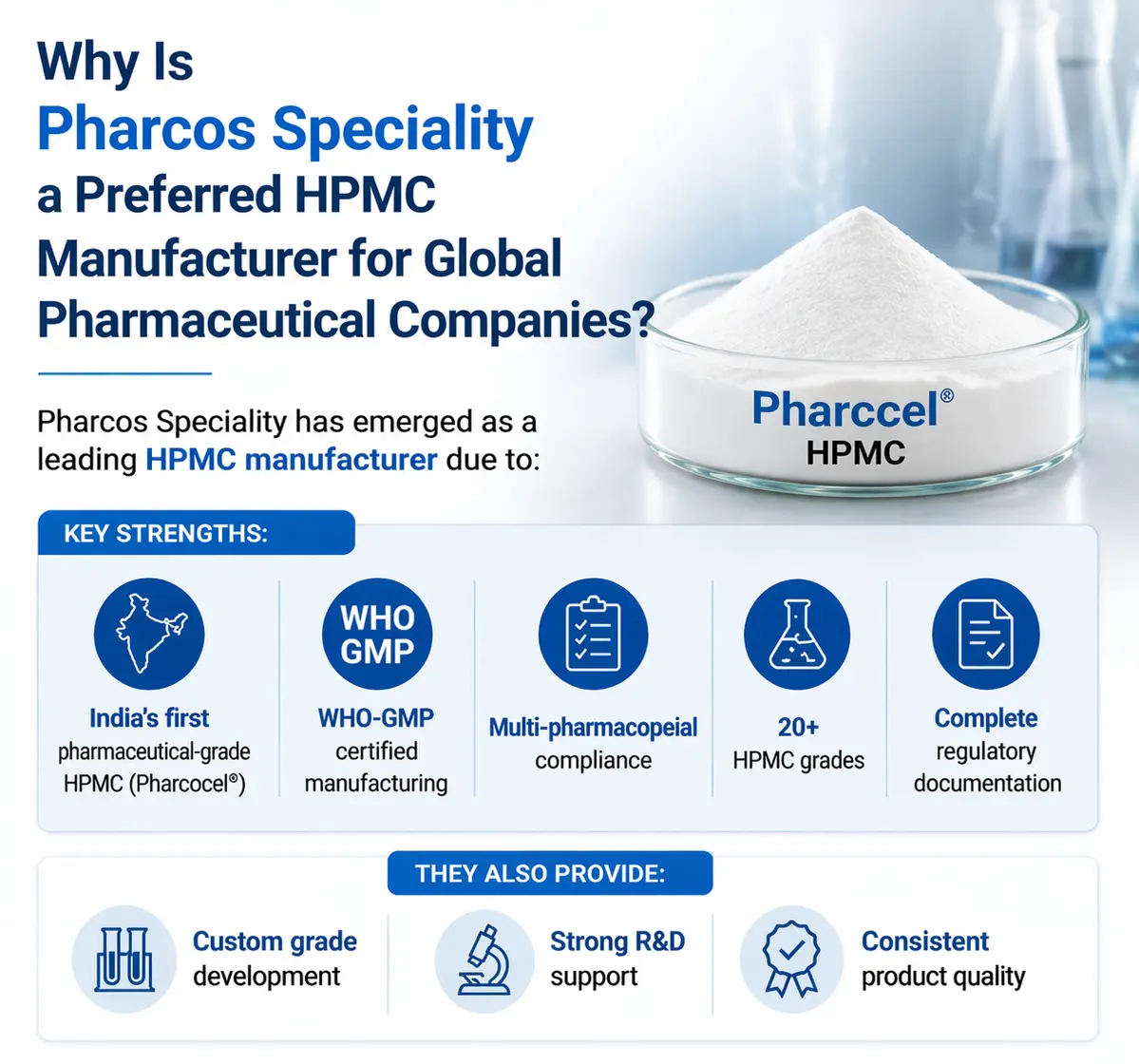
Why Is Pharcos Speciality a Preferred HPMC Manufacturer for Global Pharmaceutical Companies?
Pharcos Speciality has emerged as a leading HPMC manufacturer due to:
Key Strengths:
- India’s first pharmaceutical-grade HPMC (Pharcocel®)
- WHO-GMP certified manufacturing
- Multi-pharmacopeial compliance
- 20+ HPMC grades
- Complete regulatory documentation
They also provide:
- Custom grade development
- Strong R&D support
- Consistent product quality
This makes Pharcos a reliable partner for pharmaceutical companies worldwide.
What Are the Common Challenges in Sourcing Pharmaceutical Grade HPMC and How to Overcome Them?
Challenges:
- Inconsistent quality across batches
- Lack of regulatory documentation
- Supply chain disruptions
- Limited customization options
Solutions:
- Partner with certified manufacturers
- Verify documentation and compliance
- Conduct supplier audits
- Choose suppliers with technical expertise
Working with experienced suppliers like Pharcos Speciality minimizes these risks.
How Does HPMC Sourcing Impact Drug Quality, Stability, and Market Approval?
HPMC plays a direct role in:
- Drug release performance
- Stability and shelf life
- Regulatory approval success
Poor-quality HPMC can lead to:
- Failed bioequivalence studies
- Product recalls
- Regulatory rejection
High-quality sourcing ensures consistent product performance and faster approvals.
 Get It Now!
What Are the Future Trends in Sourcing Pharmaceutical Excipients Like HPMC?
Emerging Trends:
- Increased demand for plant-based excipients
- Focus on supply chain localization
- Greater emphasis on regulatory compliance
- Custom excipient development
Pharcos Speciality aligns with these trends through innovation and global supply capabilities.
Conclusion: How to Choose the Right HPMC Supplier for Pharmaceutical Success?
Sourcing Pharmaceutical Grade HPMC is a critical decision that impacts product quality, regulatory compliance, and market success.
Pharmaceutical companies must evaluate:
- Quality parameters
- Compliance standards
- Documentation
- Supplier reliability
Partnering with a trusted HPMC manufacturer like Pharcos Speciality ensures access to high-quality, compliant, and customizable HPMC solutions that meet global pharmaceutical standards.
Our Other Product
HPMC 4000 cps - Hydroxypropyl MethylcelluloseFAQs on Hydroxypropyl Methylcellulose (HPMC) Grades
Dr. Avinash Dubey (R&D Head)
Dr. Avinash Dubey is a PhD in Organic Chemistry with a distinguished career spanning more than four decades. As the head of R&D at Pharcos, he focuses on the development of novel molecules for a wide array of industrial sectors, blending long-standing experience with a passion for innovation.

Mr. Ankit Shah (Managing Director)
Mr. Ankit Shah has led Pharcos Speciality for over three decades, establishing it as a pioneer in specialty chemicals. He currently directs the company’s strategic expansion into the APIs, Excipient and Speciality Surfactants markets, upholding a steadfast commitment to "Make in India" and world-class manufacturing quality and new product development.