
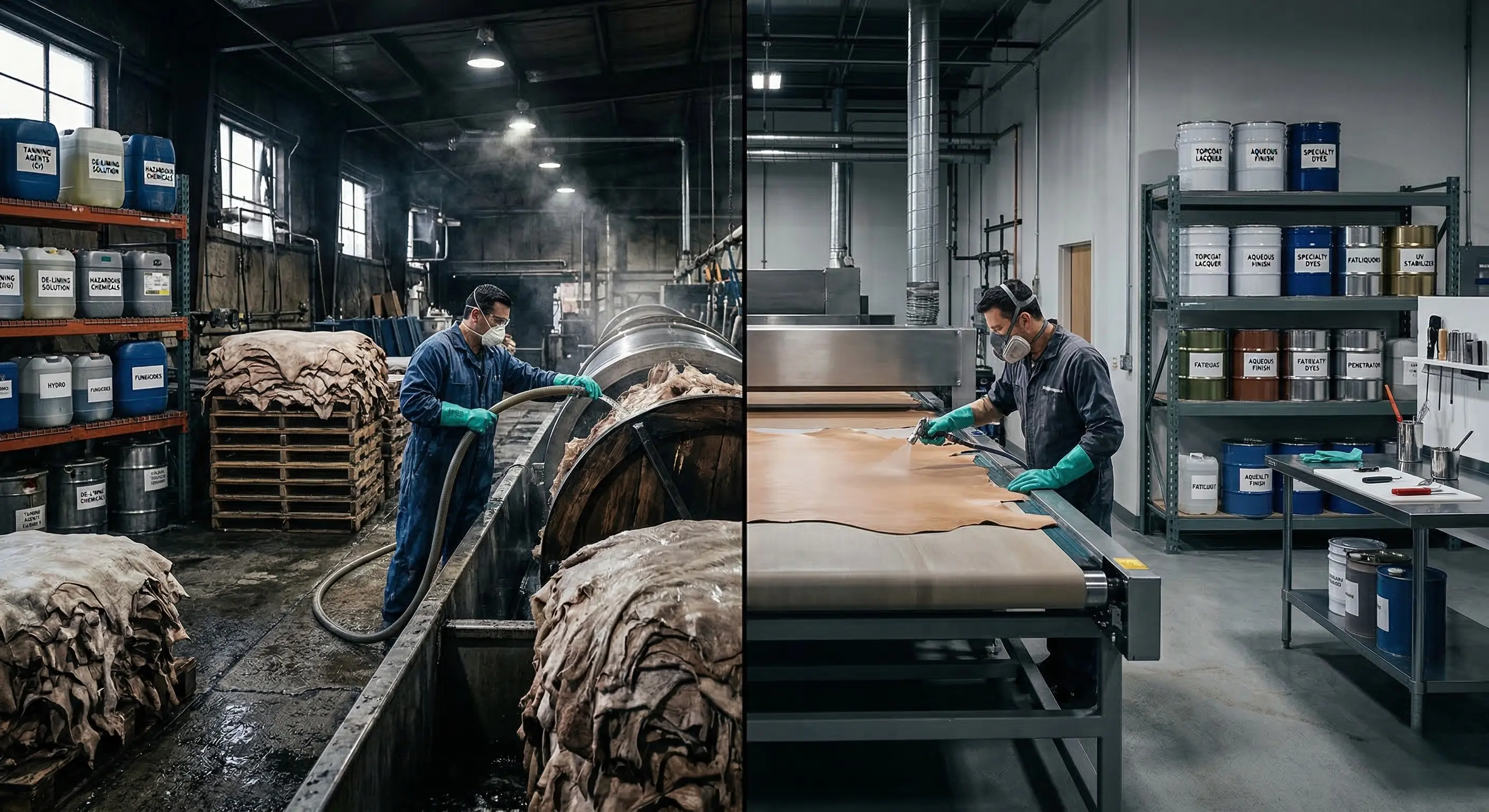
Key Specialty Chemicals Used in Leather Processing Industry




The leather processing industry has evolved significantly over the years, utilizing advanced chemical formulations to improve the quality and durability of leather products. Specialty chemicals are integral to modern leather processing, offering enhanced performance at various stages, from cleaning and degreasing to finishing and conditioning. These chemicals help achieve the desired texture, appearance, and strength, making them indispensable in producing high-quality leather suitable for a wide range of applications.
In this article, we will explore the key specialty chemicals used in modern leather processing, detailing their functions, applications, and benefits. We will focus on chemicals such as Ceteareth-20, PEG-35 Castor Oil, Tridecyl Alcohol Ethoxylate, and many others, and how they contribute to enhancing the quality of leather products.
 WhatsApp Now
1. Ceteareth-20
CAS: 68439-49-6
Ceteareth-20 is a non-ionic emulsifier commonly used in leather processing for oil-in-water emulsions. This emulsifier plays a crucial role in dye leveling, ensuring uniform dye application across the leather surface. It also aids in emulsion polymerization, which helps develop stable emulsions for leather coatings. Its ability to emulsify oils ensures that treatment agents are evenly distributed, improving the overall finish and quality of leather.
Applications in Leather Processing:
- Dye leveling to ensure uniform color distribution.
- Emulsion polymerization for leather coatings.
- General emulsification in leather treatment formulations.
2. PEG-35 Castor Oil
CAS: 61791-12-6
PEG-35 Castor Oil is a versatile solubilizer and emulsifier used in water-based leather treatments. It helps emulsify oils, which is essential in the fatliquoring process, where oils are introduced to the leather to enhance its softness and flexibility. This chemical is also used as a solubilizer for essential oils, making it easier to incorporate them into water-based formulations.
Applications in Leather Processing:
- Fatliquoring agent for improving leather softness.
- Emulsifiable concentrates for various leather treatments.
- Solubilizer for essential oils used in leather conditioning.
3. PEG-7 Hydrogenated Castor Oil
CAS: 61788-85-0
PEG-7 Hydrogenated Castor Oil is a low HLB emulsifier that is especially useful in creating water-in-oil emulsions. In leather processing, it is widely used in the fatliquoring process, where oils are added to the leather to improve its flexibility and softness. This chemical also functions as a co-emulsifier, helping create stable emulsions when mixed with other treatment agents.
Applications in Leather Processing:
- Water-in-oil emulsions for leather fatliquoring.
- Co-emulsifier for creating stable emulsions in leather treatments.
- Lubricant for improving leather texture.
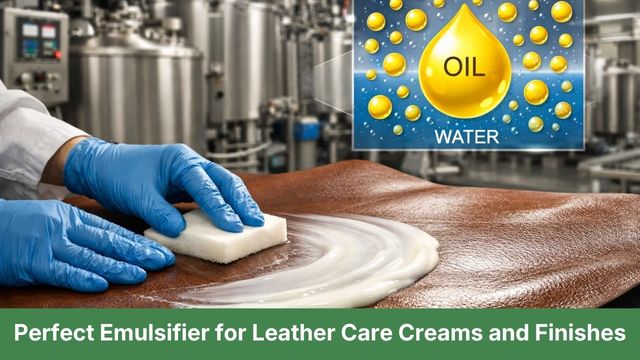
4. Glyceryl Monostearate (Self Emulsifying)
CAS: 11099-07-3
Glyceryl Monostearate (Self Emulsifying) is used as a self-emulsifying emulsifier that creates stable oil-in-water emulsions. It is an essential ingredient in leather finishing processes, where it helps improve the texture and appearance of leather. This chemical is used to stabilize emulsions, making it easier to apply lubricants and treatments evenly across the leather surface.
Applications in Leather Processing:
- Creating stable emulsions for leather treatments.
- Enhancing texture and smoothness in leather finishes.
- Used in cream-based and lotion formulations for leather care.
5. Laureth-4
CAS: 68439-50-9
Laureth-4 is an effective emulsifier used for industrial cleaning and leather processing. It helps emulsify oil-based contaminants, facilitating the removal of dirt, grease, and other impurities from leather surfaces. Additionally, it enhances dye penetration during the coloring process, ensuring uniform coloration and improving the overall quality of the leather.
Applications in Leather Processing:
- Industrial cleaners for leather preparation.
- Enhancing dye penetration during coloring.
- Removing oil-based residues from leather surfaces.
Our Other Product
Pharmaceutical Grade HPMC6. Laureth-9
CAS: 9002-92-0
Laureth-9 is a mid-range HLB surfactant used in cleaning and wetting applications in leather processing. It acts as a detergent and wetting agent, ensuring that leather is thoroughly prepared for further treatments. This chemical improves the penetration of cleaning agents, ensuring that contaminants are effectively removed from the leather surface.
Applications in Leather Processing:
- Detergent for cleaning leather surfaces.
- Wetting agent for better treatment penetration.
- Used in pre-tanning and dyeing stages.
7. PEG-400 Monostearate
CAS: 9004-99-3
PEG-400 Monostearate is a non-ionic emulsifier and softener that enhances the flexibility and moisture retention of leather. It helps emulsify various treatment agents, ensuring that they are evenly distributed across the leather surface. This chemical is particularly useful in leather conditioning and lubrication, improving the overall softness and durability of leather products.
Applications in Leather Processing:
- Softener for enhancing leather texture.
- Emulsifier for lubrication treatments.
- Moisturizing agent for improving leather flexibility.
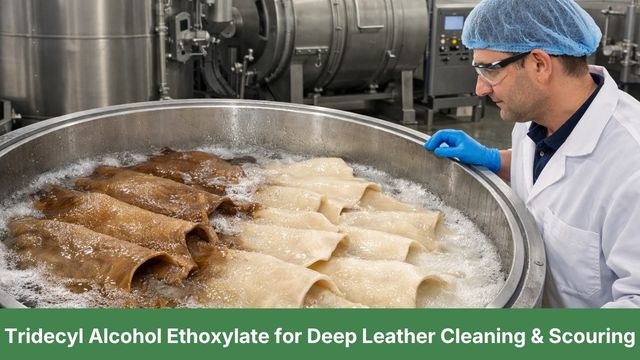
8. Tridecyl Alcohol Ethoxylate
CAS: 24938-91-8
Tridecyl Alcohol Ethoxylate is a fast-wetting branched alcohol ethoxylate used primarily for industrial cleaning and scouring leather. It aids in degreasing leather, ensuring that oils and other contaminants are effectively removed. This chemical also improves the penetration of detergents and other treatment agents into the leather surface, making it ready for subsequent processing steps.
Applications in Leather Processing:
- Degreasing agent for leather.
- Scouring agent for thorough leather cleaning.
- Used in pre-tanning and finishing stages.
9. Decyl Alcohol Ethoxylates
Function: Rapid wetting agents with superior penetrating properties.
Decyl Alcohol Ethoxylates are wetting agents and scouring agents that help degrease leather by removing oils and impurities. They facilitate the penetration of cleaning agents, ensuring that leather is thoroughly cleaned before further treatments. This chemical is also effective in textile scouring, where it aids in removing contaminants from fabric and leather surfaces.
Applications in Leather Processing:
- Leather degreasing to remove oils and impurities.
- Wetting agent for even distribution of treatments.
- Used in textile scouring for cleaning leather before finishing.
10. Nonyl Phenol Ethoxylates
Function: Cost-effective, high-performance surfactants.
Nonyl Phenol Ethoxylates are high-performance surfactants used in heavy-duty industrial applications. These chemicals are effective in cleaning, wetting, and emulsion polymerization processes in leather processing. They help emulsify oils and dirt, ensuring that leather is thoroughly cleaned and ready for further treatments such as fatliquoring, dyeing, and finishing.
Applications in Leather Processing:
- Heavy-duty cleaning and degreasing.
- Emulsion polymerization for leather coatings.
- Industrial detergent formulations.
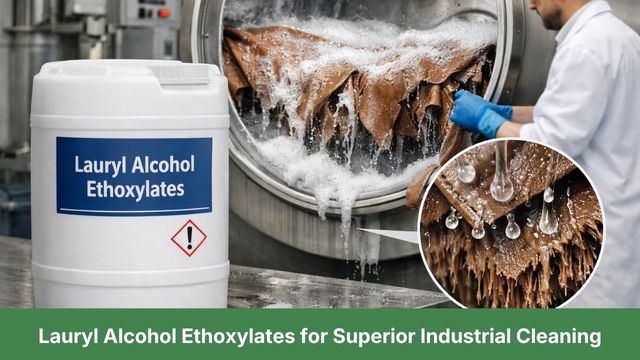
11. Lauryl Alcohol Ethoxylates
Function: Premium wetting agents and detergents derived from lauryl alcohol.
Lauryl Alcohol Ethoxylates are high-quality wetting agents derived from lauryl alcohol. They offer rapid penetration and effective soil removal, making them ideal for leather degreasing and industrial cleaning. These agents help remove oils, grease, and contaminants from leather surfaces, preparing the leather for subsequent processing stages.
Applications in Leather Processing:
- Leather degreasing and cleaning.
- Wetting agent for improved penetration of treatments.
- High-foaming detergent for industrial applications.
12. Tridecyl Alcohol Ethoxylate
Function: Branched alcohol ethoxylates offering superior wetting speed.
Tridecyl Alcohol Ethoxylate is used as a wetting agent and scouring agent in leather processing. It is particularly useful for industrial degreasing and textile scouring, as it enhances the penetration of detergents into the leather. This chemical ensures thorough cleaning and preparation of leather before further treatments.
Applications in Leather Processing:
- Industrial degreasing and cleaning.
- Textile scouring for leather.
- Rapid wetting for agrochemicals and leather treatments.
Our Other Product
Pharmaceutical Grade Polyethylene Glycol (PEG)13. PEG Castor Oil (Castor Oil Ethoxylates)
Function: Versatile oil-derived surfactants.
PEG Castor Oil (Castor Oil Ethoxylates) is an effective emulsifier for emulsifying triglycerides and oils used in leather fatliquoring. It is an important ingredient in textile lubricants and is widely used in pesticide emulsifiable concentrates and leather treatments. This chemical ensures the even distribution of oils and lubricants, improving leather texture and softness.
Applications in Leather Processing:
- Leather fatliquoring for improved softness.
- Emulsifier for textile lubricants and conditioners.
- Pesticide emulsifiable concentrates (EC) for leather treatment.
 Get It Now!
Conclusion
Specialty chemicals are critical to modern leather processing, offering a range of solutions that improve the texture, flexibility, durability, and overall quality of leather products. Chemicals such as Ceteareth-20, PEG-35 Castor Oil, Tridecyl Alcohol Ethoxylate, and PEG Castor Oil play essential roles in various stages of leather production, from cleaning and degreasing to finishing and conditioning. These chemicals ensure the efficient processing of leather, allowing manufacturers to produce high-quality leather products that meet the demands of various industries, including fashion, automotive, and upholstery.
FAQs on Specialty Chemicals in Leather Processing Industry

Dr. Avinash Dubey (R&D Head)
Dr. Avinash Dubey is a PhD in Organic Chemistry with a distinguished career spanning more than four decades. As the head of R&D at Pharcos, he focuses on the development of novel molecules for a wide array of industrial sectors, blending long-standing experience with a passion for innovation.

Mr. Ankit Shah (Managing Director)
Mr. Ankit Shah has led Pharcos Speciality for over three decades, establishing it as a pioneer in specialty chemicals. He currently directs the company’s strategic expansion into the APIs, Excipient and Speciality Surfactants markets, upholding a steadfast commitment to "Make in India" and world-class manufacturing quality and new product development.