
Binders and Processing Aids for Ceramic Tiles and Flooring: A Complete Guide




AI Summary
Ceramic tile manufacturing is a multi stage process, moving from spray dried powder through pressing and glazing to high temperature firing, and specialty processing chemicals play a defined role at each stage. Water soluble polymer binders improve the flowability of spray dried granules and provide the green strength needed to handle pressed tiles safely before firing. Internal lubricants act as mold release agents during pressing, reducing surface defects and improving tile quality. Glaze dispersants keep glaze components evenly suspended, supporting consistent flow, leveling and fired appearance. This guide explains how each of these processing aids functions across tile body binding, mold release and glaze preparation, and outlines how Pharcos Speciality Ltd supports ceramic tile and flooring manufacturers with binders and processing aids manufactured in India.
 WhatsApp Now
Why Processing Aids Matter in Ceramic Tile Manufacturing
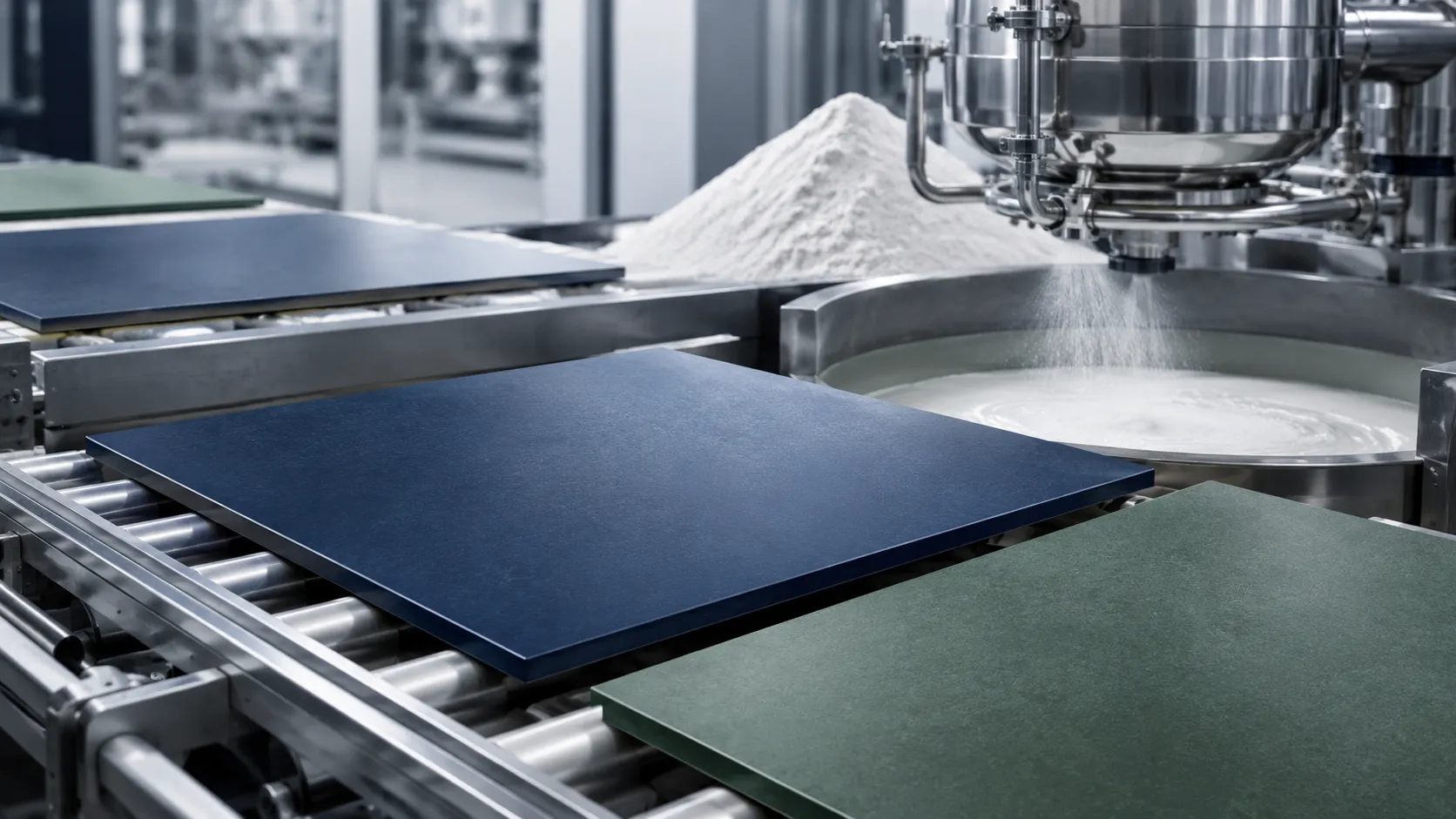
Ceramic tile production starts with a raw material slurry that is spray dried into fine granules, pressed into a tile shape, dried, glazed and finally fired at high temperature. At nearly every one of these stages, the physical behavior of the material in process, whether it is powder flowability, green tile strength, mold release or glaze suspension, is shaped by specialty processing chemicals rather than the raw ceramic material alone. Water soluble polymers and processing aids improve workability during pressing, protect tiles from handling damage before firing, and support the smooth, even glaze application that defines a tile's final appearance.
Polymer Binders for Tile Body Preparation
Before a ceramic tile can be pressed, the raw material slurry is spray dried into granules, and a binder is essential to holding those granules together through handling and pressing.
Key roles of tile body binders:
- Improved granule flowability: polyethylene glycol based binders improve how freely spray dried granules flow during handling and feeding into the pressing equipment, supporting more consistent, defect free tile pressing.
- Green strength: the binder provides the structural cohesion, known as green strength, that allows a pressed but unfired tile to withstand handling, transport and further processing without cracking or crumbling.
- Pressing characteristics: an appropriately selected binder supports even density distribution during pressing, contributing to more uniform tile dimensions and reduced pressing defects.
- Clean burnout: a well selected polymer binder burns out cleanly during the firing process, leaving no residual ash or discoloration in the finished tile.
Higher molecular weight polyethylene glycol grades are typically used at approximately 0.3 to 0.8 percent of dry tile body weight, added during slurry preparation, with larger format tiles requiring greater green strength often calling for higher molecular weight binder grades.
Mold Release Agents for Pressing Operations
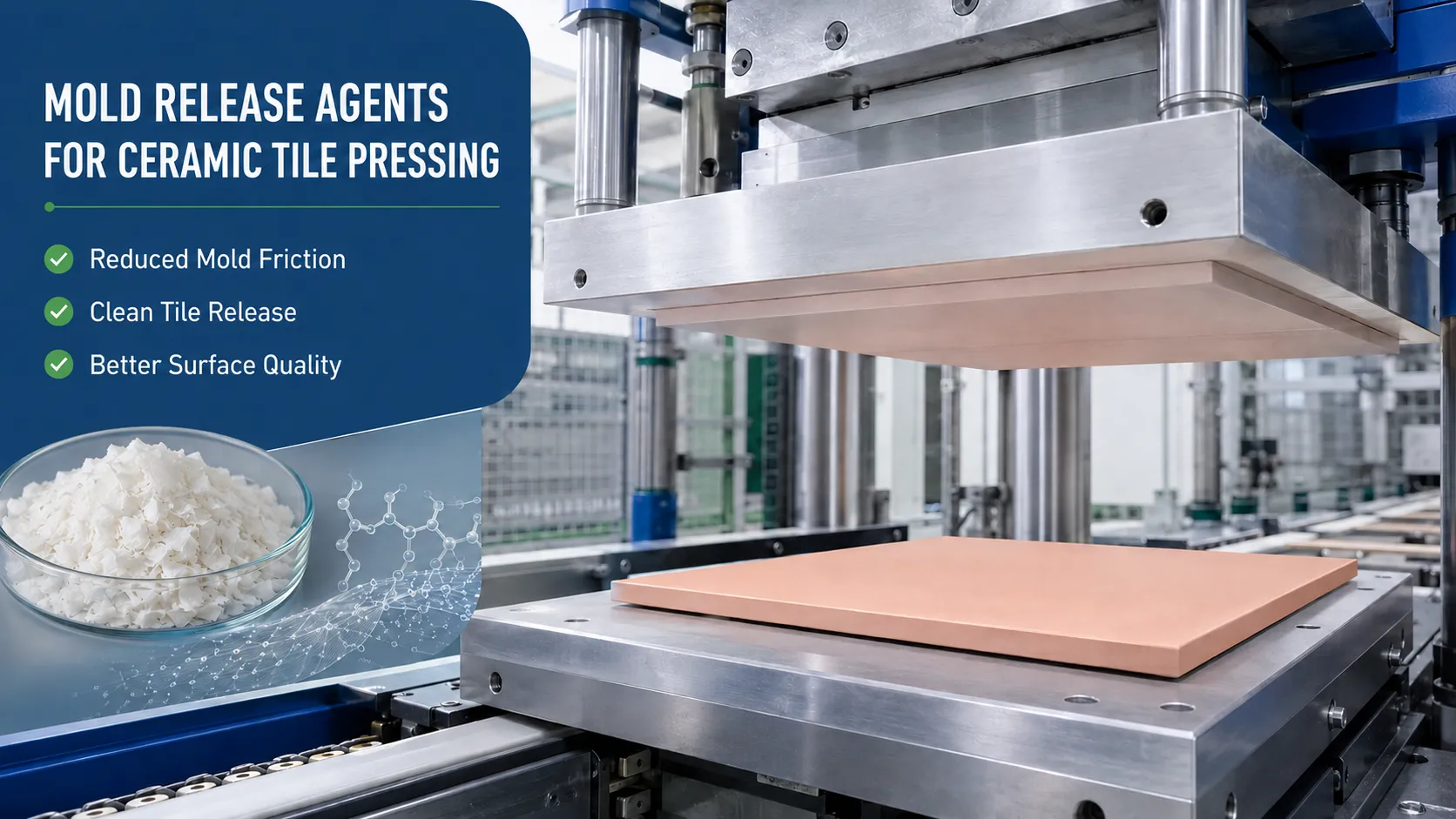
During the pressing stage, ceramic tile bodies must release cleanly from the pressing mold without sticking or surface damage.
- Internal lubrication: glyceryl monostearate functions as an internal lubricant and mold release agent during ceramic tile pressing, reducing friction between the tile body and the mold surface.
- Defect reduction: effective mold release directly reduces surface defects such as sticking marks or surface tearing that can occur when a tile does not release cleanly from the press mold.
- Surface quality: consistent mold release performance supports improved overall tile surface quality entering the subsequent glazing and firing stages.
Dispersants for Glaze Formulation
Glaze application is what gives a finished ceramic tile its surface appearance, gloss and color uniformity, and depends on stable, well dispersed glaze components.
- Castor oil ethoxylates: used at high mole ethoxylation levels, castor oil ethoxylates provide stable dispersion of glaze components, supporting consistent glaze consistency throughout preparation and application.
- Flow and leveling: a well dispersed glaze flows and levels evenly across the tile surface during application, which is essential for achieving a smooth, uniform fired appearance.
- Consistency across batches: stable dispersion also supports more consistent glaze performance from batch to batch, reducing visible variation across tile production runs.
Our Other Product
Polyethylene Glycol 10000From Green Strength to Fired Quality: How Binders Affect the Whole Process
The processing aids used earlier in tile manufacturing continue to influence outcomes all the way through firing.
- Handling protection: adequate green strength, supported by proper binder selection and dosage, protects pressed tiles from damage during the drying and pre firing handling stages.
- Firing consistency: binders that burn out cleanly avoid introducing defects or discoloration during the firing process, supporting consistent fired tile quality.
- Surface quality: the combination of clean mold release during pressing and stable glaze dispersion during glazing directly shapes the final tile's surface appearance and gloss uniformity.
- Cost and defect management: correctly dosed binders and processing aids help minimize both raw material cost and the rate of pressing or firing defects, supporting overall manufacturing efficiency.
Selecting Binder Grade by Tile Format and Application
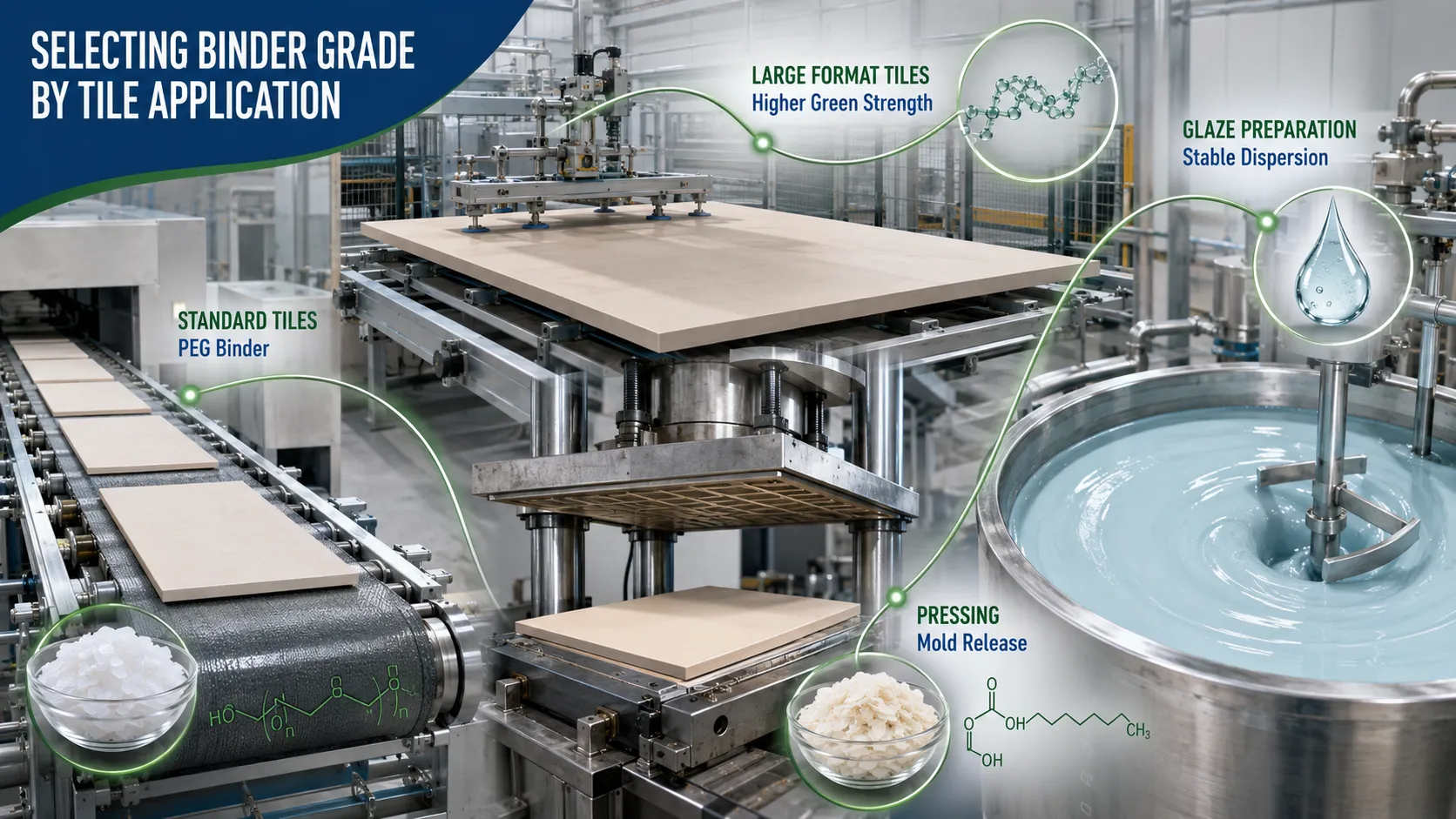
| Tile Format or Requirement | Recommended Approach |
|---|---|
| Standard Format Tiles | Standard molecular weight polyethylene glycol binder at typical dosage range |
| Larger Format Tiles | Higher molecular weight polyethylene glycol grades for greater green strength |
| Pressing Operations | Glyceryl monostearate as internal lubricant and mold release agent |
| Glaze Preparation | High mole castor oil ethoxylates for stable component dispersion |
Why Choose Pharcos Speciality for Ceramics and Flooring Processing Aids
Pharcos Speciality Ltd supplies water soluble polymers and processing aids for the ceramics and flooring industry, supporting tile body binding, mold release and glaze preparation.
What Pharcos offers ceramic tile and flooring manufacturers:
- Proven binder systems: Polyethylene Glycol grades, including PEG 4000 in flake form as a standard recommendation for ceramic tile body binding, along with higher molecular weight grades such as PEG 6000 to PEG 8000 for larger format tiles requiring greater green strength, all offering excellent green strength with clean burnout during firing.
- Mold release solutions: Glyceryl Monostearate serving as an internal lubricant and mold release agent that reduces pressing defects and improves tile surface quality.
- Glaze dispersion: high mole Castor Oil Ethoxylate grades providing stable dispersion of glaze components with good flow and leveling properties.
- Processing improvement support: technical guidance to reduce pressing defects and improve surface quality during the forming stage.
- Cost optimization: assistance optimizing binder and lubricant usage levels to help manufacturers reduce costs while maintaining consistent quality standards.
Ceramic tile and flooring manufacturers evaluating a binder or processing aid supplier in India can contact the Pharcos technical team to discuss tile format and process requirements, request samples, and review dosage guidance for tile body binding, mold release or glaze applications.
 Call Us Now!
Conclusion
Ceramic tile quality is shaped long before a tile reaches the kiln, starting with how well spray dried granules flow and press, continuing through how cleanly a tile releases from its mold, and finishing with how evenly glaze components disperse and level across the surface. Polymer binders, internal lubricants and glaze dispersants each address a distinct part of this process, and together they directly determine green strength, pressing defect rates, and final fired surface quality. As ceramic tile manufacturers work to balance cost, quality and larger tile formats, correctly selected and dosed processing aids remain one of the most direct levers available for improving both efficiency and finished product quality.
Pharcos Speciality Ltd supplies binders, mold release lubricants and glaze dispersants manufactured in India for the ceramics and flooring industry, backed by technical support to help optimize processing aid selection and dosage for specific tile formats and production requirements.
Our Other Product
Polyethylene Glycol 20000Frequently Asked Questions

Dr. Avinash Dubey (R&D Head)
Dr. Avinash Dubey is a PhD in Organic Chemistry with a distinguished career spanning more than four decades. As the head of R&D at Pharcos, he focuses on the development of novel molecules for a wide array of industrial sectors, blending long-standing experience with a passion for innovation.

Mr. Ankit Shah (Managing Director)
Mr. Ankit Shah has led Pharcos Speciality for over three decades, establishing it as a pioneer in specialty chemicals. He currently directs the company’s strategic expansion into the APIs, Excipient and Speciality Surfactants markets, upholding a steadfast commitment to "Make in India" and world-class manufacturing quality and new product development.