
Polymers and Surfactants for Adhesive Manufacturing: Bonding Solutions



AI Summary
Adhesive manufacturing spans a wide range of chemistries, from water based emulsion polymers used in packaging and woodworking adhesives to pressure sensitive adhesives used in tapes and labels, and each category depends on specific surfactant and polymer additives to achieve its target bonding performance. Emulsifiers control particle size and stability during the emulsion polymerization of adhesive base polymers such as polyvinyl acetate, ethylene vinyl acetate and acrylics. Plasticizers improve the flexibility and cold temperature performance of finished adhesive films. Crosslinking additives improve shear strength and thermal stability in polyurethane based pressure sensitive adhesive systems. This guide explains how these additive categories function across adhesive emulsion polymerization, plasticization and pressure sensitive adhesive formulation, and outlines how Pharcos Speciality Ltd supports adhesive manufacturers with polymers and surfactants manufactured in India.
Why Additive Chemistry Shapes Adhesive Performance
An adhesive's performance, its bond strength, flexibility, open time, temperature resistance and shelf stability, is determined as much by its supporting additive chemistry as by its base polymer. Water based adhesives built through emulsion polymerization depend on surfactants to control how the polymer forms and remains stable in the finished product. Plasticizers determine whether a dried adhesive film stays flexible or becomes brittle, particularly in cold conditions. Crosslinking additives shape the internal molecular structure of certain adhesive systems, directly influencing shear strength and heat resistance. Understanding how each additive category functions helps adhesive formulators build products suited to their specific bonding application, from packaging and woodworking to construction and pressure sensitive tape and label products.
Emulsifiers for Adhesive Polymer Emulsion Polymerization
Many of the most widely used adhesive base polymers, including polyvinyl acetate, ethylene vinyl acetate and acrylics, are manufactured through emulsion polymerization, a process that depends entirely on surfactant chemistry to control particle formation.
Key emulsifier chemistries used in adhesive polymerization:
- Ceteareth ethoxylates: widely used as primary emulsifiers controlling latex particle size and distribution during adhesive polymer synthesis, particularly in vinyl acetate monomer polymerization.
- Octyl phenol ethoxylates: also used as primary emulsifiers in adhesive emulsion polymerization, often combined with other emulsifier chemistries to achieve a narrower, more controlled particle size distribution.
- Particle size and adhesive performance: the particle size distribution established during polymerization directly influences the finished adhesive's film formation, tack and bonding performance, making emulsifier selection a foundational formulation decision rather than a minor process detail.
Plasticizers for PVA and EVA Based Adhesives
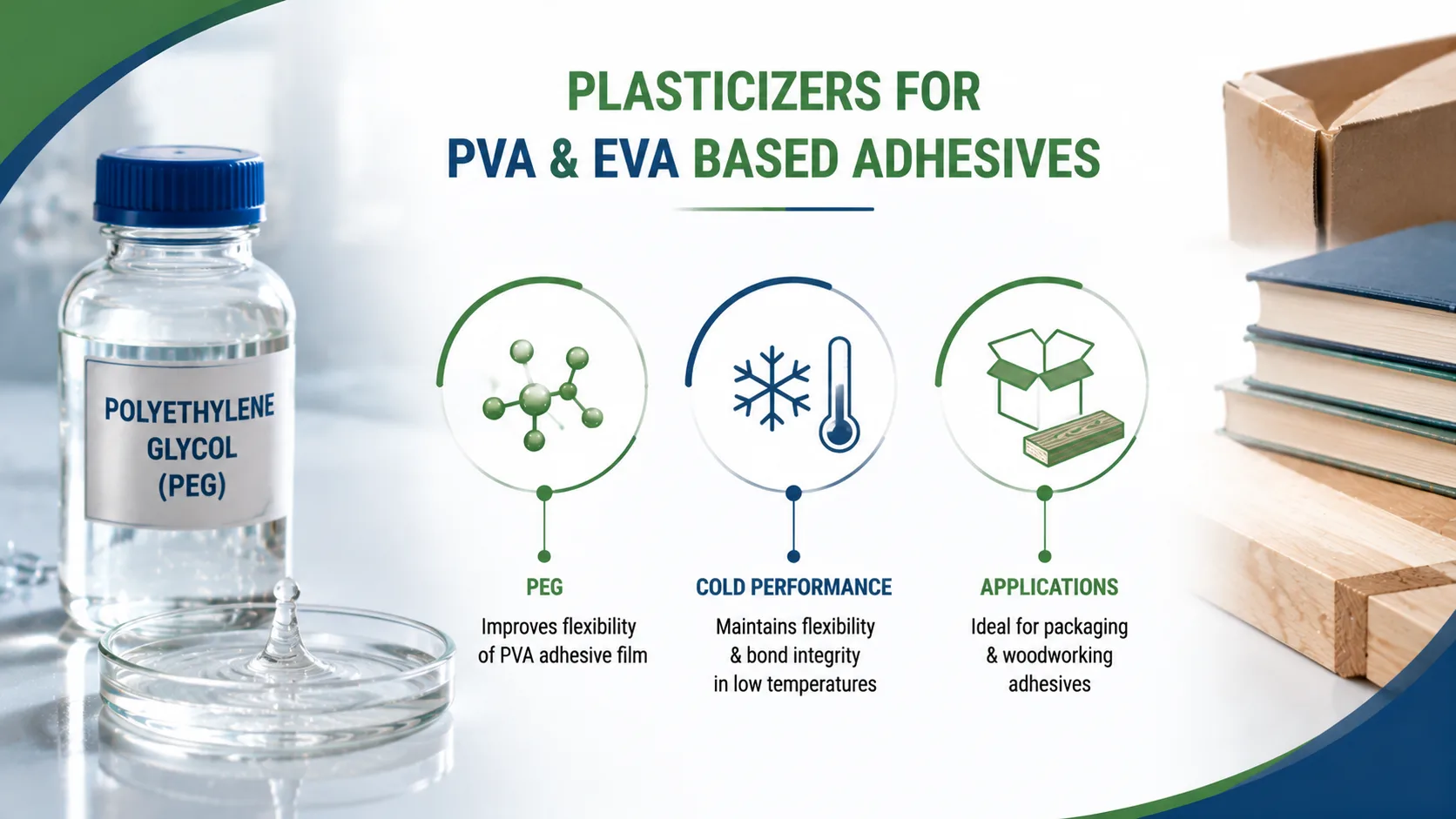
Polyvinyl acetate and ethylene vinyl acetate based adhesives, widely used in packaging, bookbinding and woodworking applications, rely on plasticizers to achieve the flexibility required for their intended use.
- Polyethylene glycol as plasticizer: polyethylene glycol is commonly used as a plasticizer in PVA based adhesives, improving the flexibility of the dried adhesive film.
- Cold temperature performance: proper plasticization is particularly important for maintaining adhesive flexibility and bond integrity under cold temperature conditions, where an under plasticized adhesive film can become brittle and prone to cracking.
- Application relevance: this flexibility improvement is especially important for packaging and woodworking adhesives, which frequently experience temperature variation during storage, transport and end use.
Crosslinking Additives for Pressure Sensitive Adhesives
Pressure sensitive adhesives, used in tapes, labels and related products, present a distinct formulation challenge: the adhesive must bond on contact under light pressure while still delivering adequate shear strength and thermal stability over time.
- Glycerin ethoxylates as crosslinkers: used in polyurethane based pressure sensitive adhesive systems, glycerin ethoxylates act as crosslinkers that improve the internal structure of the adhesive polymer.
- Shear strength improvement: proper crosslinking directly improves an adhesive's resistance to slow, sustained shear forces, an important performance attribute for tape and label applications that must hold under prolonged load.
- Thermal stability: crosslinking also contributes to improved thermal stability, helping the adhesive maintain its bonding performance across a wider temperature range.
Our Other Product
Nonyl Phenol EthoxylatesHow These Additives Affect Bonding Strength and Flexibility
The cumulative impact of emulsifier, plasticizer and crosslinker selection is expressed directly in the finished adhesive's real world performance.
- Bond strength: particle size distribution established during emulsion polymerization directly affects how well the adhesive film forms and bonds to the substrate.
- Flexibility: plasticizer selection and concentration determine whether the dried adhesive film remains flexible enough to accommodate substrate movement without cracking.
- Open time and substrate wetting: certain additive chemistries also influence how long an adhesive remains workable after application and how well it wets and penetrates the substrate surface.
- Long term durability: crosslinking chemistry in pressure sensitive systems, along with proper plasticization in PVA and EVA systems, both contribute to how well an adhesive bond holds up over the product's service life.
Selecting Additives by Adhesive System
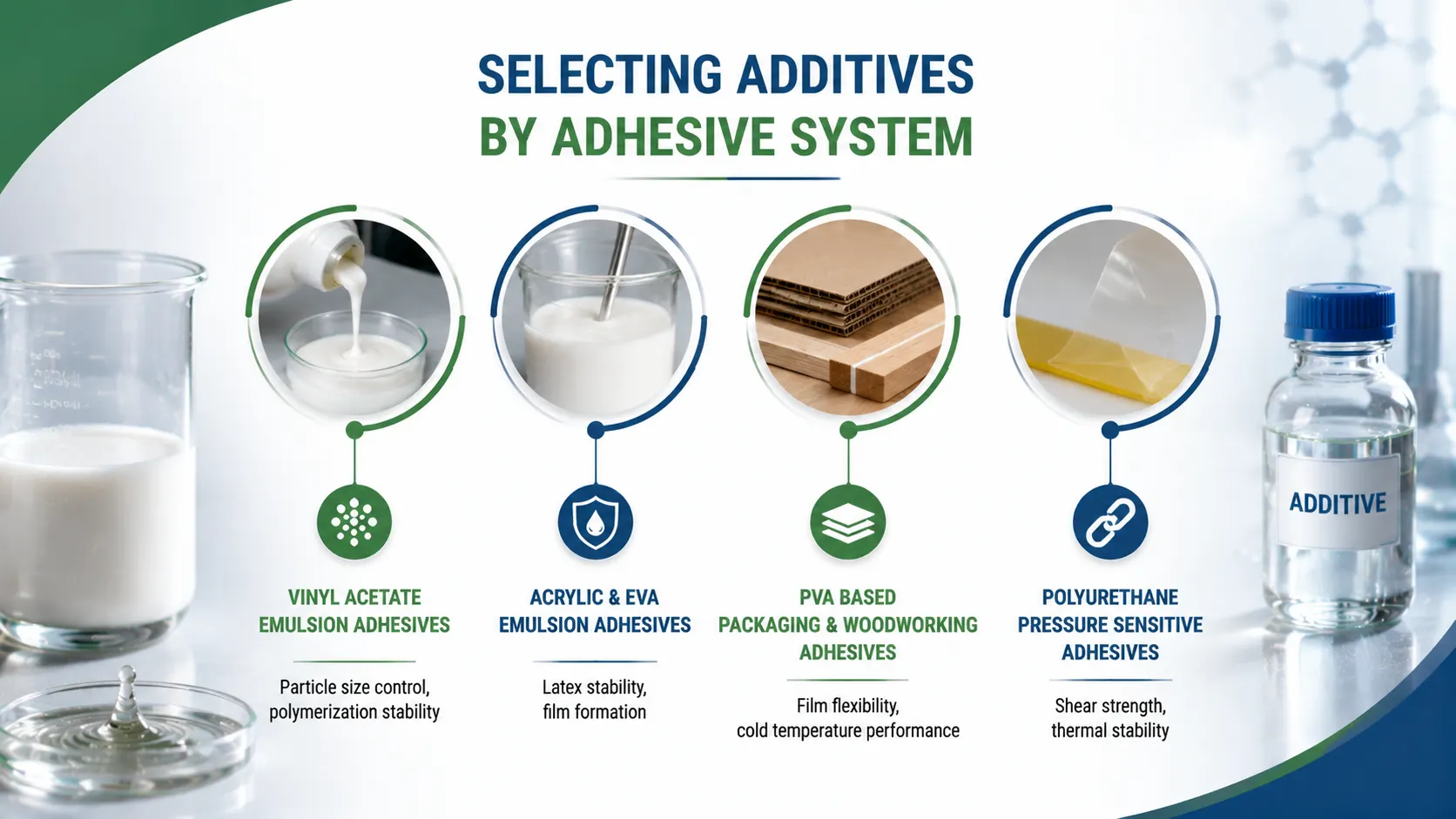
| Adhesive System | Relevant Additive Category | Primary Function |
|---|---|---|
| Vinyl Acetate Emulsion Adhesives | Ceteareth and octyl phenol ethoxylate emulsifiers | Particle size control, polymerization stability |
| Acrylic and EVA Emulsion Adhesives | Emulsion polymerization surfactants | Latex stability, film formation |
| PVA Based Packaging and Woodworking Adhesives | Polyethylene glycol plasticizers | Film flexibility, cold temperature performance |
| Polyurethane Pressure Sensitive Adhesives | Glycerin ethoxylate crosslinkers | Shear strength, thermal stability |
Why Choose Pharcos Speciality for Adhesive Industry Chemicals
Pharcos Speciality Ltd supplies polymers and surfactants for adhesive manufacturing, supporting emulsion polymerization, plasticization and pressure sensitive adhesive formulation.
What Pharcos offers adhesive manufacturers:
- Emulsion polymerization surfactants: Ceteareth grades and Octyl Phenol Ethoxylates serving as primary emulsifiers controlling latex particle size and distribution during adhesive polymer synthesis, optimized for vinyl acetate, acrylic and ethylene vinyl acetate polymerization.
- PVA and EVA plasticizers: Polyethylene Glycol grades improving film flexibility and cold temperature performance in packaging and woodworking adhesives.
- Pressure sensitive adhesive crosslinkers: Glycerin Ethoxylates acting as crosslinkers in polyurethane based pressure sensitive adhesive systems, improving shear strength and thermal stability.
- Batch consistency: tight manufacturing specifications supporting reproducible polymerization results across production batches, an important consideration for adhesive manufacturers running continuous production lines.
- Performance additive guidance: technical support to help formulators improve flexibility, open time and substrate wetting through informed additive selection.
Adhesive manufacturers evaluating a polymerization surfactant, plasticizer or crosslinker supplier in India can contact the Pharcos technical team to discuss their specific adhesive system, request samples, and review recommended use levels for vinyl acetate, acrylic, EVA or polyurethane based formulations.
Conclusion
Adhesive performance is built at the additive level as much as at the base polymer level. Emulsifier selection during emulsion polymerization shapes particle size and film forming behavior, plasticizers determine whether a finished adhesive film stays flexible under real world temperature conditions, and crosslinking chemistry gives pressure sensitive adhesive systems the shear strength and thermal stability their applications demand. For adhesive manufacturers developing packaging, woodworking, construction or pressure sensitive bonding products, understanding and correctly selecting these additive categories is central to achieving consistent, reliable bonding performance.
Pharcos Speciality Ltd supplies emulsion polymerization surfactants, plasticizers and crosslinking additives manufactured in India for the adhesive industry, backed by technical support to help formulators identify the right chemistry for their specific bonding solution.
Our Other Product
Styrenated Phenol EthoxylatesFrequently Asked Questions

Dr. Avinash Dubey (R&D Head)
Dr. Avinash Dubey is a PhD in Organic Chemistry with a distinguished career spanning more than four decades. As the head of R&D at Pharcos, he focuses on the development of novel molecules for a wide array of industrial sectors, blending long-standing experience with a passion for innovation.

Mr. Ankit Shah (Managing Director)
Mr. Ankit Shah has led Pharcos Speciality for over three decades, establishing it as a pioneer in specialty chemicals. He currently directs the company’s strategic expansion into the APIs, Excipient and Speciality Surfactants markets, upholding a steadfast commitment to "Make in India" and world-class manufacturing quality and new product development.