
Emulsifiers, Surfactants and Polymers for Lubricant Formulation: Metalworking Fluids and Beyond




AI Summary
Water soluble and water miscible lubricants, including soluble cutting oils, semi synthetic metalworking fluids and metal forming drawing compounds, all depend on surfactant and polymer chemistry to combine oil and water into a stable, functional fluid. Amine ethoxylates serve as primary emulsifiers and corrosion inhibitors for conventional soluble cutting oils, while blended ethoxylate systems create the translucent micro emulsions used in modern semi synthetic cutting and grinding fluids. High molecular weight polyethylene glycol grades provide boundary lubrication film strength for wire drawing and metal forming operations. Selecting the right emulsifier and polymer system directly affects fluid stability, corrosion protection, tool life and finished part quality. This guide explains the role of these chemistries across soluble oils, semi synthetic fluids and drawing compounds, and outlines how Pharcos Speciality Ltd supports lubricant formulators with emulsifiers, surfactants and polymers manufactured in India.
 Call Us Now!
Why Emulsifier and Polymer Chemistry Matters in Metalworking Lubricants
Metalworking operations such as cutting, grinding, drawing and forming generate substantial heat and friction at the tool and workpiece interface, and water based lubricants are widely used to manage this heat while also providing lubrication and corrosion protection. Because oil and water do not naturally mix, these fluids depend entirely on emulsifier chemistry to combine a mineral or synthetic oil base with water into a stable working fluid. The specific emulsifier system chosen determines whether that fluid remains stable throughout its working life, resists bacterial and fungal contamination, protects metal surfaces from corrosion, and performs consistently across varying water hardness and operating conditions.
Emulsifiers for Soluble Cutting Oils
Soluble cutting oils, sometimes called conventional or milky emulsions, remain widely used across metalworking operations for their combination of cooling, lubrication and cost effectiveness.
Key characteristics of soluble oil emulsifier systems:
- Primary emulsification: amine ethoxylate based emulsifiers serve as the primary emulsifier for soluble cutting oils, forming stable milky emulsions when combined with mineral oil bases, typically at 10 to 20 percent emulsifier concentration.
- Built in corrosion inhibition: many amine ethoxylate emulsifiers used in this application also contribute corrosion inhibition properties, offering dual functionality within a single additive.
- Stability across dilution: an effective soluble oil emulsifier system needs to maintain a stable emulsion across the range of dilution ratios typically used at the point of application on the shop floor.
Stabilizers for Semi Synthetic Cutting and Grinding Fluids
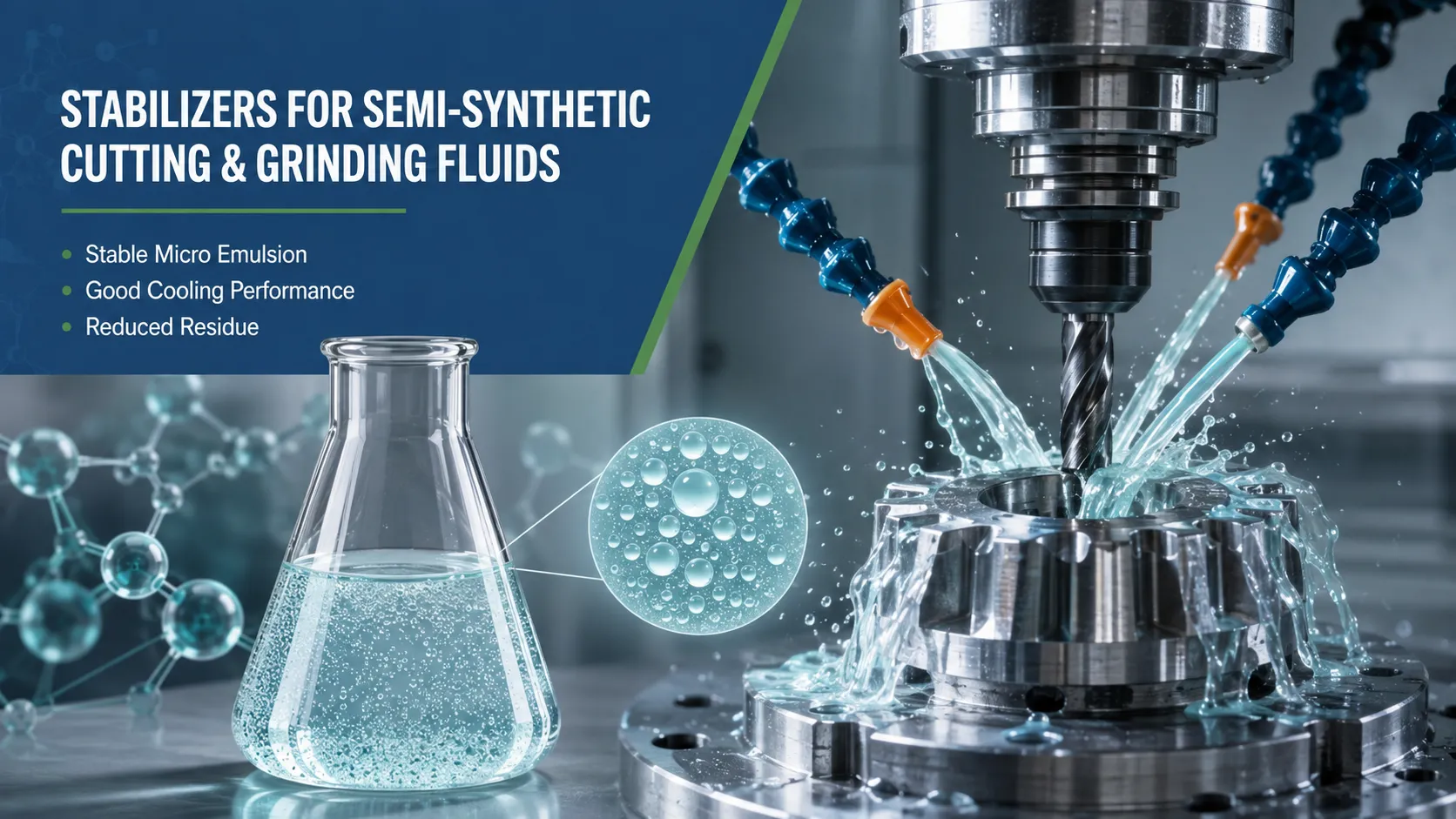
Semi synthetic metalworking fluids sit between fully soluble oils and fully synthetic fluids, combining a reduced oil content with water soluble chemistry to create a translucent, stable micro emulsion.
- Combined emulsifier systems: stearyl ethoxylates combined with castor oil ethoxylates are used to create the translucent micro emulsions characteristic of modern semi synthetic cutting and grinding fluids.
- Micro emulsion stability: achieving the fine, stable droplet size that gives semi synthetic fluids their characteristic translucency requires careful balancing of emulsifier type and concentration.
- Performance profile: semi synthetic fluids are widely valued for combining good cooling performance with improved fluid life and reduced residue compared to fully soluble oil systems.
Polymers for Metal Forming and Wire Drawing Lubrication
Wire drawing and metal forming operations place different demands on lubrication chemistry compared to cutting and grinding, requiring strong boundary lubrication film formation rather than primarily emulsified cooling fluid performance.
- High molecular weight polyethylene glycol: provides effective boundary lubrication in wire drawing and metal forming operations, where a strong, persistent lubricating film between tooling and the workpiece surface is essential.
- Film strength: polyethylene glycol grades in the 4000 to 6000 molecular weight range are generally preferred for this application due to the film strength they provide under the high pressure conditions typical of drawing and forming operations.
- Process compatibility: polyethylene glycol based lubricants are widely used because they combine effective boundary lubrication with water solubility, simplifying cleanup and downstream processing compared to purely oil based drawing compounds.
Our Other Product
Polyethylene Glycol 200Corrosion Protection in Water Based Metalworking Fluids
Because water based metalworking fluids place both the machine tool and the workpiece in prolonged contact with water, corrosion protection is a critical secondary function built into most emulsifier and additive systems.
- Amine ethoxylate corrosion inhibition: beyond their primary emulsifying role, amine ethoxylates commonly used in soluble cutting oils provide multi metal corrosion protection, an important consideration in operations working with multiple metal types.
- Fatty acid ethoxylate contributions: fatty acid ethoxylates used across metalworking fluid formulations also contribute to the overall corrosion protection profile of the finished fluid.
- System level protection: effective corrosion protection in a metalworking fluid typically results from the combined contribution of the emulsifier system rather than a single dedicated corrosion inhibitor additive alone.
Comparing Metalworking Fluid Types by Chemistry
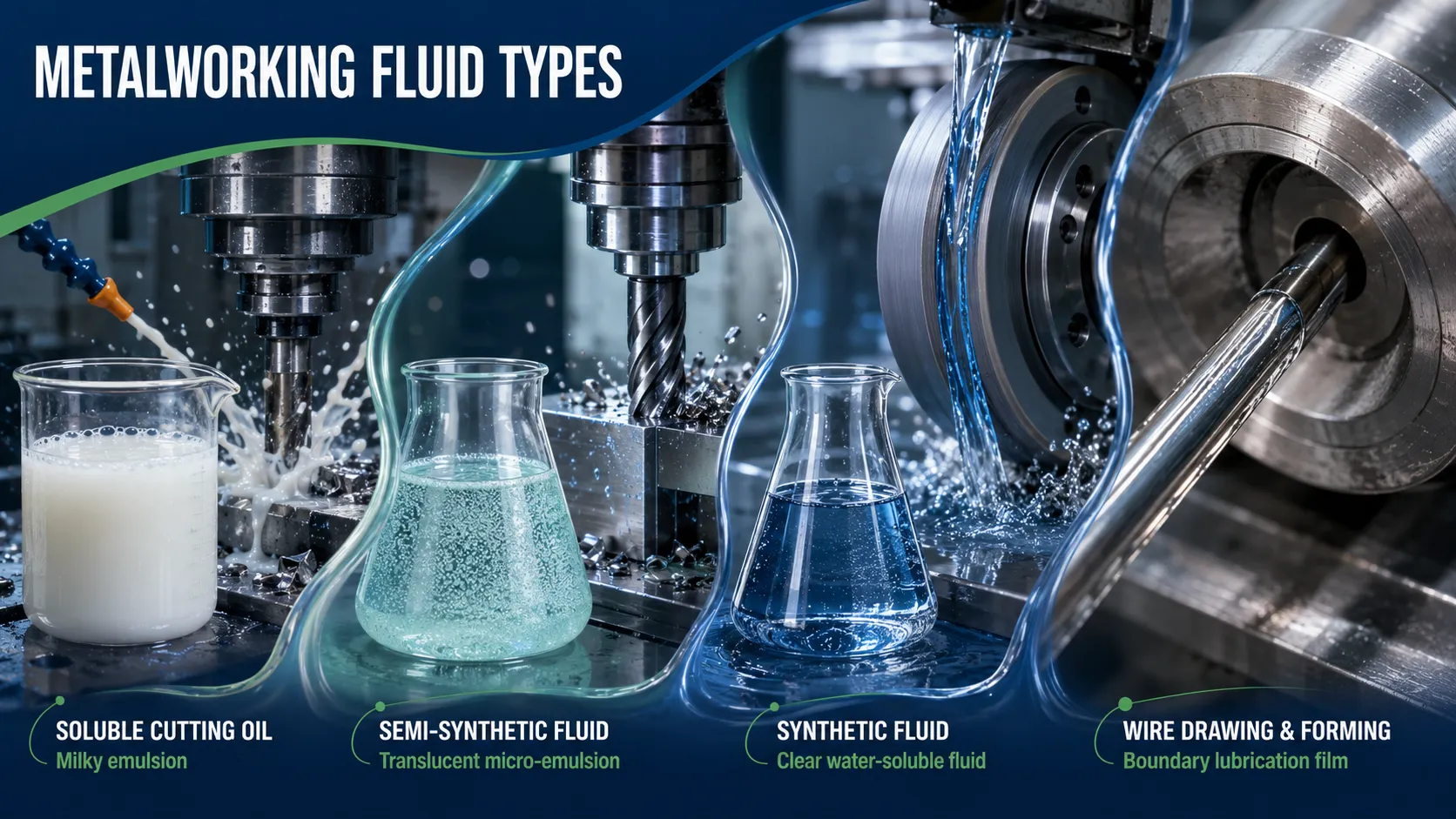
| Fluid Type | Primary Emulsifier or Polymer Chemistry | Key Characteristics |
|---|---|---|
| Soluble Cutting Oil | Amine ethoxylates | Milky emulsion, strong emulsification, built in corrosion inhibition |
| Semi Synthetic Fluid | Stearyl and castor oil ethoxylate blends | Translucent micro emulsion, extended fluid life |
| Synthetic Fluid | Water soluble polymer and surfactant blends | Fully synthetic base, minimal or no mineral oil content |
| Wire Drawing and Forming Compound | High molecular weight polyethylene glycol | Strong boundary lubrication film, water solubility |
Why Choose Pharcos Speciality for Lubricant Industry Chemicals
Pharcos Speciality Ltd manufactures surfactants and polymers for the lubricant industry, supporting the formulation of soluble cutting oils, semi synthetic fluids, drawing compounds and other specialty industrial lubricants.
What Pharcos offers lubricant formulators:
- Soluble oil emulsification: Oleyl Amine Ethoxylates serving as the primary emulsifier and corrosion inhibitor for soluble cutting oils, forming stable milky emulsions at 10 to 20 percent emulsifier concentration.
- Semi synthetic fluid stability: Stearyl Ethoxylates combined with Castor Oil Ethoxylates creating translucent micro emulsions for modern semi synthetic cutting and grinding fluids.
- Metal forming lubrication: high molecular weight Polyethylene Glycol grades, particularly PEG 4000 to PEG 6000, providing boundary lubrication film strength for wire drawing and metal forming operations.
- Metalworking specialization: deep expertise in emulsifiers and corrosion inhibitors across soluble, semi synthetic and synthetic metalworking fluid categories.
- Custom blending support: development of custom surfactant packages optimized for specific metalworking operations and local water quality conditions.
Lubricant formulators evaluating an emulsifier, surfactant or polymer supplier in India can contact the Pharcos technical team to discuss specific metalworking fluid requirements, request samples, and review formulation guidance for soluble, semi synthetic or drawing compound applications.
 WhatsApp Now
Conclusion
Water based metalworking lubricants, from conventional soluble cutting oils to modern semi synthetic fluids and metal forming drawing compounds, all depend on carefully selected emulsifier and polymer chemistry to deliver stable performance under demanding operating conditions. Amine ethoxylates bring both emulsification and corrosion protection to soluble oils, blended ethoxylate systems create the fine, stable micro emulsions that define semi synthetic fluids, and high molecular weight polyethylene glycol provides the boundary lubrication film strength wire drawing and forming operations require. For lubricant formulators, matching the right chemistry to the specific fluid type and operating environment remains central to product performance.
Pharcos Speciality Ltd supplies emulsifiers, surfactants and polymers manufactured in India for the lubricant industry, backed by metalworking specific formulation expertise to help identify the right chemistry for soluble oil, semi synthetic fluid or metal forming lubrication requirements.
Our Other Product
Polyethylene Glycol 1000Frequently Asked Questions
Dr. Avinash Dubey (R&D Head)
Dr. Avinash Dubey is a PhD in Organic Chemistry with a distinguished career spanning more than four decades. As the head of R&D at Pharcos, he focuses on the development of novel molecules for a wide array of industrial sectors, blending long-standing experience with a passion for innovation.

Mr. Ankit Shah (Managing Director)
Mr. Ankit Shah has led Pharcos Speciality for over three decades, establishing it as a pioneer in specialty chemicals. He currently directs the company’s strategic expansion into the APIs, Excipient and Speciality Surfactants markets, upholding a steadfast commitment to "Make in India" and world-class manufacturing quality and new product development.