
Surfactants and Chemical Auxiliaries for Textile Processing: From Scouring to Finishing




AI Summary
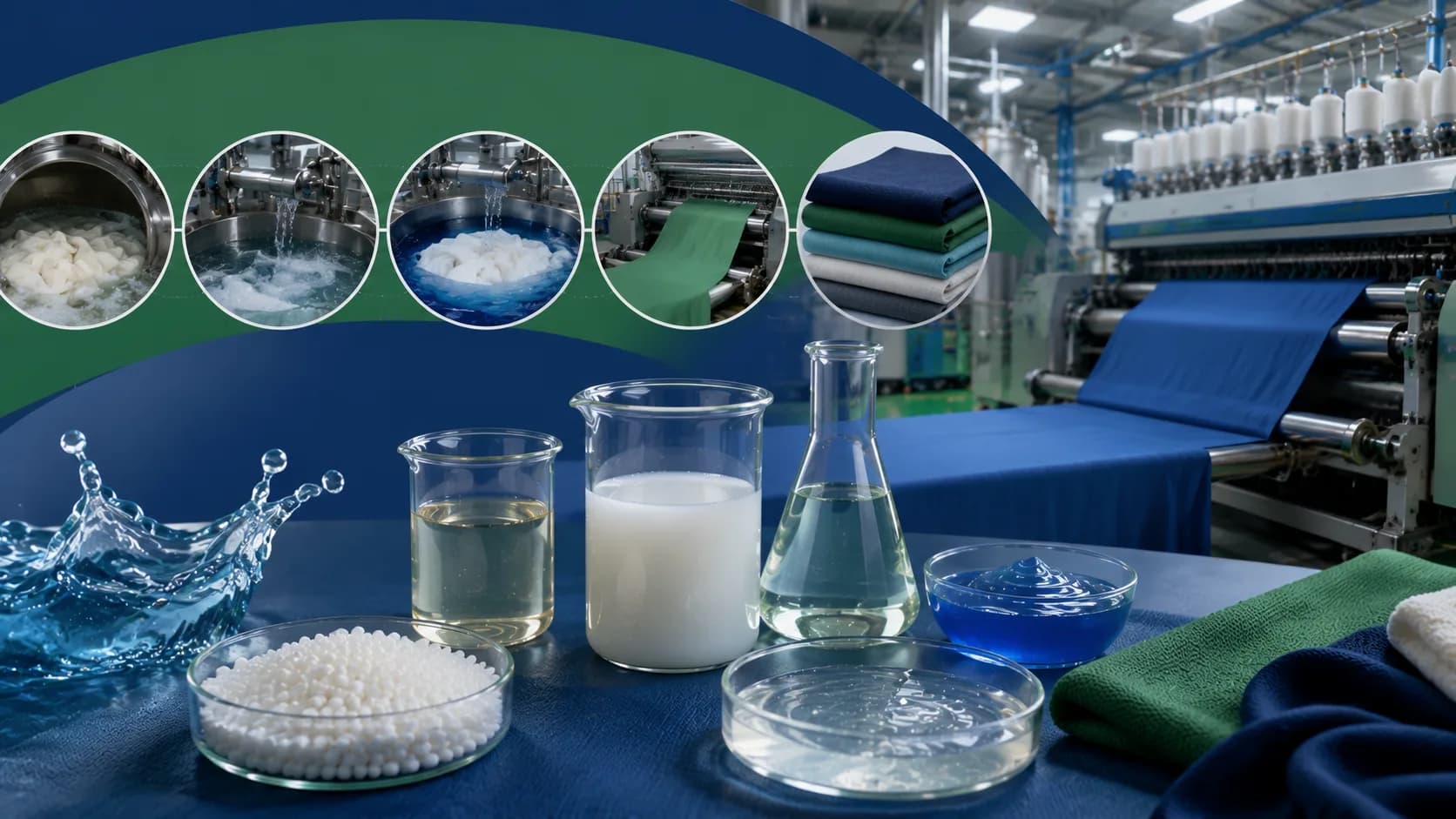
Textile processing moves fabric and yarn through a sequence of chemically distinct stages, from scouring and desizing through dyeing and finally softening and finishing, and each stage relies on a different category of surfactant chemistry. Fast wetting alcohol ethoxylates strip grease, wax and sizing agents from raw fiber during scouring and desizing. Dye leveling agents ensure dye uptake is even across the fabric surface, preventing patchy or streaky coloration. Softening agents, including fatty acid and amine ethoxylates, give finished fabric its desired hand feel, while specialty spin finish chemistries lubricate and reduce static during yarn spinning. This guide explains the surfactant chemistry behind each textile processing stage, compares wetting agent performance, and outlines how Pharcos Speciality Ltd supports textile manufacturers with a complete range of processing surfactants manufactured in India.
Why Textile Processing Depends on Stage Specific Surfactants
Raw textile fiber, whether natural or synthetic, arrives at a processing mill carrying natural waxes, oils, sizing agents and other contaminants that must be removed before dyeing can proceed effectively. From there, fabric must absorb dye evenly, resist streaking, and ultimately receive a finish that gives it the hand feel, drape and functional properties the end product requires. Each of these stages, scouring, dyeing and finishing, calls for a distinct surfactant chemistry engineered for that specific job, which is why textile mills typically rely on a full portfolio of processing auxiliaries rather than a single general purpose surfactant.
Wetting Agents for Scouring and Desizing
Scouring and desizing are the first chemical processing steps most textile substrates undergo, removing natural fiber impurities and, for woven fabrics, the sizing agents applied before weaving.
Key wetting agent chemistries used in scouring and desizing:
- Short chain alcohol ethoxylates: decanol based ethoxylates at low mole ethoxylation levels provide rapid wetting and excellent grease removal, supporting fast, efficient scouring performance.
- Tridecyl alcohol ethoxylates: Iso Tridecyl Alcohol Ethoxylates offer comparable wetting performance with notably superior hard water tolerance, an important consideration in regions or facilities with harder process water.
- Wetting speed as a performance benchmark: wetting agent performance in textile processing is commonly evaluated using standardized wetting tests, with faster wetting speeds directly translating into reduced processing time and lower water and energy consumption.
Dye Leveling Agents for Uniform Color Distribution
Achieving consistent, even color across an entire fabric batch is one of the most technically demanding aspects of textile processing, and depends heavily on dye leveling agent performance.
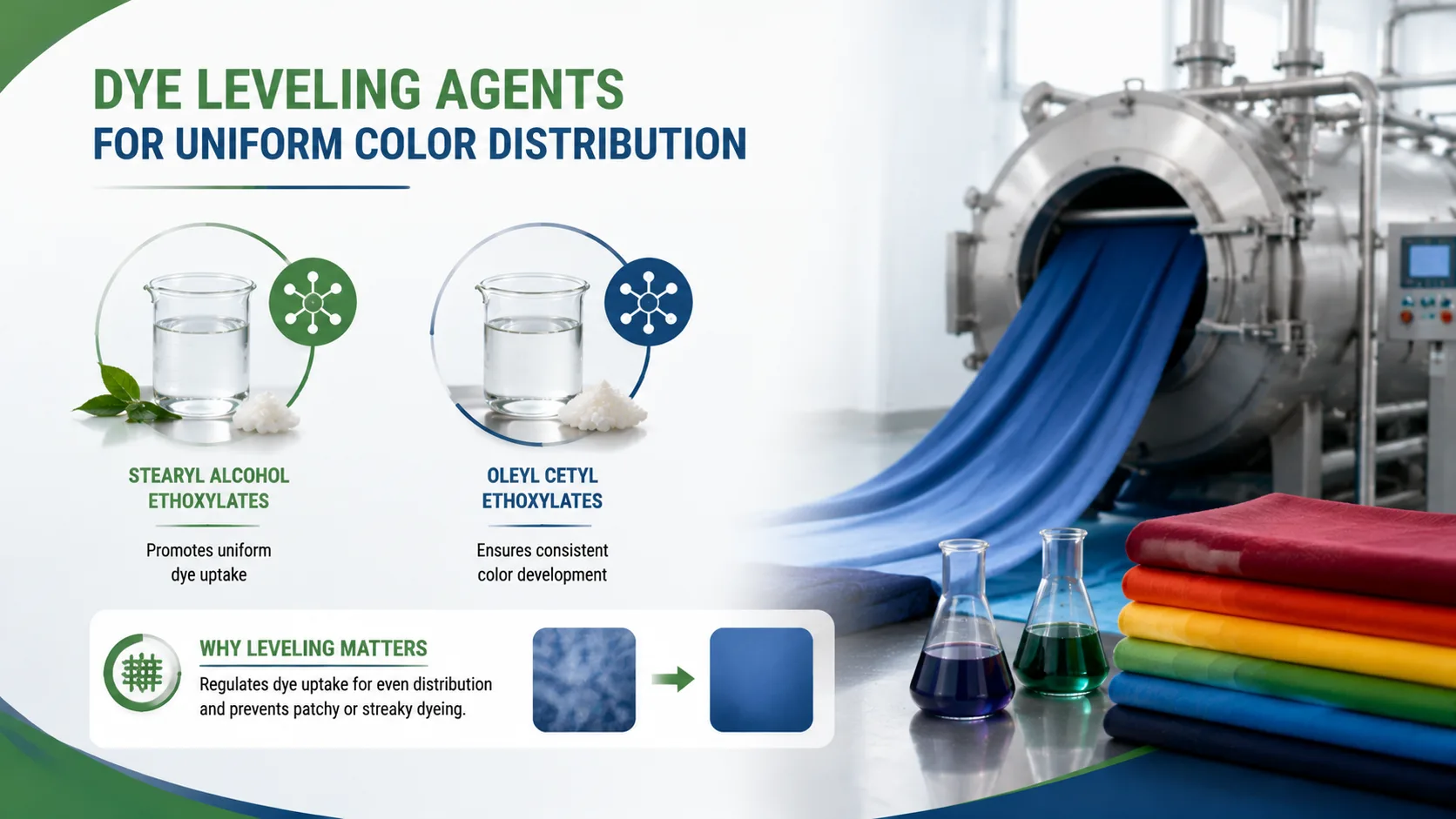
- Stearyl alcohol ethoxylates: function as dye leveling agents, helping ensure uniform dye uptake and distribution across the fabric surface during the dyeing process.
- Oleyl cetyl ethoxylates: Oleyl Cetyl Alcohol Ethoxylates also support consistent color development and reduce the risk of patchy or streaky dyeing outcomes.
- Why leveling matters: dye leveling agents work by moderating the rate of dye uptake onto the fiber, preventing dye from depositing unevenly or too quickly in localized areas, which is a common cause of visible dyeing defects.
Softening and Finishing Agents
The final hand feel of a textile product, whether soft and supple or crisp and structured, is determined largely by the finishing chemistry applied after dyeing.
- Fatty acid ethoxylates: provide effective softening performance across both natural and synthetic fibers, contributing to the smooth, pleasant hand feel expected of finished textile products.
- Amine ethoxylates: also used in softening formulations, often selected for their compatibility with specific fiber types and finishing process requirements.
- Balancing softness and functionality: finishing formulations must balance softness against other functional requirements, such as moisture management or durability, depending on the intended end use of the fabric.
Our Other Product
Styrenated Phenol EthoxylatesSpin Finish Chemistries for Yarn Processing
Before fabric can be woven or knitted, yarn spinning requires its own specialized surfactant chemistry to manage friction and static during high speed processing.
- Coconut fatty acid ethoxylates: Coconut Fatty Acid Ethoxylates provide both lubrication and antistatic properties during yarn processing in spinning mills, addressing two distinct processing challenges with a single chemistry.
- Lubrication role: proper lubrication during spinning reduces friction related yarn breakage and equipment wear.
- Antistatic role: controlling static buildup during high speed spinning helps maintain consistent yarn handling and reduces processing disruptions caused by fiber clinging or tangling.
Dye Carriers for Polyester and Synthetic Fiber Dyeing
Polyester and certain other synthetic fibers present a particular dyeing challenge, since their tightly packed molecular structure resists dye penetration at standard dyeing temperatures.
- Dye carrier function: specialty ethoxylate based dye carriers help swell the polyester fiber structure sufficiently to allow dye penetration at reduced dyeing temperatures, typically below 130 degrees C.
- Energy efficiency benefit: by enabling effective dyeing at lower temperatures, dye carriers can contribute to reduced energy consumption during the dyeing process compared to high temperature dyeing without a carrier.
- Typical use levels: dye carriers are generally used at approximately 2 to 4 percent on goods weight within the dyebath to achieve effective dye penetration.
Comparing Surfactants Across the Textile Processing Sequence
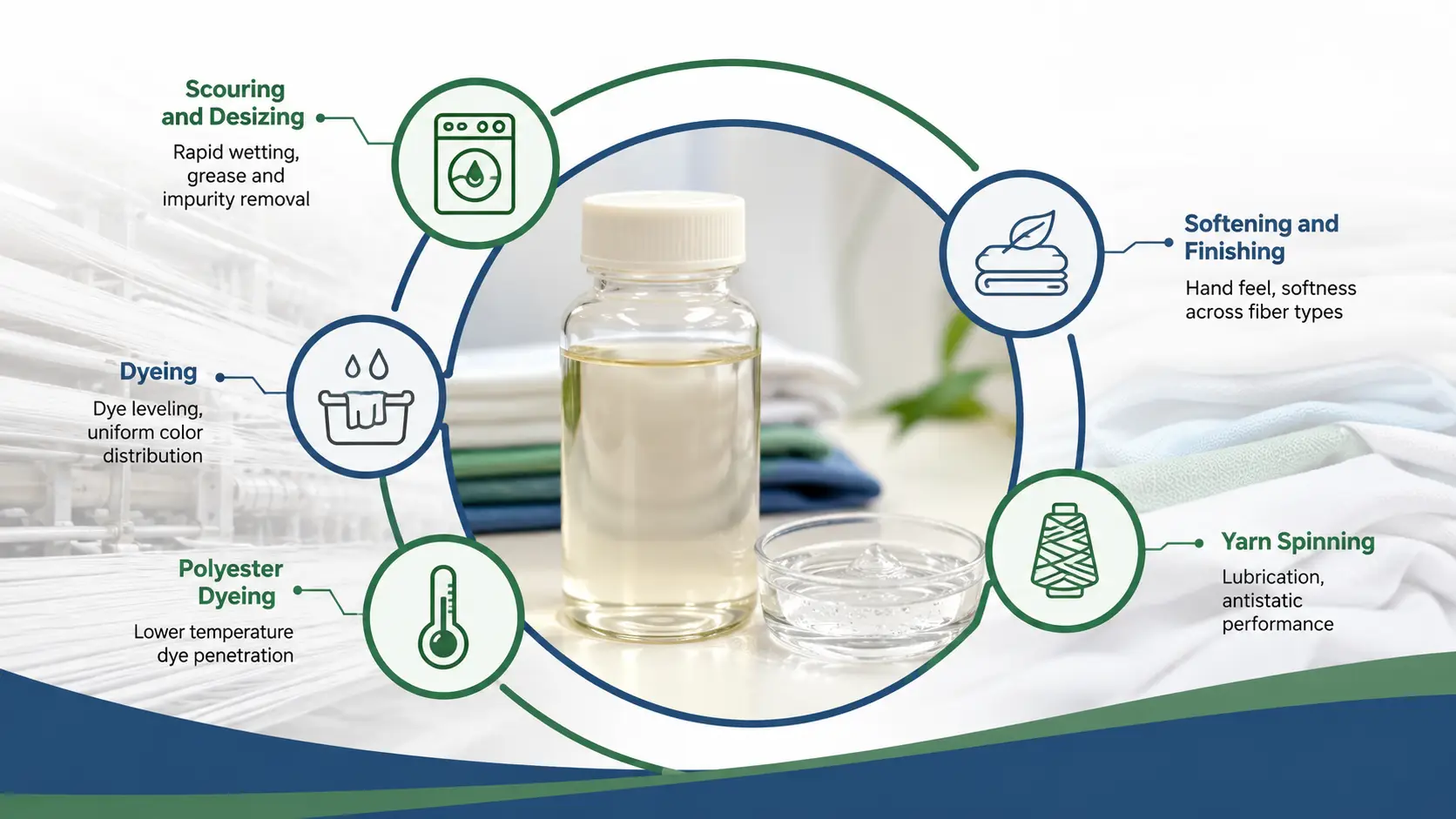
| Processing Stage | Relevant Chemistry | Primary Function |
|---|---|---|
| Scouring and Desizing | Decanol and tridecyl alcohol ethoxylates | Rapid wetting, grease and impurity removal |
| Dyeing | Stearyl and oleyl cetyl ethoxylates | Dye leveling, uniform color distribution |
| Polyester Dyeing | Beta naphthol ethoxylate dye carriers | Lower temperature dye penetration |
| Softening and Finishing | Fatty acid and amine ethoxylates | Hand feel, softness across fiber types |
| Yarn Spinning | Coconut fatty acid ethoxylates | Lubrication, antistatic performance |
Sustainability Standards in Textile Chemical Selection
Textile processing chemical selection is increasingly influenced by international sustainability and chemical safety standards relevant to export focused textile manufacturing.
- Chemical safety certifications: frameworks such as the OEKO TEX Standard and the Zero Discharge of Hazardous Chemicals Manufacturing Restricted Substances List are widely referenced by international brands and retailers when specifying acceptable processing chemistry for their supply chains.
- Biodegradable and low foam alternatives: biodegradable surfactants and low foam processing chemistries support both regulatory compliance and more sustainable water and effluent management in textile mills.
- Regional chemical regulation: frameworks such as the European Union REACH Regulation also influence which surfactant chemistries, including legacy options such as nonylphenol ethoxylates, remain acceptable for textiles entering regulated export markets.
Textile manufacturers supplying export markets should confirm current chemical restriction lists and certification requirements applicable to their specific customers and target regions.
Why Choose Pharcos Speciality for Textile Processing Chemicals
Pharcos Speciality Ltd offers a comprehensive range of surfactants and chemical auxiliaries for textile processing, from fiber scouring and desizing through dyeing and finishing.
What Pharcos offers textile manufacturers:
- Fast wetting scouring agents: Decanol Ethoxylates at 3 to 5 moles providing rapid wetting and excellent grease removal, with Iso Tridecyl Alcohol Ethoxylates offering comparable performance and superior hard water tolerance.
- Dye leveling range: Stearyl Alcohol Ethoxylates and Oleyl Cetyl Ethoxylates functioning as dye leveling agents for uniform color distribution across the fabric.
- Softening and finishing chemistry: Coconut Fatty Acid Ethoxylates, Stearic Ethoxylates and amine ethoxylates providing effective softening across natural and synthetic fibers.
- Spin finish solutions: Coconut Fatty Acid Ethoxylates providing lubrication and antistatic properties for yarn processing in spinning mills.
- Dye carrier availability: Beta Naphthol Ethoxylates serving as a dye carrier for polyester dyeing at temperatures below 130 degrees C.
- Rapid wetting technology and eco friendly options: ultra fast wetting agents that reduce processing time and water consumption, alongside biodegradable and low foam alternatives supporting sustainable textile manufacturing.
Textile manufacturers evaluating a processing surfactant manufacturer or supplier in India can contact the Pharcos technical team to discuss specific fiber types and process requirements, request samples, and review dosage guidance across scouring, dyeing, softening or spin finish applications.
Conclusion
Textile processing is a sequence of distinct chemical transformations, and each stage, from stripping impurities during scouring to achieving uniform color during dyeing to delivering the right hand feel during finishing, depends on surfactant chemistry engineered specifically for that job. Fast wetting alcohol ethoxylates, dye leveling agents, softening chemistries and spin finish additives together determine both processing efficiency and finished fabric quality, while growing attention to international chemical safety standards continues to shape which chemistries remain suitable for export focused manufacturing.
Pharcos Speciality Ltd supplies a complete portfolio of textile processing surfactants manufactured in India, covering scouring, dyeing, softening and spin finish applications, backed by technical support to help textile manufacturers select the right chemistry for their specific fiber type and processing requirements.
Our Other Product
Nonyl Phenol EthoxylatesFrequently Asked Questions

Dr. Avinash Dubey (R&D Head)
Dr. Avinash Dubey is a PhD in Organic Chemistry with a distinguished career spanning more than four decades. As the head of R&D at Pharcos, he focuses on the development of novel molecules for a wide array of industrial sectors, blending long-standing experience with a passion for innovation.

Mr. Ankit Shah (Managing Director)
Mr. Ankit Shah has led Pharcos Speciality for over three decades, establishing it as a pioneer in specialty chemicals. He currently directs the company’s strategic expansion into the APIs, Excipient and Speciality Surfactants markets, upholding a steadfast commitment to "Make in India" and world-class manufacturing quality and new product development.