Pharmaceutical Grade Polyethylene Glycol (PEG) vs Industrial PEG: Key Differences and Compliance Standards




AI Summary
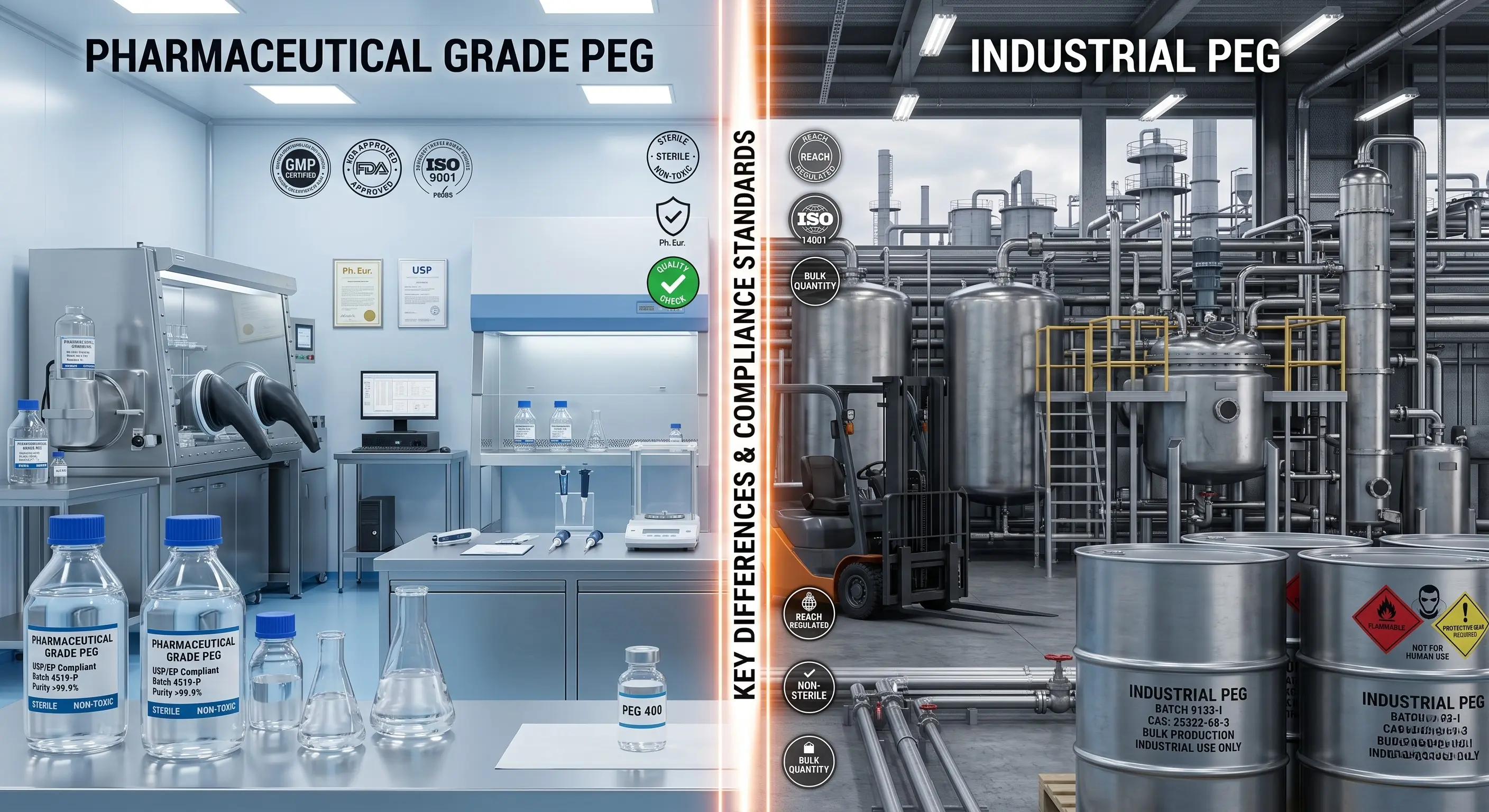
Pharmaceutical Grade Polyethylene Glycol (PEG) and Industrial PEG differ significantly in purity, regulatory compliance, safety, and application scope. While pharmaceutical-grade PEG is highly purified and compliant with global standards such as USP, EP, and FDA, industrial PEG is produced for technical applications with less stringent impurity controls. Pharmaceutical PEG is widely used as an excipient in drug formulations due to its biocompatibility, low toxicity, and stability, whereas industrial PEG is used in lubricants, coatings, textiles, and chemical processing. Key differentiators include impurity levels, traceability, testing protocols, and manufacturing standards. For pharmaceutical and healthcare applications, compliance with pharmacopeial standards and regulatory approvals is non-negotiable, making pharmaceutical-grade PEG essential for safety and efficacy. As global supply chains evolve, buyers must carefully evaluate suppliers based on quality certifications, consistency, and regulatory adherence.
What Is Polyethylene Glycol (PEG) and Why Is It Widely Used Across Industries?
Polyethylene Glycol (PEG) is a synthetic polymer derived from ethylene oxide, known for its water solubility, chemical stability, and versatility. It exists in a wide range of molecular weights, which directly influence its physical form-from liquids to waxy solids.
PEG is widely used across industries due to its:
- Hydrophilicity and solubility
- Low toxicity and biocompatibility
- Lubricating and stabilizing properties
In pharmaceuticals, PEG acts as an excipient, solvent, and drug delivery enhancer, while in industrial sectors, it serves as a lubricant, surfactant, and processing aid.
 WhatsApp Now
What Is Pharmaceutical Grade PEG and What Standards Does It Follow?
Pharmaceutical-grade PEG is a highly purified form of polyethylene glycol specifically manufactured for use in drug formulations, medical devices, and healthcare products.
It complies with stringent global pharmacopeial standards such as:
- USP (United States Pharmacopeia)
- EP (European Pharmacopoeia)
- BP (British Pharmacopoeia)
These standards ensure:
- High purity and minimal impurities
- Consistent molecular weight distribution
- Safety for human consumption and application
Pharmaceutical PEG is extensively used in oral, topical, and injectable formulations due to its safety profile and non-immunogenic nature.
What Is Industrial Grade PEG and Where Is It Commonly Used?
Industrial-grade PEG is designed for non-pharmaceutical applications where ultra-high purity is not critical. It is widely used in:
- Textile processing
- Lubricants and antifreeze formulations
- Paints, coatings, and adhesives
- Agrochemicals and detergents
Unlike pharmaceutical-grade PEG, industrial PEG may contain higher levels of impurities and does not require compliance with pharmacopeial standards.
What Are the Key Differences Between Pharmaceutical Grade PEG and Industrial PEG?
Understanding the differences between these two grades is critical for selecting the right material for specific applications.
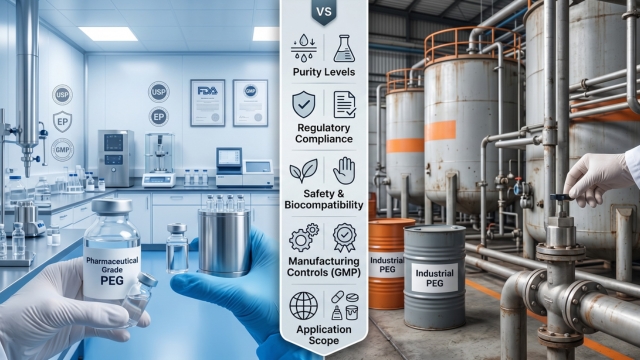
1. Purity Levels
Pharmaceutical PEG has extremely low impurity levels and is highly refined, whereas industrial PEG allows broader impurity tolerances.
2. Regulatory Compliance
Pharmaceutical PEG complies with USP, EP, and FDA guidelines, while industrial PEG follows general industrial quality standards.
3. Safety and Biocompatibility
Pharma-grade PEG is tested for toxicity, sterility, and biocompatibility. Industrial PEG is not suitable for human consumption or medical use.
4. Manufacturing Controls
Pharmaceutical PEG is produced under GMP (Good Manufacturing Practices), ensuring traceability and batch consistency.
5. Application Scope
Pharmaceutical PEG is used in drug delivery and formulations, while industrial PEG is used in manufacturing and processing applications.
How Do Purity and Impurity Profiles Differ Between Pharma and Industrial PEG?
Purity is the most critical differentiator.
Pharmaceutical-grade PEG undergoes:
- Advanced purification processes
- Strict impurity profiling
- Residual solvent and heavy metal testing
Industrial PEG, on the other hand:
- May contain residual catalysts
- Has less stringent impurity limits
- Is not tested for pharmaceutical safety parameters
This difference directly impacts product safety, especially in healthcare applications.
Our Other Product
PEG 200 (Polyethylene Glycol 200)Why Are USP, EP, and FDA Compliance Standards Critical for Pharmaceutical PEG?
Compliance with pharmacopeial and regulatory standards ensures that PEG used in medicines is safe, consistent, and effective.
Key compliance requirements include:
- Defined molecular weight specifications
- Controlled impurity levels
- Stability and compatibility testing
- Documentation and traceability
The U.S. FDA recognizes PEG as a safe excipient due to its low toxicity and established safety profile, making compliance essential for regulatory approvals.
How Does Molecular Weight Impact the Use of Pharmaceutical vs Industrial PEG?
PEG is classified based on molecular weight, which determines its physical and functional properties.
- Low MW PEG (200–600): Liquid, used as solvents
- Medium MW PEG (1000–2000): Semi-solid, used in ointments
- High MW PEG (4000+): Solid, used in tablets and coatings
In pharmaceutical applications, precise molecular weight control is essential for:
- Drug release profiles
- Stability
- Bioavailability
Industrial applications are less sensitive to these parameters.
What Are the Common Applications of Pharmaceutical Grade PEG in Drug Formulation?
Pharmaceutical PEG plays a critical role in modern medicine.
Key applications include:
- Tablet binders and lubricants
- Ointment and cream bases
- Solubilizers for poorly soluble drugs
- Drug delivery systems (PEGylation)
PEG is also widely used in laxatives and bowel preparation solutions due to its osmotic properties.
What Are the Industrial Applications of PEG Across Sectors?
Industrial PEG is used in a wide range of applications:
- Surfactants and emulsifiers
- Lubricants and coolants
- Textile finishing agents
- Chemical intermediates
Its versatility and cost-effectiveness make it a preferred material in manufacturing industries.
Read Our Article
Key Specialty Chemicals Used in Leather Processing IndustryHow Do Manufacturing Processes Differ Between Pharmaceutical and Industrial PEG?
Pharmaceutical PEG manufacturing involves:
- GMP-certified facilities
- Controlled environments
- Batch traceability
- Extensive quality testing
Industrial PEG production focuses on:
- High-volume manufacturing
- Cost efficiency
- Functional performance
This difference directly impacts product consistency and safety.
Why Is Traceability and Documentation Important in Pharmaceutical PEG Supply?
Traceability ensures that every batch of PEG can be tracked from raw material to finished product.
Pharmaceutical suppliers must provide:
- Certificates of Analysis (CoA)
- Regulatory documentation
- Batch records
- Stability data
Industrial PEG suppliers typically do not provide such detailed documentation.
How to Choose Between Pharmaceutical Grade PEG and Industrial PEG for Your Application?
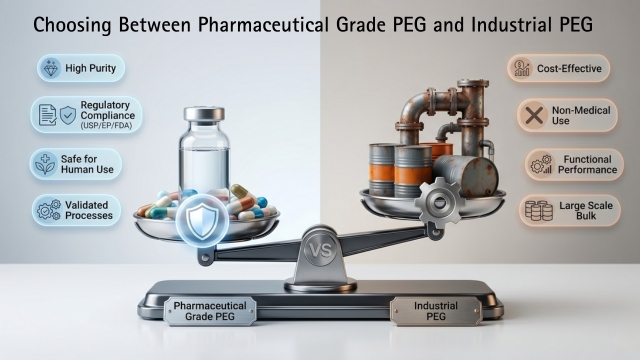
Choosing the right PEG grade depends on application requirements:
Choose Pharmaceutical Grade PEG if:
- Product involves human consumption or contact
- Regulatory compliance is required
- High purity and safety are critical
Choose Industrial PEG if:
- Application is non-medical
- Cost is a priority
- Performance requirements are functional rather than regulatory
Why Are Global Buyers Increasingly Sourcing Pharmaceutical PEG from India?
India has become a major hub for pharmaceutical raw materials due to:
- Cost competitiveness
- Advanced manufacturing infrastructure
- Compliance with global standards (USP, EP, FDA)
- Availability of certified suppliers
Indian manufacturers offer high-quality PEG with strong regulatory support, making them preferred partners for global pharmaceutical companies.
Our Other Product
PEG 300 (Polyethylene Glycol 300 | Macrogol 300)What Are the Risks of Using Industrial PEG in Pharmaceutical Applications?
Using industrial PEG in pharmaceutical applications can lead to:
- Regulatory non-compliance
- Product recalls
- Safety risks to patients
- Legal liabilities
Even minor impurities can compromise drug safety and efficacy.
 Get It Now!
Conclusion: Why Pharmaceutical Grade PEG Is Non-Negotiable for Healthcare Applications?
Pharmaceutical-grade PEG is essential for ensuring drug safety, efficacy, and regulatory compliance. While industrial PEG serves important roles in manufacturing and processing industries, it cannot replace pharma-grade material in healthcare applications.
The key differences lie in:
- Purity
- Compliance
- Safety
- Traceability
For pharmaceutical companies, investing in high-quality PEG is not just a regulatory requirement-it is a commitment to patient safety and product excellence.
FAQs on Pharmaceutical Grade Polyethylene Glycol (PEG) vs Industrial PEG

Dr. Avinash Dubey (R&D Head)
Dr. Avinash Dubey is a PhD in Organic Chemistry with a distinguished career spanning more than four decades. As the head of R&D at Pharcos, he focuses on the development of novel molecules for a wide array of industrial sectors, blending long-standing experience with a passion for innovation.

Mr. Ankit Shah (Managing Director)
Mr. Ankit Shah has led Pharcos Speciality for over three decades, establishing it as a pioneer in specialty chemicals. He currently directs the company’s strategic expansion into the APIs, Excipient and Speciality Surfactants markets, upholding a steadfast commitment to "Make in India" and world-class manufacturing quality and new product development.