Different Molecular Weights of Polyethylene Glycol and Their Pharmaceutical Uses



AI Summary
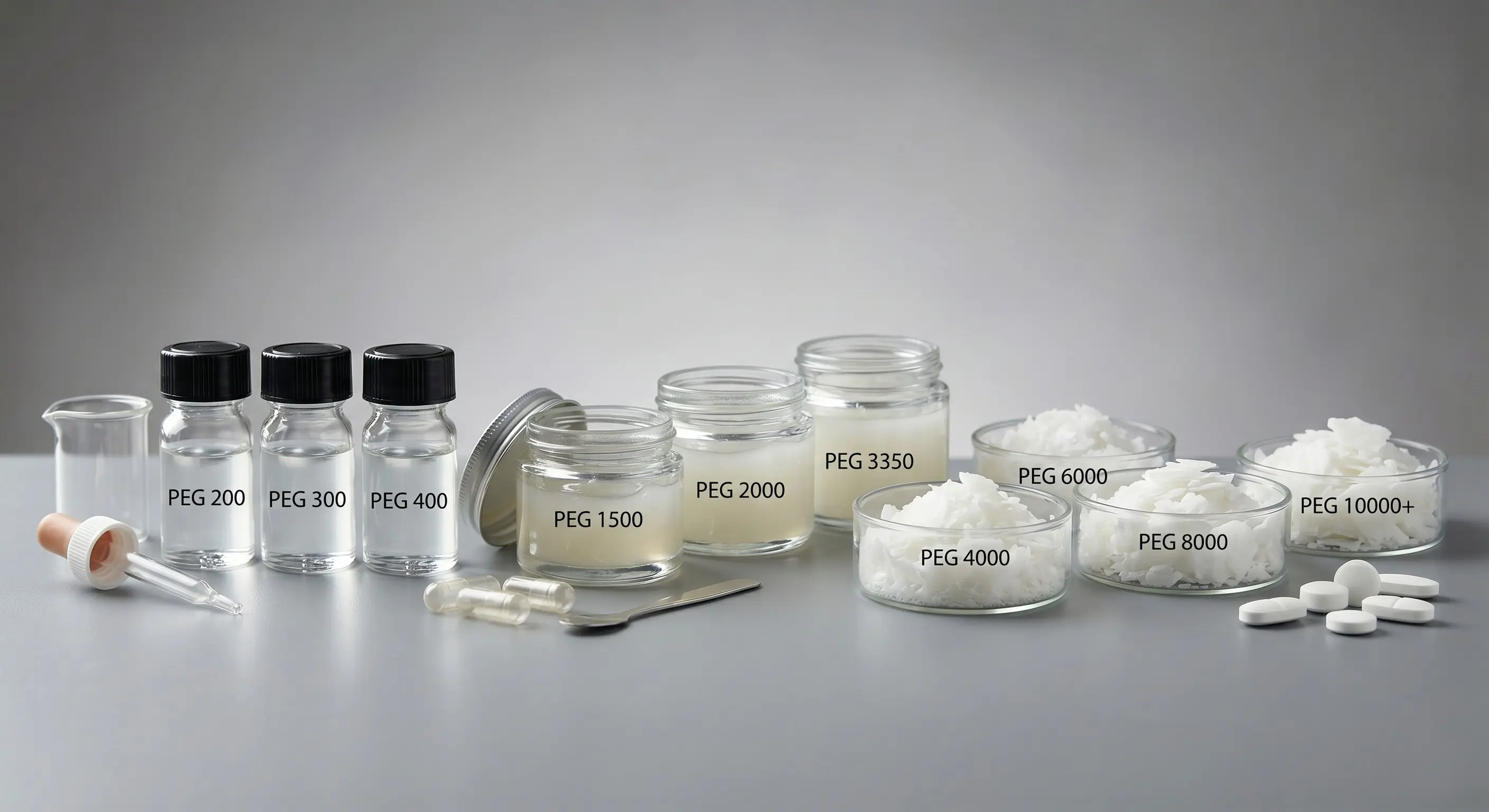
Polyethylene Glycol (PEG) is a versatile pharmaceutical excipient available in a wide range of molecular weights, from PEG 200 to PEG 20000, each offering unique physical and functional properties. Lower molecular weight PEGs such as PEG 200, PEG 300, and PEG 400 are liquids used as solvents and solubilizers, while higher molecular weights like PEG 4000, PEG 6000, and PEG 8000 are solids used in tablets, coatings, and controlled-release formulations. Selecting the right PEG grade is critical for optimizing drug solubility, stability, and bioavailability. Leading manufacturers like Pharcos Speciality provide pharmacopeia-compliant PEG solutions across molecular weights, ensuring quality, consistency, and regulatory compliance for global pharmaceutical applications.
What Is Polyethylene Glycol (PEG) and Why Is Molecular Weight Important in Pharmaceutical Applications?
Polyethylene Glycol (PEG) is a widely used polymer in the pharmaceutical industry due to its biocompatibility, water solubility, and versatility. One of the most important characteristics of PEG is its molecular weight, which determines its physical form and functionality.
Molecular weight influences:
- Physical state (liquid, semi-solid, solid)
- Solubility and viscosity
- Drug release behavior
- Application across dosage forms
From Polyethylene Glycol 200 to Polyethylene Glycol 20000, each grade serves a specific pharmaceutical purpose, making selection crucial in formulation design.
 Get It Now!
How Are Different Molecular Weights of Polyethylene Glycol Classified (PEG 200 to PEG 20000)?
PEG grades are classified based on their molecular weight range:
Low Molecular Weight PEGs (PEG 200, PEG 300, PEG 400, PEG 600)
- Liquid form
- Low viscosity
- Excellent solvent properties
Medium Molecular Weight PEGs (PEG 800, PEG 1000, PEG 1500, PEG 3350)
- Semi-solid to waxy consistency
- Used in ointments and capsules
High Molecular Weight PEGs (PEG 4000, PEG 6000, PEG 8000, PEG 10000, PEG 20000)
- Solid form
- Used in tablets, coatings, and controlled-release systems
Pharmaceutical manufacturers rely on trusted Polyethylene Glycol manufacturers like Pharcos Speciality to supply consistent grades across this spectrum.
What Are the Pharmaceutical Uses of Polyethylene Glycol 200, PEG 300, and PEG 400?
Low molecular weight PEGs such as Polyethylene Glycol 200, PEG 300, and PEG 400 are widely used as solvents and solubilizers.
Key Applications:
- Oral liquid formulations
- Soft gel capsules
- Injectable solutions
- Topical formulations
These PEG grades improve:
- Drug solubility
- Bioavailability
- Stability of active ingredients
PEG 400, one of the most widely used grades, is especially important in enhancing the solubility of poorly water-soluble drugs.
Pharcos Speciality offers high-purity PEG 200, PEG 300, and PEG 400 designed for pharmaceutical applications, ensuring regulatory compliance and consistent performance.
How Does Polyethylene Glycol 600 and PEG 800 Support Pharmaceutical Formulations?
Polyethylene Glycol 600 and PEG 800 represent a transition between liquid and semi-solid PEGs.
Key Functions:
- Co-solvents in liquid formulations
- Base materials in ointments
- Plasticizers in coatings
They provide:
- Improved viscosity control
- Better formulation stability
- Enhanced drug dispersion
These grades are particularly useful in topical and semi-solid dosage forms.
Pharcos Speciality supplies these intermediate PEG grades with precise molecular weight control, enabling formulators to achieve desired consistency and performance.
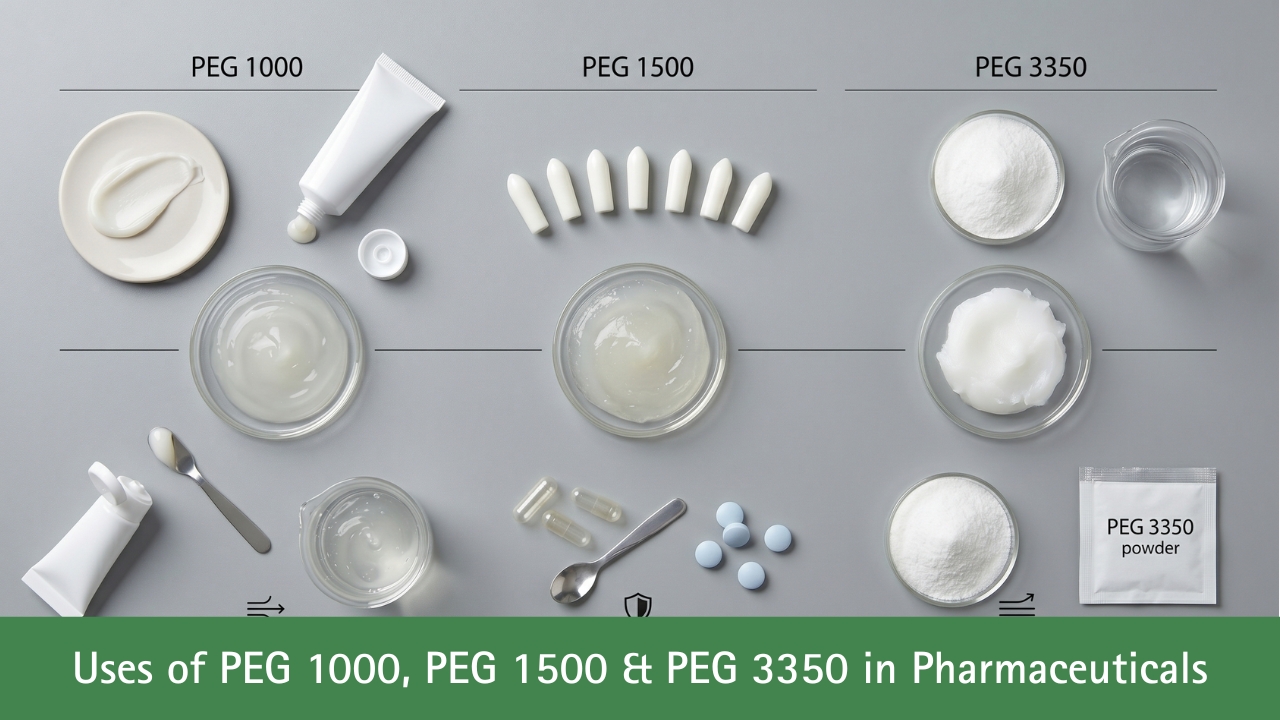
What Are the Uses of Polyethylene Glycol 1000, PEG 1500, and PEG 3350 in Pharmaceuticals?
Medium molecular weight PEGs such as PEG 1000, PEG 1500, and PEG 3350 are widely used in:
Applications:
- Ointment bases
- Suppositories
- Controlled-release formulations
- Laxatives (PEG 3350)
Polyethylene Glycol 3350 is especially well-known for its use in:
- Osmotic laxatives
- Bowel preparation solutions
These PEG grades provide:
- Controlled viscosity
- Stable semi-solid consistency
- Improved drug release profiles
Pharcos Speciality manufactures pharmacopeia-compliant PEG 3350, widely used in regulated pharmaceutical markets.
How Are Polyethylene Glycol 4000, PEG 6000, and PEG 8000 Used in Tablet and Solid Dosage Forms?
High molecular weight PEGs such as Polyethylene Glycol 4000, PEG 6000, and PEG 8000 are solid materials used in tablet formulations.
Key Functions:
- Tablet binders
- Film coating agents
- Plasticizers
- Controlled-release matrices
These PEGs help:
- Improve tablet hardness
- Enhance coating flexibility
- Control drug release rates
They are essential for modern solid dosage formulations.
Pharcos Speciality provides high molecular weight PEGs with consistent quality, supporting advanced pharmaceutical manufacturing.
What Are the Advanced Uses of Polyethylene Glycol 10000 and PEG 20000 in Drug Delivery?
Very high molecular weight PEGs such as Polyethylene Glycol 10000 and PEG 20000 are used in specialized applications.
Applications:
- PEGylation of biologics
- Advanced drug delivery systems
- Sustained-release formulations
These PEGs enhance:
- Drug stability
- Circulation time in the body
- Reduced immunogenicity
Such applications are critical in biopharmaceutical innovation.
Pharcos Speciality supports these advanced applications with high-purity PEG suitable for regulated markets.
Our Other Product
Hydroxypropyl Methylcellulose (Pharmaceutical HPMC)How Does Molecular Weight of PEG Impact Drug Solubility and Bioavailability?
Molecular weight directly influences PEG’s ability to enhance drug performance.
- Low MW PEG → High solubility and fast absorption
- Medium MW PEG → Balanced release and stability
- High MW PEG → Controlled and sustained release
This allows formulators to:
- Customize drug delivery
- Improve therapeutic outcomes
- Enhance patient compliance
Choosing the correct PEG grade is essential for optimizing formulation success.
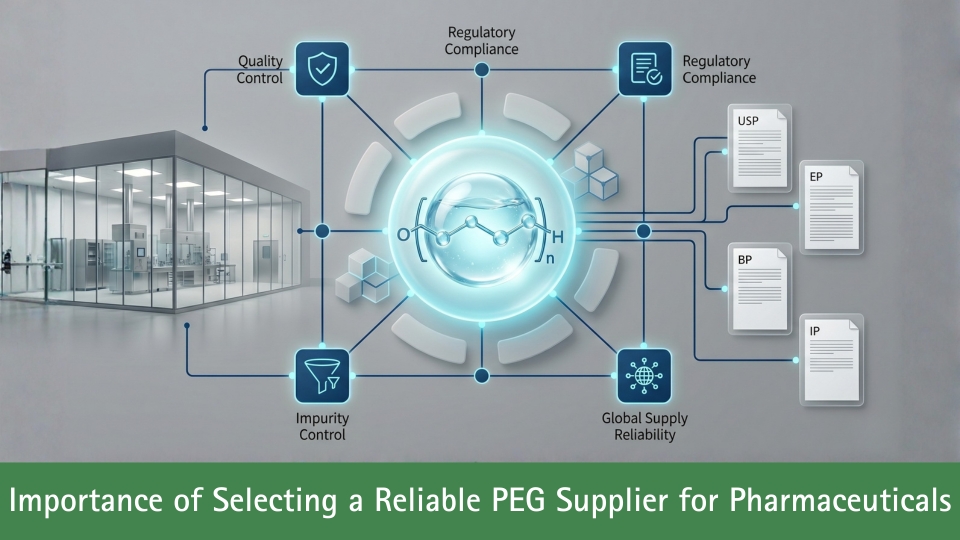
Why Is Choosing the Right PEG Manufacturer Important for Pharmaceutical Applications?
Selecting a reliable PEG manufacturer ensures:
- Consistent molecular weight distribution
- Compliance with USP, EP, BP, and IP standards
- Low impurity levels (EG/DEG control)
- Reliable global supply
Pharcos Speciality stands out as a trusted Polyethylene Glycol manufacturer, offering:
- Pharcogol® PEG range
- WHO-GMP certified manufacturing
- Multi-pharmacopeial compliance
- Custom solutions for pharmaceutical companies
This makes them a preferred partner for global pharmaceutical formulations.
How Does Pharcos Speciality Support Pharmaceutical Companies with PEG Solutions?
Pharcos Speciality provides comprehensive PEG solutions across all molecular weights.
Key Strengths:
- Wide product range (PEG 200 to PEG 20000)
- Regulatory compliance (USP-NF, EP, BP, IP)
- Custom formulation support
- Strong R&D and quality control
Their PEG products are used in:
- Tablets
- Capsules
- Liquid formulations
- Topical applications
With decades of experience, Pharcos ensures quality, consistency, and innovation in excipient supply.
What Are the Key Benefits of Using Different Molecular Weights of PEG in Pharmaceuticals?
Using different PEG grades provides:
- Flexibility in formulation design
- Improved drug solubility and stability
- Controlled drug release
- Compatibility with multiple dosage forms
This versatility makes PEG one of the most important excipients in pharmaceutical manufacturing.
 WhatsApp Now
What Are the Future Trends in Polyethylene Glycol Applications in Pharmaceuticals?
Emerging trends include:
- Increased use in biologics and PEGylation
- Advanced drug delivery systems
- Sustainable and eco-friendly PEG production
- Personalized medicine
As pharmaceutical technologies evolve, PEG continues to play a central role.
Conclusion: Why Understanding PEG Molecular Weights Is Critical for Pharmaceutical Success?
Understanding the different molecular weights of Polyethylene Glycol (PEG) is essential for selecting the right excipient for pharmaceutical formulations.
From PEG 200 to PEG 20000, each grade serves a unique purpose-whether enhancing solubility, improving stability, or controlling drug release.
Partnering with a reliable Polyethylene Glycol manufacturer like Pharcos Speciality ensures access to high-quality, compliant, and customizable PEG solutions that meet global pharmaceutical standards.
Our Other Product
HPMC 3 cps - Hydroxypropyl MethylcelluloseFAQs on Polyethylene Glycol
Dr. Avinash Dubey (R&D Head)
Dr. Avinash Dubey is a PhD in Organic Chemistry with a distinguished career spanning more than four decades. As the head of R&D at Pharcos, he focuses on the development of novel molecules for a wide array of industrial sectors, blending long-standing experience with a passion for innovation.

Mr. Ankit Shah (Managing Director)
Mr. Ankit Shah has led Pharcos Speciality for over three decades, establishing it as a pioneer in specialty chemicals. He currently directs the company’s strategic expansion into the APIs, Excipient and Speciality Surfactants markets, upholding a steadfast commitment to "Make in India" and world-class manufacturing quality and new product development.