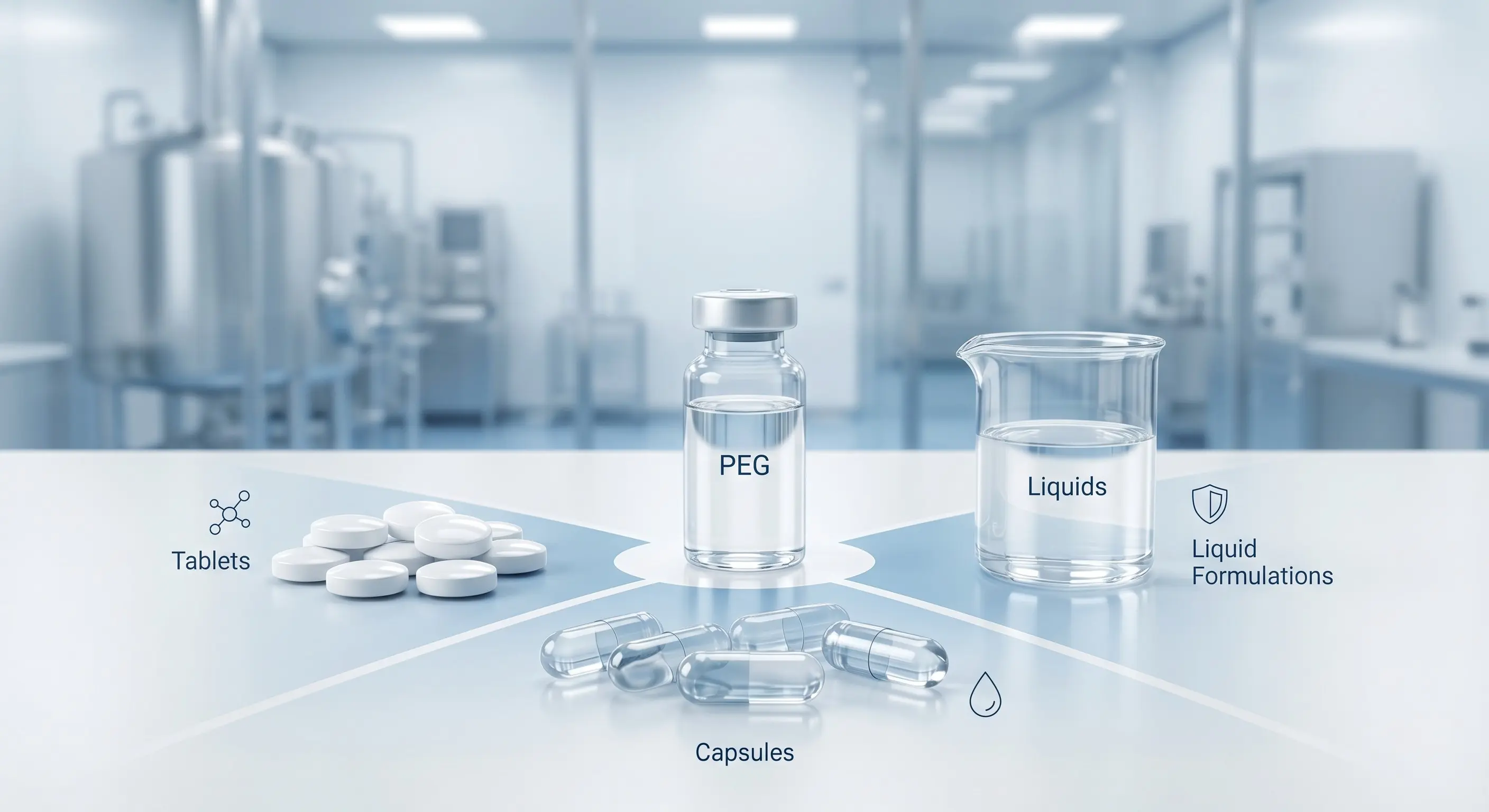
PEG as an Excipient: Functions in Tablets, Capsules, and Liquid Formulations



AI Summary
Polyethylene Glycol (PEG) is a versatile pharmaceutical excipient widely used in tablets, capsules, and liquid formulations due to its solubility, biocompatibility, and functional adaptability across molecular weights. It serves multiple roles including solubilizer, binder, plasticizer, lubricant, and drug delivery enhancer. PEG improves bioavailability of poorly soluble drugs, stabilizes formulations, and enhances patient compliance. Pharmaceutical-grade PEG must comply with global pharmacopeial standards (USP-NF, EP, BP, IP) to ensure safety and consistency. Companies like Pharcos Speciality provide high-purity PEG excipients designed for oral, topical, and parenteral applications, offering customized grades, regulatory support, and reliable global supply for pharmaceutical manufacturers.
What Is PEG as a Pharmaceutical Excipient and Why Is It Widely Used in Drug Formulations?
Polyethylene Glycol (PEG) is a water-soluble polymer widely used as an excipient in pharmaceutical formulations. It is available in different molecular weights, allowing it to function across a variety of dosage forms.
PEG is widely used because of:
- Excellent solubility in water and organic solvents
- Low toxicity and high biocompatibility
- Ability to enhance drug stability and absorption
As a result, PEG is considered a multi-functional excipient, playing a critical role in modern pharmaceutical formulations.
 WhatsApp Now
How Does PEG Function as an Excipient in Tablet Formulations?
PEG plays multiple roles in tablet formulations, making it indispensable in solid dosage forms.
Key Functions of PEG in Tablets:
- Binder: Helps hold active ingredients together for uniform tablet structure
- Lubricant: Reduces friction during tablet compression
- Plasticizer: Improves flexibility in film coatings
- Solubilizer: Enhances dissolution of poorly soluble drugs
PEG also supports controlled drug release when combined with polymers, ensuring consistent therapeutic outcomes.
Pharmaceutical manufacturers rely on high-purity PEG to maintain tablet integrity and performance-something ensured by advanced excipient providers.
How Is PEG Used as a Binder and Lubricant in Tablets?
PEG acts as both a binder and lubricant, improving manufacturing efficiency and product quality.
- As a binder, PEG ensures proper cohesion of powders during granulation
- As a lubricant, it reduces sticking and improves tablet ejection
This dual functionality simplifies formulation design and enhances scalability in production.
Companies like Pharcos Speciality manufacture PEG with consistent molecular weight distribution, ensuring reliable binding and lubrication performance in tablet formulations.
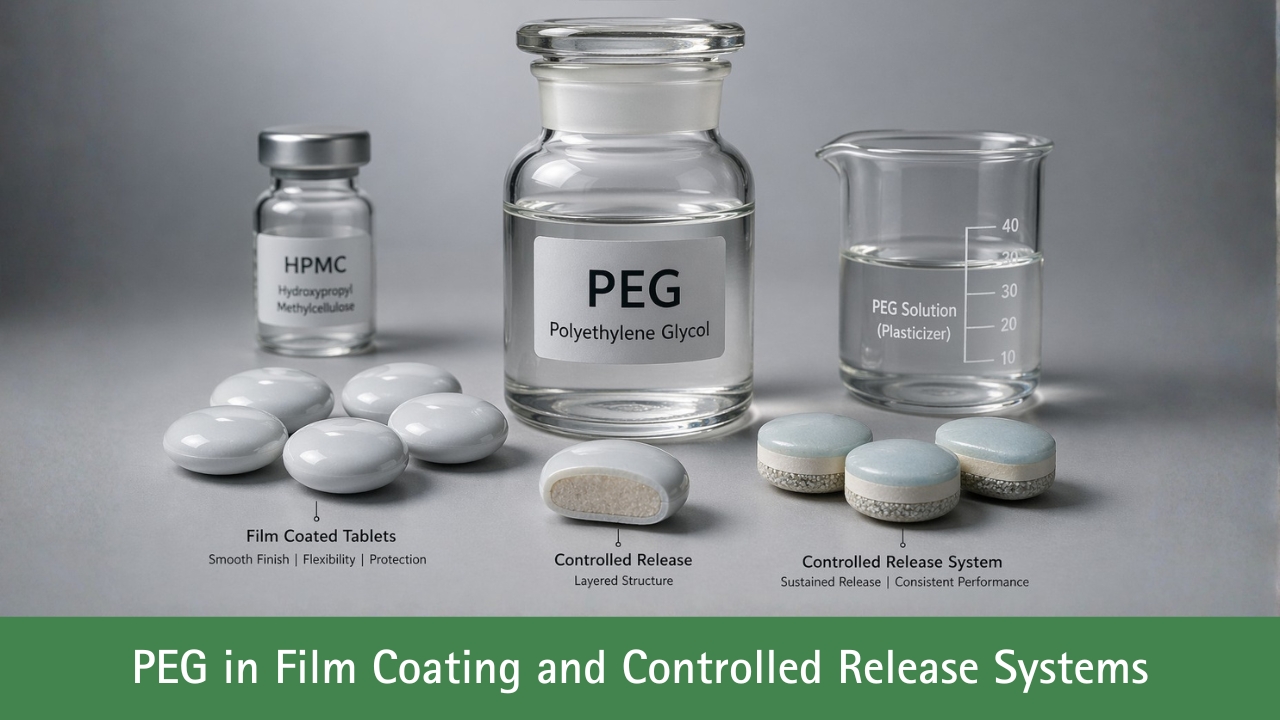
Why Is PEG Important in Tablet Film Coating and Controlled Release Systems?
PEG is widely used as a plasticizer in film coating systems, improving flexibility and preventing cracks.
In controlled-release formulations:
- PEG modifies drug release rates
- Enhances coating uniformity
- Improves patient compliance through better tablet appearance
Pharcos Speciality supports such applications with PEG and complementary excipients like HPMC for film coating and controlled-release systems, enabling optimized drug delivery.
How Does PEG Function as an Excipient in Capsule Formulations?
PEG is commonly used in both hard and soft gelatin capsules.
Key Functions in Capsules:
- Acts as a solubilizer for active pharmaceutical ingredients (APIs)
- Improves flow properties during capsule filling
- Enhances drug dissolution and absorption
In soft gel capsules, PEG serves as a solvent system for liquid formulations, enabling uniform drug distribution.
Why Is PEG Used in Soft Gel Capsules for Drug Solubilization?
Many modern drugs are poorly water-soluble, making solubilization critical.
PEG helps by:
- Increasing drug solubility
- Enhancing bioavailability
- Providing stable liquid matrices
PEG 400, for example, is widely used in oral liquid and capsule formulations to improve drug absorption.
Pharcos Speciality offers PEG grades specifically designed for solubilization, helping formulators overcome bioavailability challenges.
What Role Does PEG Play in Liquid Pharmaceutical Formulations?
PEG is extensively used in oral liquids, syrups, and injectables.
Key Functions in Liquid Formulations:
- Solubilizer for hydrophobic drugs
- Viscosity modifier
- Stabilizer for active ingredients
PEG ensures uniform distribution of APIs, preventing precipitation and improving shelf life.
How Does PEG Improve Drug Solubility and Bioavailability in Liquid Dosage Forms?
PEG enhances drug solubility through:
- Hydrogen bonding with drug molecules
- Formation of micellar systems
- Improved dispersion of APIs
This results in:
- Faster drug absorption
- Improved therapeutic efficacy
- Better patient outcomes
Pharcos Speciality’s PEG solutions are engineered to enhance bioavailability in oral and topical formulations, making them valuable for advanced drug delivery systems.
How Do Different Molecular Weights of PEG Affect Its Function as an Excipient?
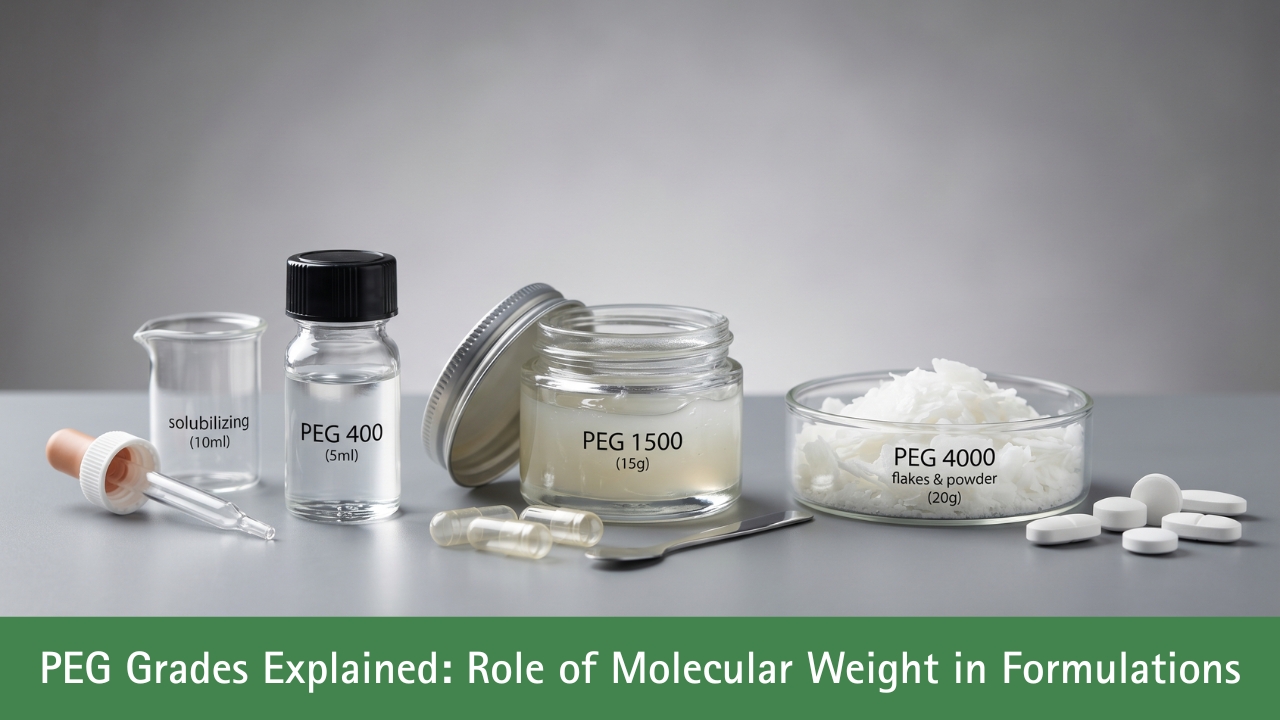
PEG’s functionality depends heavily on its molecular weight:
- Low MW (PEG 200–600): Liquid, used as solvents and solubilizers
- Medium MW (PEG 1000–2000): Semi-solid, used in ointments and capsules
- High MW (PEG 4000+): Solid, used in tablets and coatings
This versatility allows formulators to tailor PEG usage across multiple dosage forms.
Pharcos Speciality offers PEG ranging from low to high molecular weights, enabling precise formulation control.
Why Is Pharmaceutical Grade PEG Preferred Over Industrial PEG in Drug Formulations?
Pharmaceutical-grade PEG is essential due to:
- High purity and low impurity levels
- Compliance with USP, EP, BP, and IP standards
- Safety for human use
Industrial PEG lacks these standards and is unsuitable for pharmaceutical applications.
Pharcos Speciality ensures multi-pharmacopeial compliance and high purity, making it a reliable partner for regulated markets.
Our Other Product
PEG 800 (Polyethylene Glycol 800)How Does PEG Support Advanced Drug Delivery Systems Like PEGylation?
PEG is widely used in PEGylation, where it is attached to drug molecules to:
- Increase drug stability
- Extend circulation time
- Reduce immunogenicity
This is particularly important in biologics and targeted therapies.
PEG’s role in drug delivery continues to expand with advancements in pharmaceutical science.
How Can Pharcos Speciality Support Pharmaceutical Companies with PEG Excipients?
Pharcos Speciality plays a critical role as a global supplier of pharmaceutical-grade PEG excipients.
Key Advantages:
- Compliance with USP-NF, EP, BP, and IP standards
- WHO-GMP certified manufacturing facilities
- Wide range of PEG grades for diverse applications
- Customization based on formulation requirements
- Strong global supply network
Their PEG (Pharcogol®) is designed for:
- Tablets, capsules, and liquid formulations
- Solubilization and bioavailability enhancement
- Ointments and controlled-release systems
With over 50 years of expertise and presence in 30+ countries, Pharcos ensures consistent quality, regulatory support, and technical expertise for pharmaceutical manufacturers.
What Are the Key Benefits of Using PEG as an Excipient Across Dosage Forms?
PEG offers several advantages:
- Multi-functional excipient
- Excellent safety profile
- Compatibility with various APIs
- Improved drug stability and shelf life
- Enhanced patient compliance
These benefits make PEG one of the most widely used excipients in pharmaceutical formulations.
 Get It Now!
What Are the Future Trends of PEG in Pharmaceutical Applications?
Emerging trends include:
- Increased use in biologics and PEGylation
- Development of sustainable and eco-friendly PEG variants
- Advanced drug delivery systems
- Growing demand in personalized medicine
As pharmaceutical innovation continues, PEG remains a cornerstone excipient.
Conclusion: Why PEG Remains a Critical Excipient in Modern Pharmaceuticals?
PEG’s versatility, safety, and functionality make it indispensable across tablets, capsules, and liquid formulations. Its ability to enhance solubility, stability, and bioavailability ensures its continued relevance in pharmaceutical innovation.
With trusted manufacturers like Pharcos Speciality, pharmaceutical companies can access high-quality, compliant, and customizable PEG solutions that meet global regulatory standards and evolving formulation needs.
Our Other Product
PEG 1000 (Polyethylene Glycol 1000 | Macrogol 1000)FAQs on PEG
Dr. Avinash Dubey (R&D Head)
Dr. Avinash Dubey is a PhD in Organic Chemistry with a distinguished career spanning more than four decades. As the head of R&D at Pharcos, he focuses on the development of novel molecules for a wide array of industrial sectors, blending long-standing experience with a passion for innovation.
Mr. Ankit Shah (Managing Director)
Mr. Ankit Shah has led Pharcos Speciality for over three decades, establishing it as a pioneer in specialty chemicals. He currently directs the company’s strategic expansion into the APIs, Excipient and Speciality Surfactants markets, upholding a steadfast commitment to "Make in India" and world-class manufacturing quality and new product development.