
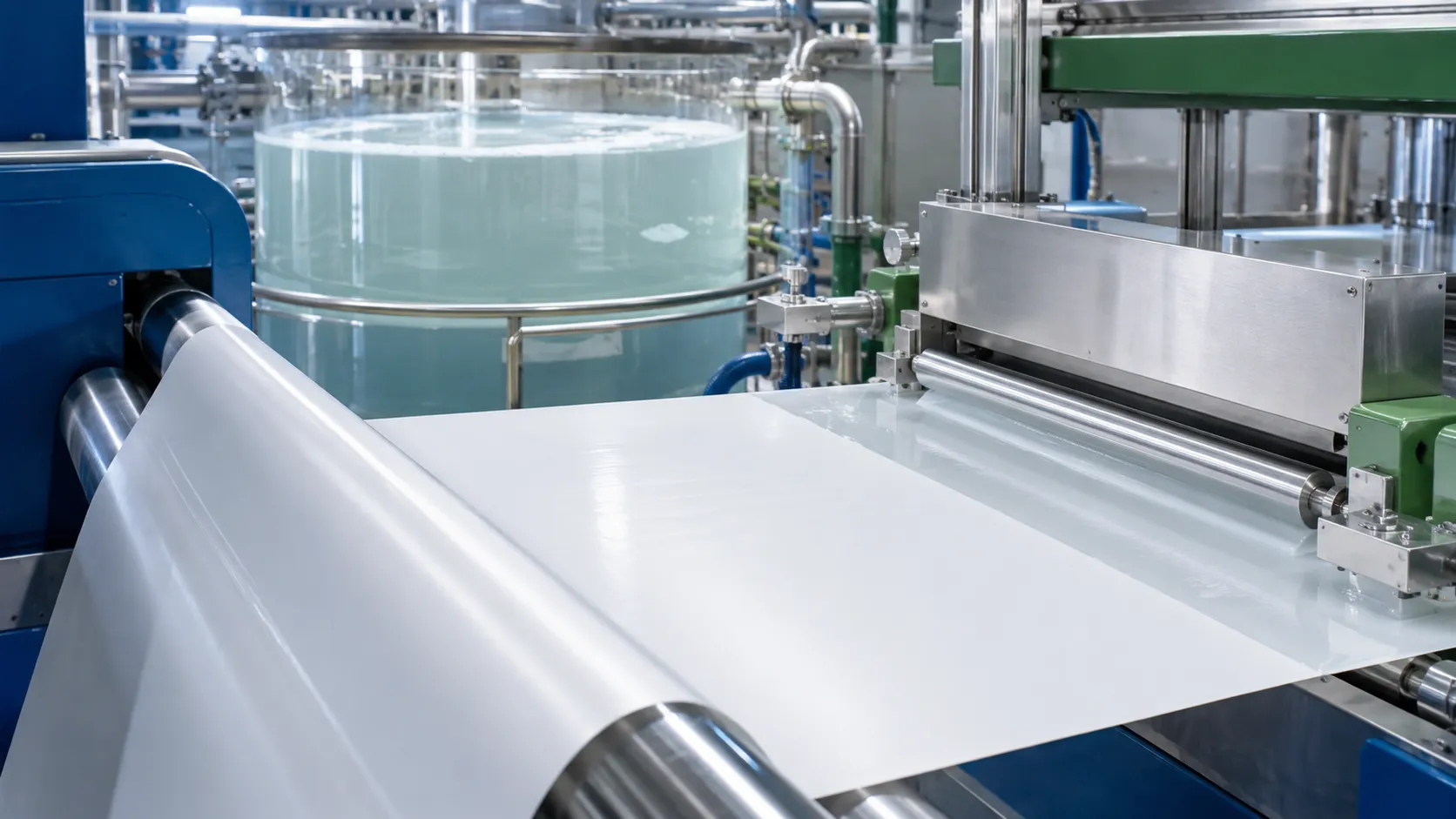
Specialty Chemicals for Paper and Pulp Processing: Wetting Agents, Coating Lubricants and Defoamers




AI Summary
Paper and pulp manufacturing depends on a small set of specialty chemicals to keep fiber processing, sheet formation and coating operations running efficiently. Wetting agents improve fiber wetting and support deinking during pulp preparation, particularly in recycled paper processing. Coating lubricants reduce friction and dusting during calendering, contributing to a smoother, more printable paper surface. Defoamers control foam generation at the wet end of the paper machine and within pulp mill process water, preventing sheet defects and production slowdowns. Together, these additives directly influence paper strength, smoothness, printability and overall manufacturing efficiency. This guide explains the role of each additive category across pulp processing, paper coating and defoaming applications, and outlines how Pharcos Speciality Ltd supports paper and pulp manufacturers with wetting agents, coating lubricants and defoaming chemistries manufactured in India.
 Call Us Now!
Why Specialty Chemicals Matter in Paper and Pulp Manufacturing
Paper manufacturing is a continuous, high speed process that moves fiber slurry through pulping, sheet formation, pressing, drying and, in many cases, coating and calendering, all within a single integrated production line. Specialty processing chemicals are used at each of these stages to keep the process running smoothly and to build specific performance characteristics into the finished sheet. A wetting agent that improves fiber dispersion during pulping, a lubricant that reduces friction during coating, or a defoamer that keeps the paper machine wet end free of disruptive foam, each addresses a distinct operational challenge, and together they have an outsized effect on both production efficiency and final paper quality.
Fiber Wetting Agents in Pulp Processing and Deinking
Pulp preparation, particularly when working with recycled fiber, depends on effective wetting to properly disperse fiber and separate contaminants such as ink from the pulp slurry.
Key contributions of wetting agents in pulp processing:
- Improved fiber wetting: alcohol ethoxylate based wetting agents help water fully penetrate and disperse pulp fiber, supporting more uniform slurry consistency ahead of sheet formation.
- Deinking support: in recycled paper processing, wetting agents assist in detaching ink particles from fiber surfaces, improving the effectiveness of the deinking process and supporting brighter, cleaner recycled pulp.
- Processing efficiency: better fiber wetting generally supports faster, more consistent pulp preparation, reducing processing time and improving downstream sheet uniformity.
Lauryl Alcohol Ethoxylate are a commonly used wetting agent chemistry in this application, valued for their combination of wetting speed and compatibility with pulp processing conditions.
Coating Lubricants for Paper Surface Quality
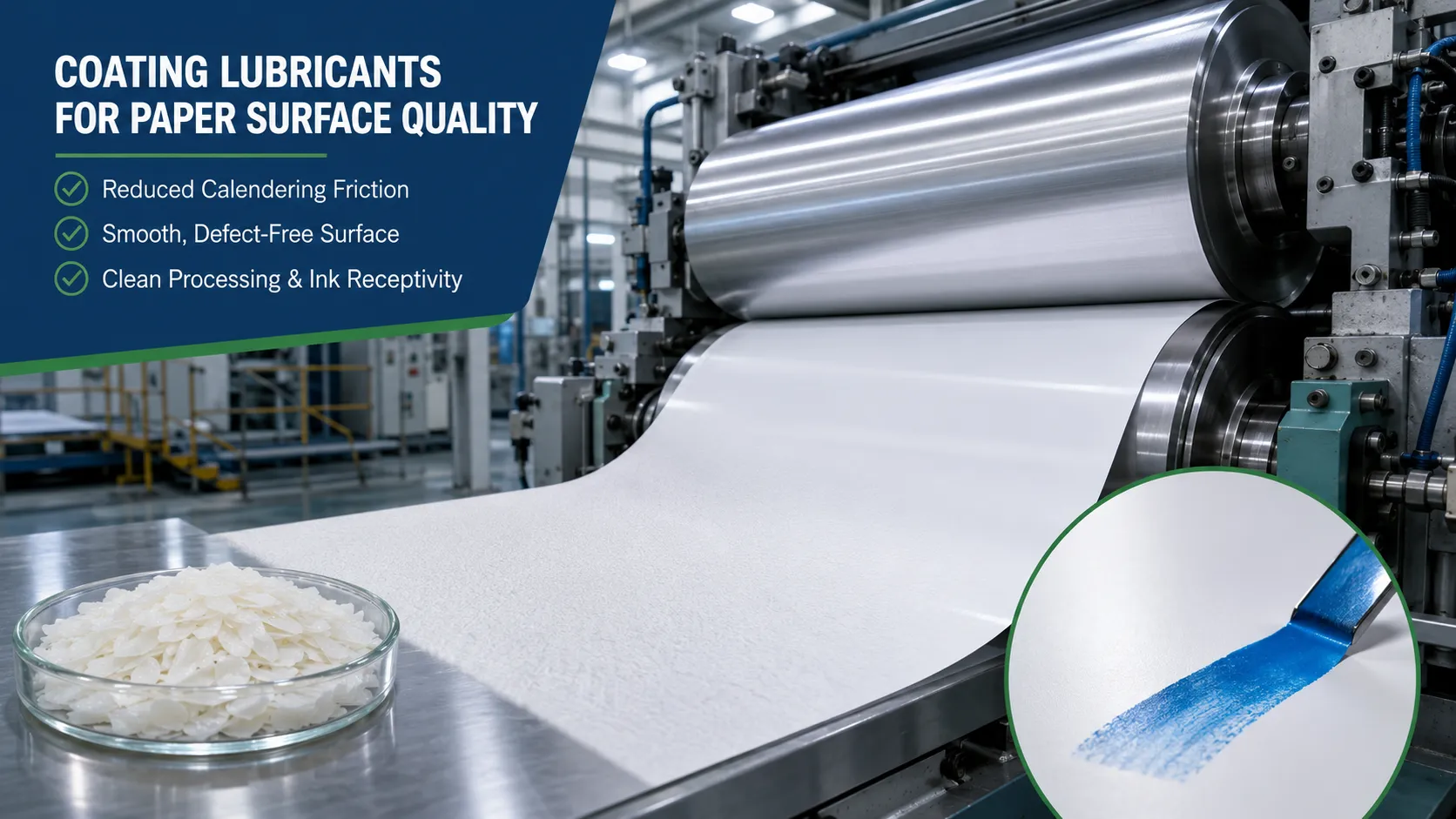
Coated paper grades, used for printing and packaging applications, rely on coating lubricants to achieve a smooth, defect free surface during the calendering process.
How coating lubricants improve paper quality:
- Reduced friction during calendering: Stearic Ethoxylates reduce friction between the paper surface and calendering equipment, supporting smoother processing.
- Improved surface smoothness: effective coating lubricants contribute directly to a smoother finished paper surface, an important quality attribute for printing grades.
- Reduced dusting: proper lubrication during calendering helps minimize dust generation, supporting cleaner operation and reducing surface defects.
- Preserved ink receptivity: a well selected coating lubricant improves surface smoothness and reduces friction without negatively affecting the paper's ability to accept and hold printing ink.
Defoaming Chemicals for Pulp Mills and Paper Machine Operation
Foam is a persistent operational challenge in paper manufacturing, capable of causing sheet defects, process water handling problems and reduced machine efficiency if not properly controlled.
Why defoaming matters at key process points:
- Pulp mill process water: foam generated during pulping and stock preparation can disrupt process water handling and reduce processing consistency if not controlled.
- Paper machine wet end: foam at the wet end of the paper machine, where the fiber slurry is formed into a continuous sheet, can lead to pinholes, sheet breaks and other visible defects in the finished paper.
- Low mole castor oil ethoxylates: castor oil ethoxylates are used as effective defoaming agents in both pulp mill and paper machine wet end applications, helping maintain stable, defect free sheet formation.
Our Other Product
Pharmaceutical Grade HPMCHow These Chemicals Improve Paper Strength and Printability
The cumulative effect of properly selected wetting agents, coating lubricants and defoamers extends directly into finished paper performance.
- Paper strength: consistent, well dispersed fiber processing, supported by effective wetting agents, contributes to more uniform sheet formation and, in turn, more consistent paper strength properties.
- Smoothness: coating lubricants directly influence surface smoothness, a key quality attribute for both printing and packaging paper grades.
- Printability: smoother, more uniform paper surfaces generally accept printing ink more evenly, supporting sharper print quality and reduced ink consumption.
- Processing efficiency: effective defoaming reduces machine downtime and sheet defects, directly supporting overall production efficiency and yield.
Selecting Chemicals by Paper and Pulp Process Stage
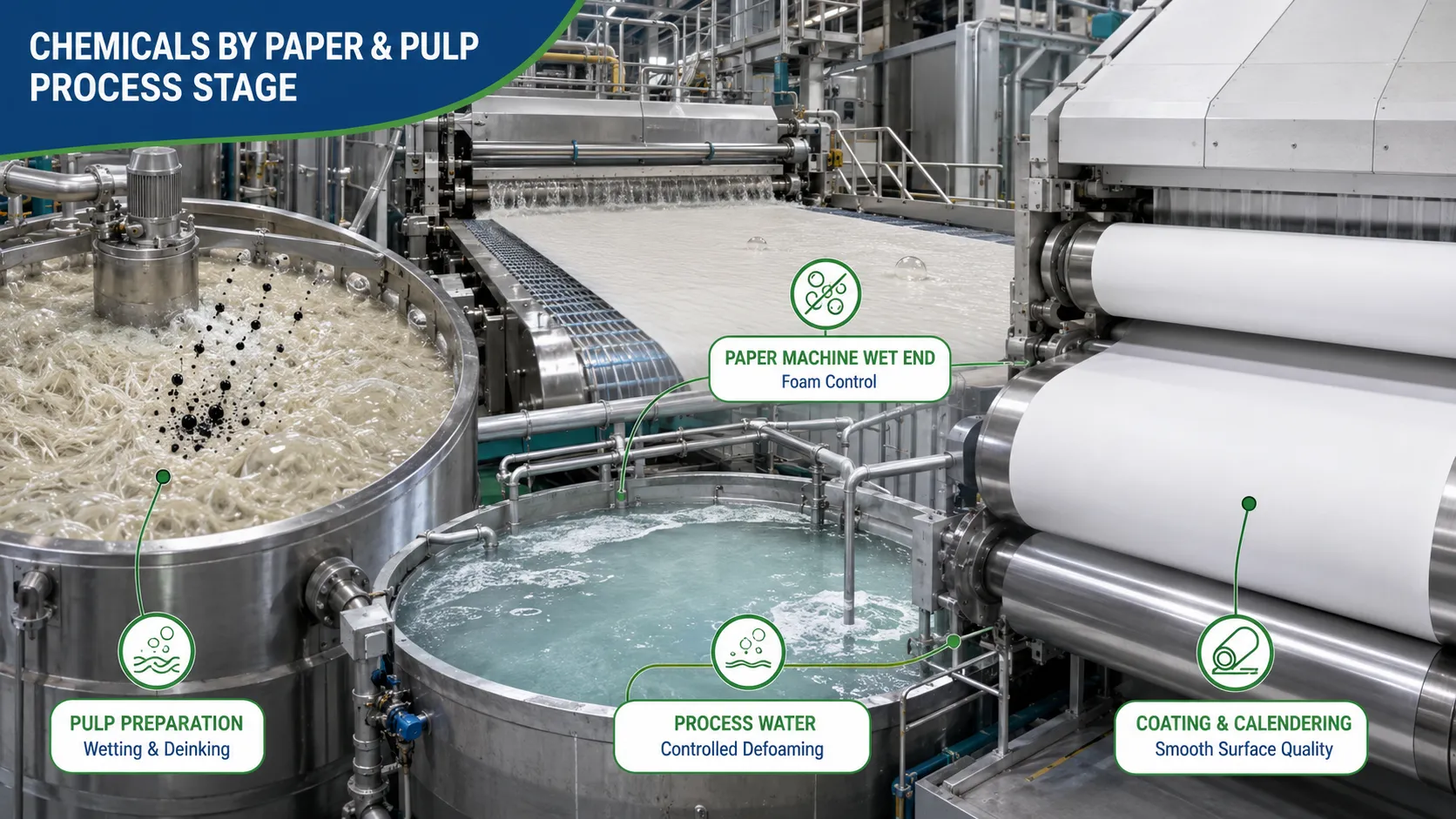
| Process Stage | Relevant Chemical Category | Primary Function |
|---|---|---|
| Pulp Preparation and Deinking | Alcohol ethoxylate wetting agents | Fiber wetting, ink detachment from recycled fiber |
| Paper Machine Wet End | Castor oil ethoxylate defoamers | Foam control during sheet formation |
| Pulp Mill Process Water | Low mole castor oil ethoxylate defoamers | Foam control in process water handling |
| Paper Coating and Calendering | Stearic acid ethoxylate lubricants | Reduced friction, improved smoothness, reduced dusting |
Sustainability and Biodegradability in Paper Processing Chemicals
The paper and pulp industry operates under significant environmental scrutiny, given its water intensive processes and the volume of process effluent generated.
- Biodegradable surfactant options: formulators increasingly favor wetting agents and process chemicals with favorable biodegradation profiles, supporting compliance with effluent discharge requirements and broader sustainability goals.
- Industry standards references: organizations such as the Technical Association of the Pulp and Paper Industry publish widely referenced testing standards for paper properties, while national environmental regulators set effluent discharge limits that indirectly shape which process chemicals are suitable for use.
- Recycled fiber processing: as demand for recycled paper content grows, driven partly by sustainability certifications relevant to the paper industry, effective deinking and wetting chemistry becomes an increasingly important part of maintaining paper quality while using recycled input material.
Why Choose Pharcos Speciality for Paper and Pulp Chemicals
Pharcos Speciality Ltd supplies specialty chemicals for the paper and pulp industry<, supporting pulp preparation, paper machine operation and coating processes with wetting agents, lubricants and defoamers.
What Pharcos offers paper and pulp manufacturers:
- Fiber wetting and deinking support: Lauryl Alcohol Ethoxylate grades that improve fiber wetting and deinking performance in recycled paper pulp preparation.
- Coating lubrication: Stearic Ethoxylates that act as coating lubricants, improving surface smoothness and reducing dusting during calendering, alongside select Polyethylene Glycol grades used as complementary paper coating lubricants.
- Effective defoaming: Low mole Castor Oil Ethoxylates providing reliable defoaming performance in pulp mills and paper machine wet ends.
- Process optimization support: technical guidance on wetting, drainage and retention performance to help improve paper machine productivity.
- Environmental focus: biodegradable surfactant options that support sustainable paper manufacturing practices.
Paper and pulp manufacturers evaluating a specialty chemical supplier for pulp processing, coating lubrication or defoaming applications can contact the Pharcos technical team to discuss process requirements, request samples, and review documentation for their specific production line.
 WhatsApp Now
Conclusion
Efficient, high quality paper manufacturing depends on a well matched set of specialty chemicals working at each stage of the process, from fiber wetting and deinking through defoaming at the paper machine wet end to coating lubrication during calendering. Each of these additive categories addresses a distinct operational challenge, and together they directly shape paper strength, smoothness, printability and overall production efficiency. As sustainability expectations continue to shape the paper industry, biodegradable, well characterized process chemistry has become an increasingly important part of a manufacturer's raw material strategy.
For paper and pulp manufacturers sourcing these process chemicals, Pharcos Speciality Ltd offers a focused range of wetting agents, coating lubricants and defoamers manufactured in India, backed by technical support to help optimize chemical selection for specific pulp, paper machine and coating requirements.
Our Other Product
Pharmaceutical Grade Polyethylene Glycol (PEG)Frequently Asked Questions

Dr. Avinash Dubey (R&D Head)
Dr. Avinash Dubey is a PhD in Organic Chemistry with a distinguished career spanning more than four decades. As the head of R&D at Pharcos, he focuses on the development of novel molecules for a wide array of industrial sectors, blending long-standing experience with a passion for innovation.

Mr. Ankit Shah (Managing Director)
Mr. Ankit Shah has led Pharcos Speciality for over three decades, establishing it as a pioneer in specialty chemicals. He currently directs the company’s strategic expansion into the APIs, Excipient and Speciality Surfactants markets, upholding a steadfast commitment to "Make in India" and world-class manufacturing quality and new product development.