
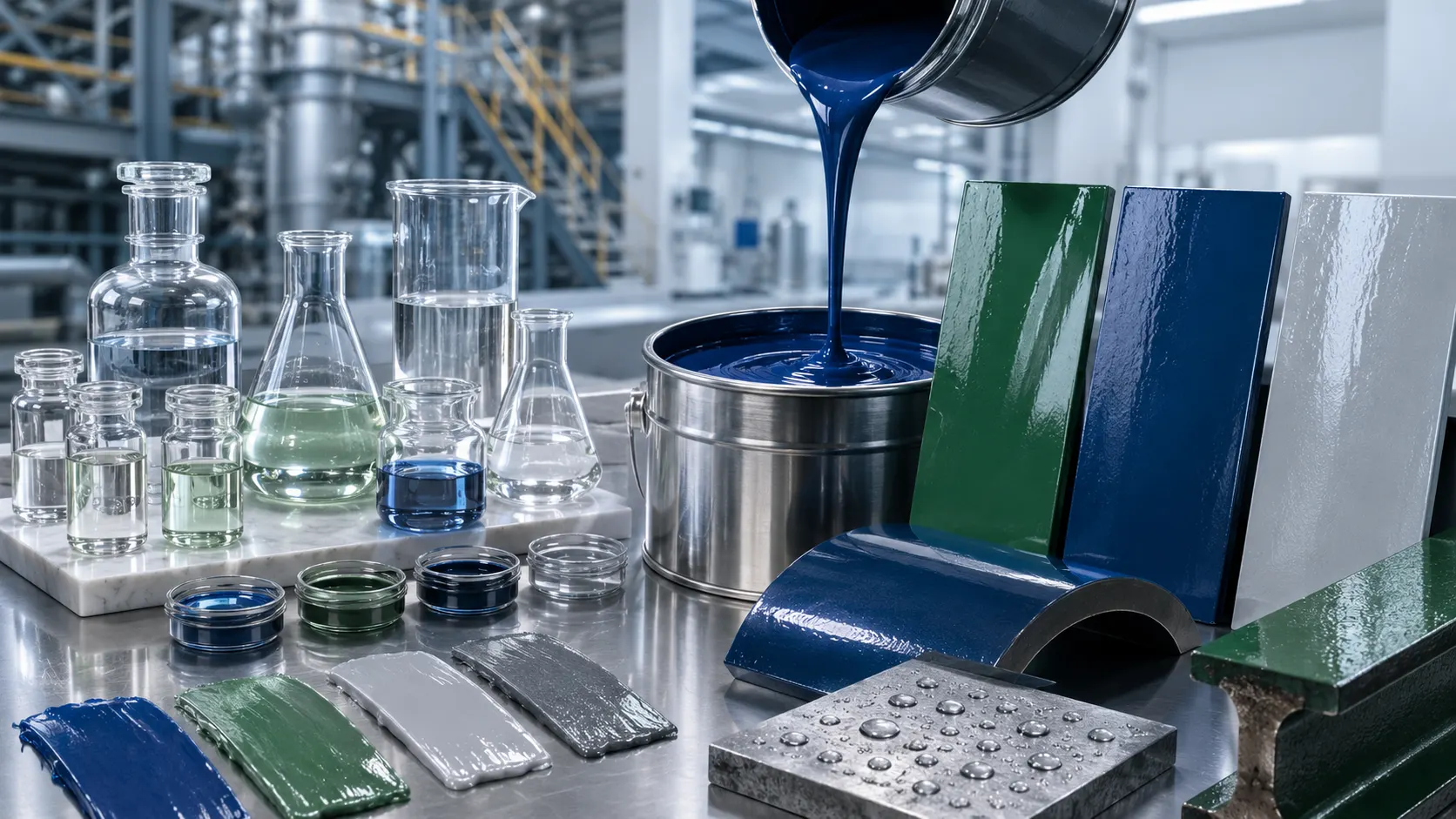
How Specialty Chemical Additives Enhance the Performance of Industrial Paints and Protective Coatings




AI Summary
Modern industrial paints and protective coatings depend on a small set of specialty chemical additives to achieve consistent quality, application performance and durability. Surfactants control particle formation during emulsion polymerization and directly influence latex stability. Wetting agents and dispersants break down pigment agglomerates and keep pigment particles evenly suspended, which determines color strength, gloss and surface finish. Stabilizers protect the finished emulsion from coagulation during storage, transport and freeze thaw cycling. Together, these additives shape nearly every performance attribute a formulator or end user notices, from film uniformity and hiding power to shelf stability and resistance to environmental stress. With global regulations such as the European Union REACH Annex XVII restriction and United States EPA reporting requirements limiting the use of nonylphenol ethoxylates, the paint and coatings industry has increasingly shifted toward alcohol ethoxylate and Ceteareth based surfactant systems that deliver comparable wetting and emulsification performance with an improved environmental profile. This guide explains how each additive category functions, compares traditional and NPE free surfactant systems, and outlines how Pharcos Speciality Ltd supports paint and coating manufacturers with a dedicated range of surfactants, dispersants, stabilizers and eco solvents manufactured in India.
Why Specialty Chemical Additives Matter in Paint and Coating Formulation
A finished paint or protective coating is far more than pigment, resin and solvent mixed together. The performance a customer actually experiences, smooth application, even color, resistance to sagging or settling, and long term film durability, is largely governed by a small percentage of specialty chemical additives working behind the scenes. Surfactants, dispersants and stabilizers influence how the coating behaves at every stage: during manufacture through emulsion polymerization, during storage and transport, and during final application and film formation.
Because these additives are used at relatively low concentrations but have an outsized effect on finished product quality, selecting the right additive chemistry and grade is one of the highest leverage decisions a paint or coating formulator makes.
 WhatsApp Now
Understanding Surfactants, Dispersants and Stabilizers
Point wise overview of the core additive categories used in paint and coating manufacturing:
- Surfactants: surface active agents that reduce interfacial tension between water, resin and pigment phases, enabling emulsification, wetting and, in waterborne systems, the emulsion polymerization process itself.
- Dispersants: chemistries specifically formulated to break apart pigment agglomerates and keep individual pigment particles evenly suspended throughout the coating, preventing settling and supporting consistent color development.
- Stabilizers: additives that protect an already formed emulsion or dispersion from breaking down over time, whether from mechanical shear, temperature fluctuation or extended storage.
- Eco Solvents: vegetable oil ester based solvents used as lower impact alternatives to traditional petroleum derived solvents in select coating formulations.
While these categories are functionally distinct, many paint formulations rely on a single surfactant or ethoxylate chemistry to perform more than one of these roles simultaneously, which is part of why correct additive selection has such a significant impact on overall formulation efficiency.
Emulsion Polymerization Surfactants: Building the Foundation of Waterborne Coatings
Waterborne coatings, including acrylic, vinyl acetate and styrene butadiene emulsion systems, are built through emulsion polymerization, a process in which monomer droplets are stabilized in water using surfactants before being polymerized into latex particles.
Key surfactant chemistries used in emulsion polymerization:
- Octyl Phenol Ethoxylates: widely used as primary surfactants in emulsion polymerization, these help control particle nucleation and particle size distribution during the polymerization reaction, directly influencing the final latex properties.
- Ceteareth Ethoxylate Variants: used both as primary polymerization surfactants and as post polymerization stabilizers, particularly valuable in NPE free formulation strategies.
Why surfactant selection matters at this stage:
- Particle size control: surfactant type and concentration directly affect monomer droplet size, which in turn determines the final latex particle size distribution.
- Polymerization stability: an inadequately stabilized emulsion can coagulate mid reaction, resulting in batch failure and production loss.
- Downstream film properties: particle size distribution established during polymerization carries through to influence film forming temperature, gloss and mechanical film properties in the finished coating.
Standard grades used across the industry for this application include Octyl Phenol Ethoxylates at 10 and 30 mole ethoxylation levels, valued for their reliability in controlling particle size and latex stability across acrylic, vinyl acetate and styrene butadiene emulsion polymerization processes.
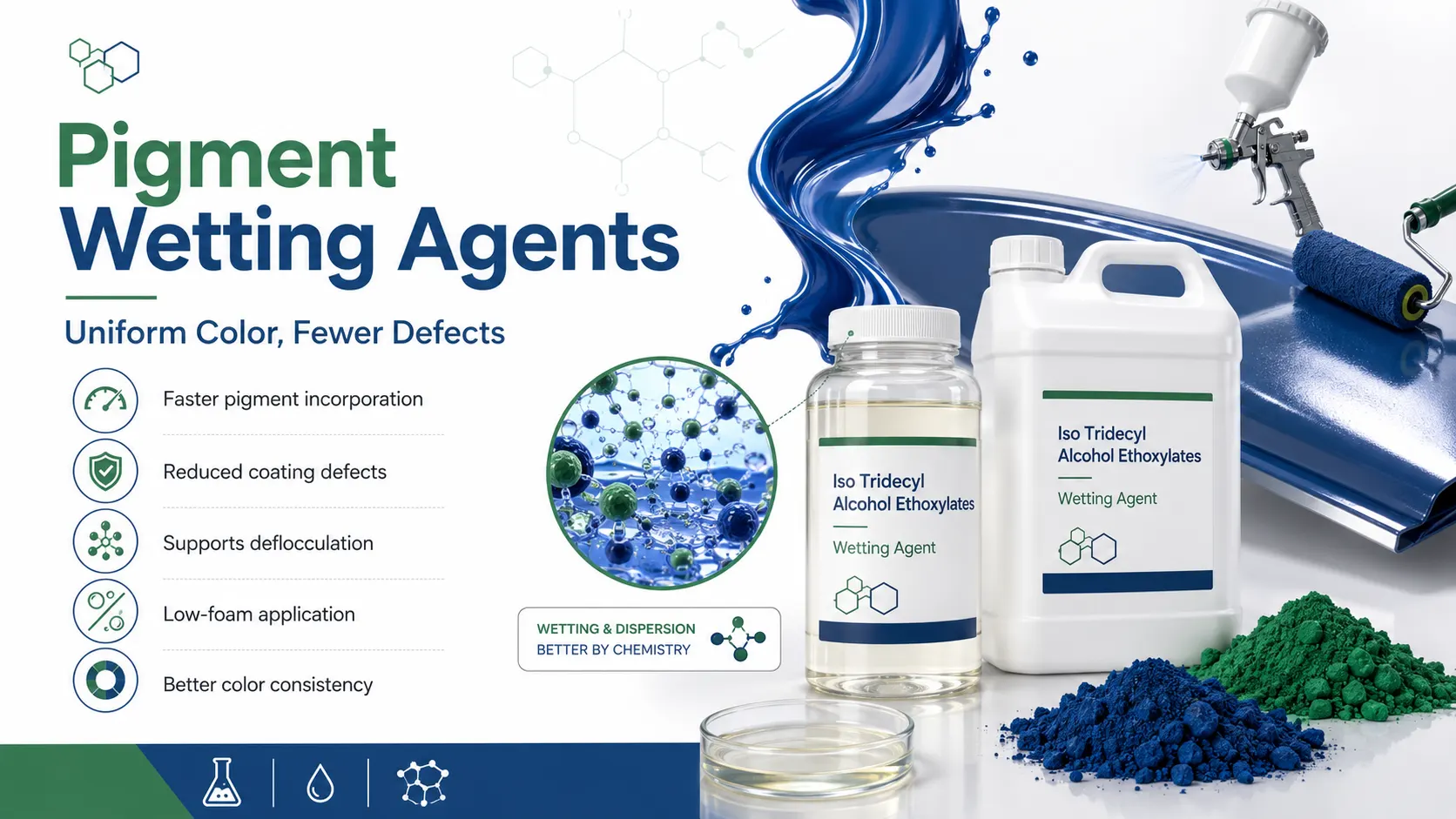
Pigment Wetting Agents: Achieving Uniform Color with Fewer Defects
Before a pigment can be evenly dispersed within a coating, its surface must first be properly wetted, meaning the surrounding liquid medium fully displaces air and other contaminants from the pigment particle surface.
How wetting agents improve coating quality:
- Faster, more complete pigment incorporation: effective wetting agents reduce the time and energy needed to fully incorporate pigment into the coating base during manufacturing.
- Reduced defects: poor wetting is a common root cause of visible defects such as pigment specking, color streaking and uneven gloss in the finished film.
- Deflocculation support: wetting agents work alongside dispersants to prevent pigment particles from re agglomerating after initial dispersion.
- Application system compatibility: low foam wetting agents are particularly valuable for roller and spray application systems, where excessive foam generated during manufacturing or application can lead to surface defects in the finished coating.
Iso Tridecyl Alcohol Ethoxylates are a commonly referenced wetting agent chemistry in this category, valued for delivering strong pigment wetting and deflocculation performance with a lower foam profile compared to traditional nonylphenol ethoxylate based wetting agents.
Latex Stabilization: Protecting Coatings Through Storage and Freeze Thaw Cycling
Once an emulsion polymer has been formed, it must remain stable through blending, packaging, storage, shipping and, in many climates, repeated freezing and thawing before it ever reaches the application stage.
What can cause latex instability:
- Mechanical shear during pumping, mixing or transport
- Temperature extremes, particularly repeated freeze thaw cycling in cold climate storage or shipping
- Extended storage duration, especially in less than ideal warehouse conditions
- Incompatibility between the stabilizing surfactant system and other formulation components
How stabilizer chemistries address these risks:
- Stearyl Alcohol Ethoxylates: provide post polymerization stability, helping prevent coagulation during storage and through freeze thaw cycling.
- Ceteareth Ethoxylates: used both in initial polymerization and as an added post polymerization stabilizer, supporting long term emulsion integrity.
Freeze thaw stability testing, commonly evaluated using recognized coating industry test methods, is a standard quality benchmark that formulators use to confirm a stabilizer system will hold up under real world storage and transport conditions, particularly for coatings distributed across regions with cold winter climates.
Our Other Product
Hydroxypropyl Methylcellulose (Pharmaceutical HPMC)Pigment Dispersion Additives and Deflocculation
Pigment dispersion is the process of breaking down pigment agglomerates into individual, well separated particles and keeping them that way throughout the life of the coating.
Key dispersant chemistries and their function:
- Styrenated Phenols: used as dispersants that provide effective pigment wetting and deflocculation, supporting stable, well developed color throughout the coating batch.
- General purpose wetting and dispersing agents: used alongside primary dispersants to fine tune pigment dispersion performance across different pigment types and loading levels.
Benefits of proper pigment dispersion:
- Improved color strength and consistency: properly dispersed pigment develops its full tinting strength, supporting accurate, repeatable color matching across production batches.
- Better gloss and surface appearance: well dispersed pigment particles contribute to a smoother, more uniform film surface.
- Reduced settling during storage: effective deflocculation reduces the tendency of pigment to settle and cake at the bottom of a container during storage.
- Lower foam profile: modern dispersant chemistries, compared to traditional nonylphenol ethoxylate based systems, generally offer improved foam control, reducing the risk of foam related surface defects.
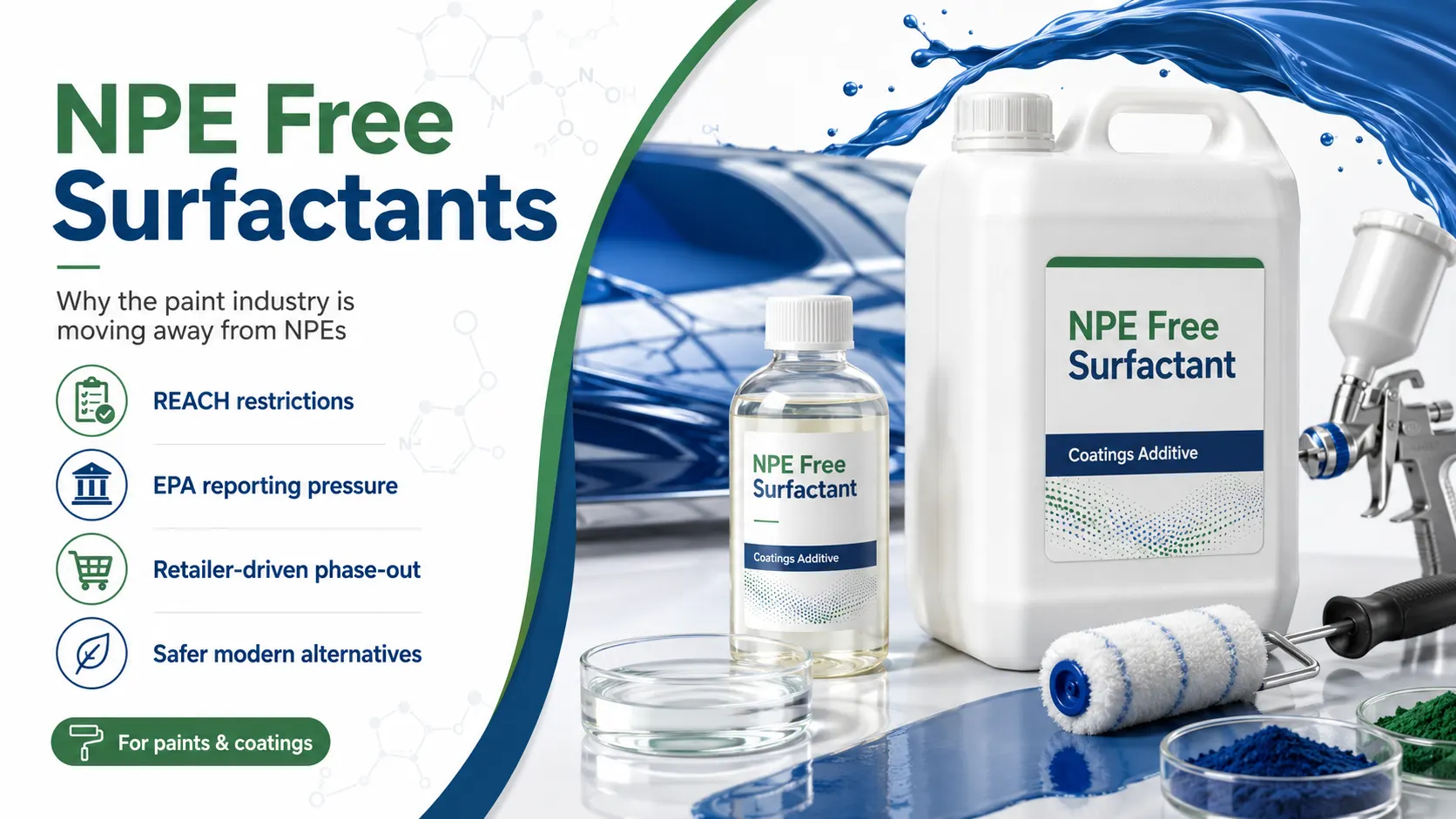
Why the Paint Industry Is Moving Toward NPE Free Surfactants
Nonylphenol ethoxylates, commonly abbreviated as NPEs, were historically widely used across paint, coating and industrial cleaning formulations due to their strong wetting and emulsifying performance. Regulatory attention over the past two decades, however, has significantly reduced their use.
Regulatory background:
- European Union: nonylphenol and nonylphenol ethoxylates are restricted under Annex XVII of the REACH Regulation, with strict concentration limits applying across a wide range of product categories due to their classification as a priority hazardous substance under the Water Framework Directive.
- United States: the Environmental Protection Agency has taken regulatory action on NPEs under the Toxic Substances Control Act, including requiring annual release reporting for a defined list of nonylphenol ethoxylates under the Toxics Release Inventory program.
- Retailer and brand driven restrictions: beyond government regulation, several major retailers have independently directed suppliers to eliminate NPEs from household and personal care products, reinforcing market pressure toward alternative chemistries.
Why alcohol ethoxylates and Ceteareth chemistries are replacing NPEs:
Alcohol ethoxylate surfactants, including Iso Tridecyl Alcohol Ethoxylates and Ceteareth variants, are widely used as NPE free replacements in paint and coating formulations, offering comparable wetting, emulsification and stabilization performance while avoiding the environmental persistence and aquatic toxicity concerns associated with nonylphenol degradation products.
Low VOC and Eco Friendly Additives for Sustainable Coating Formulation
Volatile organic compound content is a major regulatory and market driven consideration in modern coating formulation, particularly for architectural and decorative paints sold into regions with defined VOC emission limits for coatings.
How specialty additives support low VOC and eco conscious formulation goals:
- Water based surfactant systems: using water as the primary carrier for emulsion polymerization and dispersion systems directly supports low VOC formulation targets compared to solvent based alternatives.
- Eco solvents based on vegetable oil esters: these serve as a lower impact alternative to traditional petroleum derived solvents in coating systems where some solvent character is still required.
- Formulation efficiency: effective wetting and dispersing agents reduce the amount of raw material and processing energy needed to achieve target dispersion quality, indirectly supporting more resource efficient manufacturing.
Formulators working toward specific regional VOC compliance targets should confirm current limits with the relevant regulatory body for their target market, since permitted VOC content varies by coating category and jurisdiction.
Traditional NPE Surfactants vs Alcohol Ethoxylate Alternatives
| Attribute | Traditional NPE Surfactants | Alcohol Ethoxylate and Ceteareth Alternatives |
|---|---|---|
| Wetting and Emulsification Performance | Strong, historically the industry standard | Comparable performance in most paint and coating applications |
| Environmental Profile | Degrades to nonylphenol, a persistent, aquatic toxicity concern | Generally more favorable biodegradation profile |
| Regulatory Status | Restricted under EU REACH Annex XVII; subject to US EPA reporting requirements | Not subject to the same restrictions |
| Foam Profile | Can generate higher foam in certain systems | Generally lower foam, suited to roller and spray application |
| Suitability for Export Formulations | Increasingly limited for products sold into regulated markets | Broadly suitable across regulated and unregulated markets |
This comparison reflects general industry trends and current regulatory status as commonly reported by regulatory bodies and industry sources; formulators should always confirm current requirements for their specific target market before finalizing a raw material selection.
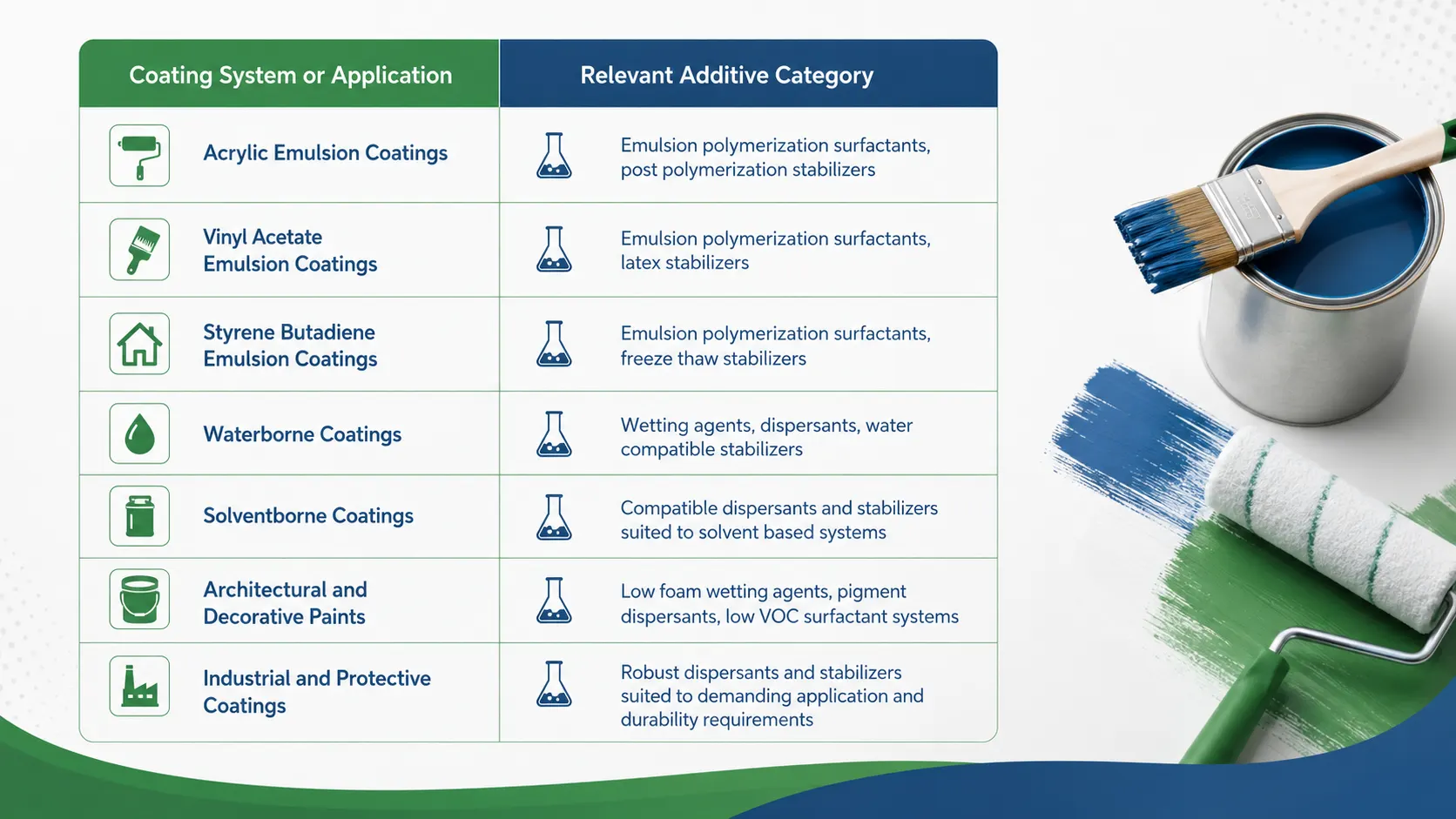
Selecting Additives by Coating System and Application
| Coating System or Application | Relevant Additive Category |
|---|---|
| Acrylic Emulsion Coatings | Emulsion polymerization surfactants, post polymerization stabilizers |
| Vinyl Acetate Emulsion Coatings | Emulsion polymerization surfactants, latex stabilizers |
| Styrene Butadiene Emulsion Coatings | Emulsion polymerization surfactants, freeze thaw stabilizers |
| Waterborne Coatings | Wetting agents, dispersants, water compatible stabilizers |
| Solventborne Coatings | Compatible dispersants and stabilizers suited to solvent based systems |
| Architectural and Decorative Paints | Low foam wetting agents, pigment dispersants, low VOC surfactant systems |
| Industrial and Protective Coatings | Robust dispersants and stabilizers suited to demanding application and durability requirements |
How These Additives Influence Final Film Performance
The cumulative effect of surfactant, wetting agent, dispersant and stabilizer selection is ultimately expressed in the finished, dried coating film.
- Particle size distribution: established during emulsion polymerization, this influences minimum film formation temperature and the smoothness of the final film.
- Film forming properties: proper surfactant and stabilizer selection supports uniform particle coalescence during drying, contributing to a continuous, defect free film.
- Gloss and surface appearance: well dispersed pigment and appropriate wetting agent selection directly support consistent gloss and surface finish.
- Long term durability: coatings built on a well stabilized emulsion and properly dispersed pigment system generally show better resistance to cracking, chalking and color fade over the service life of the coating.
- Paint rheology: additive selection also interacts with rheology modifiers to determine application behavior, including brushability, sag resistance and leveling.
 Call Us Now!
Why Choose Pharcos Speciality for Paint and Coating Additives
Pharcos Speciality Ltd manufactures a dedicated range of surfactants, dispersants, eco solvents and stabilizers for the paint and coatings industry, supporting formulators developing waterborne and solventborne coating systems.
What Pharcos offers paint and coating manufacturers:
- Emulsion polymerization expertise: surfactants optimized for vinyl acetate, acrylic and styrene butadiene emulsion polymerization processes, including Octyl Phenol Ethoxylate grades at standard 10 and 30 mole ethoxylation levels for controlling particle size and latex stability.
- NPE free alternatives: Alcohol Ethoxylate grades, including Iso Tridecyl Alcohol Ethoxylates and Ceteareth series products at 20 to 25 mole ethoxylation levels, offering comparable wetting and emulsification performance with an improved environmental profile for formulators moving away from nonylphenol ethoxylate chemistry.
- Latex stabilization solutions: Stearyl Alcohol Ethoxylates and Ceteareth ethoxylates for post polymerization stability, helping prevent coagulation during storage and freeze thaw cycling.
- Pigment dispersion additives: Styrenated Phenol dispersants and wetting agents offering effective pigment wetting and deflocculation with a lower foam profile compared to traditional nonylphenol ethoxylate based systems.
- Low VOC solution support: water based surfactant systems that support regulatory compliance and low VOC formulation targets across architectural, decorative and industrial coating categories.
- Technical optimization support: a technical team available to help formulators optimize particle size distribution, latex stability and film forming properties through informed surfactant and dispersant selection.
Paint and coating manufacturers evaluating a specialty chemical manufacturer for paints, an industrial surfactant manufacturer, or a coating additive supplier in India can contact the Pharcos technical team to discuss grade selection for acrylic, vinyl acetate or styrene butadiene emulsion systems, request samples, and review documentation for their specific formulation and target market.
Our Other Product
Polyethylene Glycol (Pharmaceutical Grade PEG)Conclusion
The performance gap between an average coating and a genuinely high performing one is very often decided at the additive level, not the resin or pigment level. Surfactants determine how successfully an emulsion polymer forms and how stable it remains through the product's entire storage and transport life. Wetting agents and dispersants determine whether pigment develops its full color strength and stays evenly suspended. Stabilizers determine whether a coating survives shipping, seasonal temperature swings and extended shelf life without failing before it ever reaches the application stage. As global regulation continues to restrict legacy chemistries such as nonylphenol ethoxylates, formulators who have already transitioned to alcohol ethoxylate and Ceteareth based systems are better positioned for both regulatory compliance and long term formulation stability.
For paint and coating manufacturers evaluating additive suppliers, working with a manufacturer that understands the specific demands of emulsion polymerization, pigment dispersion and latex stabilization, rather than treating surfactants as a generic commodity, makes a measurable difference in finished product quality. Pharcos Speciality Ltd, as a specialty chemical manufacturer serving the paint and coatings industry from India, offers a focused range of surfactants, dispersants, stabilizers and eco solvents, backed by technical support to help identify the right additive system for a specific coating formulation and target market.
Frequently Asked Questions

Dr. Avinash Dubey (R&D Head)
Dr. Avinash Dubey is a PhD in Organic Chemistry with a distinguished career spanning more than four decades. As the head of R&D at Pharcos, he focuses on the development of novel molecules for a wide array of industrial sectors, blending long-standing experience with a passion for innovation.

Mr. Ankit Shah (Managing Director)
Mr. Ankit Shah has led Pharcos Speciality for over three decades, establishing it as a pioneer in specialty chemicals. He currently directs the company’s strategic expansion into the APIs, Excipient and Speciality Surfactants markets, upholding a steadfast commitment to "Make in India" and world-class manufacturing quality and new product development.