
Surfactants for Detergents and Cleaning Products: Complete Guide to Industrial Applications




AI Summary
Every detergent or cleaning product, from a mild shampoo to a heavy duty industrial degreaser, is built around a carefully balanced surfactant system. Primary surfactants provide the core cleansing action, co surfactants such as alkanolamides and betaines boost foam and build viscosity, solubilizing ethoxylates bind solid formulations together, and specialty alcohol ethoxylates deliver heavy duty degreasing for metalworking and industrial cleaning. Getting this system right determines foam quality, viscosity, mildness, hard water tolerance and overall cleaning performance. This guide explains the major surfactant categories used across shampoo, body wash, toilet rim block, powder detergent and industrial degreasing formulations, compares common surfactant chemistries, and outlines how Pharcos Speciality Ltd supports detergent and cleaning product manufacturers with a complete surfactant system, including primary cleansers, foam boosters, solubilizers and pearlizing agents, manufactured in India.
 WhatsApp Now
Why Surfactant Selection Defines Detergent and Cleaning Product Performance
A cleaning formulation lives or dies on its surfactant system. Surfactants reduce the surface tension of water, allowing it to wet, penetrate and lift away oil, grease and soil from fabric, skin, hard surfaces or metal parts. Beyond basic cleansing, the specific combination of primary surfactant, co surfactant, foam booster and functional additive determines whether a product foams richly, feels mild on skin, holds its shape as a solid block, or cuts through heavy industrial grease. Because household, personal care and industrial cleaning products each demand very different performance profiles, formulators typically draw on several distinct surfactant categories rather than a single all purpose chemistry.
Foam Boosting and Viscosity Building Co Surfactants
In liquid detergents, dishwashing liquids and personal wash products built on sulfate based primary surfactants such as sodium lauryl sulfate or sodium laureth sulfate, a co surfactant is almost always added to enhance performance.
Key roles of foam boosting co surfactants:
- Foam enhancement: alkanolamide based co surfactants, such as cocamide diethanolamide and cocamide monoethanolamide, are widely used to increase foam volume and improve foam texture in conventional sulfate based systems.
- Viscosity building: the same alkanolamide chemistries also thicken liquid formulations, reducing or eliminating the need for separate salt based thickening.
- Formulation flexibility: these co surfactants work across a range of product types, including shampoos, body washes, dishwashing liquids and liquid hand soaps.
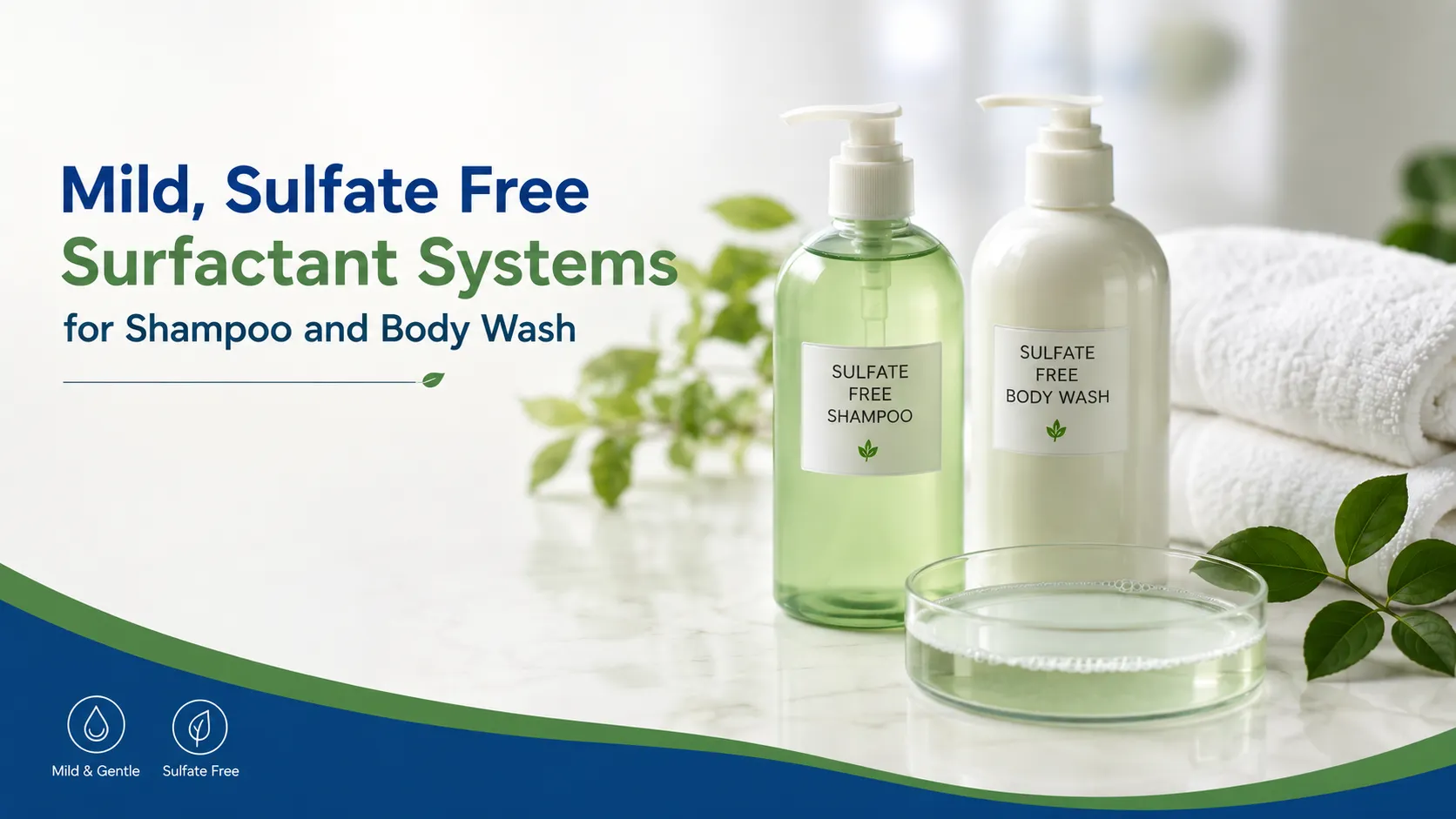
Mild, Sulfate Free Surfactant Systems for Shampoo and Body Wash
As consumer demand shifts toward gentler personal care formulations, amphoteric surfactants have become central to mild and sulfate free product development.
- Betaine surfactants: coco betaine and related amphoteric surfactants provide mild foam boosting and viscosity building performance while significantly reducing the potential for skin and eye irritation compared to conventional anionic co surfactants.
- Sulfate free system design: formulators building sulfate free shampoo and body wash products typically combine a mild primary surfactant base with a betaine co surfactant to achieve an acceptable balance of cleansing, foam and mildness.
- Market relevance: the continued growth of the mild and natural personal care category has made betaine based, sulfate free formulation know how a significant point of differentiation for cleaning product manufacturers.
Solid Detergent Binders: Toilet Rim Blocks and Powder Formulations
Solid cleaning products such as toilet rim blocks require a fundamentally different additive: a binder and solubilizer capable of holding active ingredients, perfume and dye together in a cohesive, slowly dissolving solid form.
Key functions in solid detergent formulation:
- Binding and solubilizing: high mole ethoxylate surfactants act as the primary binder and solubilizer in rim block formulations, typically used at 20 to 40 percent of the formulation alongside perfume, dye and an acid or alkaline active ingredient.
- Controlled dissolution: the binder system determines how evenly and how slowly the solid block dissolves during use, directly affecting product lifespan and consistent active ingredient release.
- Compatibility with actives: the binder must remain compatible and stable with the specific acid or alkaline active used in the formulation, whether an in cistern block, a rim hanger or a solid toilet bowl cleaner.
Our Other Product
Pharmaceutical Grade HPMCHeavy Duty Alcohol Ethoxylates for Industrial Degreasing
Industrial and institutional cleaning, including metalworking degreasing and manufacturing floor cleaners, calls for surfactant chemistries capable of cutting through heavy grease, oil and soil under demanding conditions.
Common heavy duty degreasing surfactant categories:
- Nonyl phenol ethoxylates: nonyl phenol ethoxylates were historically widely used for their strong degreasing performance, though increasingly restricted in several markets due to environmental regulation, discussed further below.
- Lauryl alcohol ethoxylates: lauryl alcohol ethoxylates are effective general purpose degreasing surfactants suited to a range of industrial cleaning applications.
- C9 to C11 alcohol ethoxylates: shorter chain alcohol ethoxylates valued for fast wetting and strong degreasing performance in metalworking and manufacturing environments.
- C12 to C18 alcohol ethoxylates: longer chain alcohol ethoxylates offering strong grease cutting performance suited to heavier industrial soil loads.
These chemistries support industrial and institutional cleaning applications including clean in place systems, floor cleaners and heavy duty degreasers used across manufacturing and metalworking environments.
Pearlizing and Opacifying Agents for Visual Appeal
Beyond core cleansing performance, visual presentation plays a significant role in personal care and household cleaning product positioning.
- Pearlizing agents: glycol distearate and similar pearlizing chemistries are used at approximately 1 to 3 percent, combined with a suitable suspending agent, to create the pearl effect appearance associated with premium shampoo and body wash formulations.
- Formulation stability: achieving a stable pearl effect requires the pearlizing agent to be properly suspended and evenly dispersed, which is why suspending agent compatibility is an important formulation consideration.
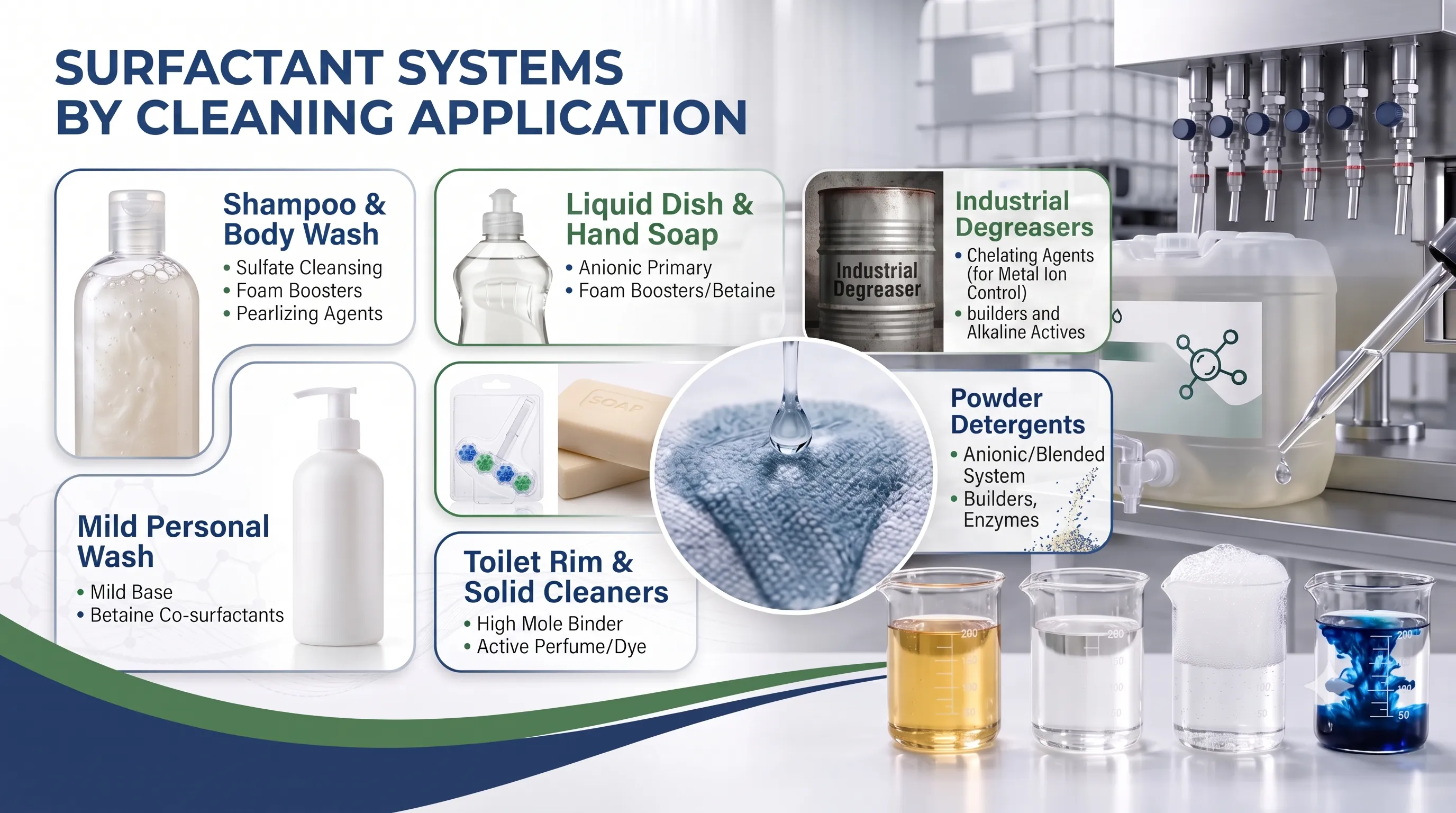
Comparing Surfactant Systems by Cleaning Application
| Application | Primary Surfactant Role | Key Supporting Additives |
|---|---|---|
| Conventional Shampoo and Body Wash | Sulfate based primary cleansing | Alkanolamide foam boosters, pearlizing agents |
| Mild and Sulfate Free Personal Wash | Milder primary surfactant base | Betaine co surfactants |
| Liquid Dishwashing and Hand Soap | Anionic primary surfactant | Alkanolamide or betaine foam boosters |
| Toilet Rim Blocks and Solid Cleaners | High mole ethoxylate binder | Perfume, dye, acid or alkaline active |
| Industrial and Metalworking Degreasers | Heavy duty alcohol ethoxylates | Builders, chelating agents as needed |
| Powder Detergents | Anionic or blended surfactant system | Builders, brighteners, enzymes as needed |
Biodegradability and Regulatory Considerations for Surfactants
Surfactant selection is increasingly shaped by environmental regulation as well as performance.
- Nonylphenol ethoxylate restrictions: nonylphenol and nonylphenol ethoxylates are restricted under Annex XVII of the European Union REACH Regulation due to aquatic toxicity concerns, and are subject to reporting requirements under the United States Toxic Substances Control Act, prompting many formulators to transition toward alcohol ethoxylate alternatives.
- Biodegradability standards: surfactant biodegradability is commonly assessed using internationally recognized methods such as those published by the Organisation for Economic Co operation and Development, which are referenced across multiple national detergent regulations.
- Regional detergent regulations: markets such as the European Union apply specific detergent regulations governing surfactant biodegradability, while national standards bodies, including India's Bureau of Indian Standards, publish quality and compositional standards applicable to household detergent products sold domestically.
Formulators developing products for export or for environmentally regulated markets should confirm current surfactant restrictions and biodegradability requirements applicable to their specific target country before finalizing a formulation.
Why Choose Pharcos Speciality for Detergent and Cleaning Surfactants
Pharcos Speciality Ltd supplies a complete surfactant system for household, personal care and industrial cleaning product manufacturers, covering primary surfactants, co surfactants, solubilizers, pearlizing agents and industrial degreasing chemistries.
What Pharcos offers detergent and cleaning product manufacturers:
- Complete system supply: a one stop source for primary surfactants, co surfactants, foam boosters, thickeners, solubilizers and opacifiers across any cleaning system, including Cocamide DEA and MEA for conventional foam boosting and Coco Betaine for mild, sulfate free formulations.
- Solid detergent binders: high mole Ceteareth grades serving as the primary binder and solubilizer for toilet rim block and solid detergent formulations.
- Industrial degreasing range: Nonyl Phenol Ethoxylates, Lauryl Alcohol Ethoxylates, and C9 to C11 and C12 to C18 Alcohol Ethoxylates for heavy duty degreasing in metalworking and manufacturing environments.
- Pearlizing solutions: Glycol Distearate as a standard pearlizing agent for shampoo and body wash formulations.
- Cost effective formulation support: technical optimization to balance performance and cost, helping manufacturers develop commercially competitive products.
- Industrial and institutional focus: specialized products supporting clean in place systems, floor cleaners and heavy duty degreasers for I and I cleaning applications.
Detergent and cleaning product manufacturers evaluating a surfactant manufacturer or supplier in India can contact the Pharcos technical team to discuss formulation requirements, request samples, and review documentation for their specific cleaning product category.
 Call Us Now!
Conclusion
Behind every effective detergent or cleaning product is a surfactant system engineered for its specific job, whether that is a rich, stable lather in a shampoo, a slowly dissolving solid block in a toilet cleaner, or a heavy duty grease cutting formula for industrial degreasing. Understanding the distinct roles of primary surfactants, foam boosting co surfactants, solid binders and degreasing ethoxylates gives formulators the foundation to build products that perform consistently across their intended use case, while staying mindful of the ongoing regulatory shift away from legacy chemistries such as nonylphenol ethoxylates.
For manufacturers sourcing surfactants across this range of applications, Pharcos Speciality Ltd offers a complete, India manufactured surfactant portfolio spanning personal care, household and industrial cleaning categories, backed by technical formulation support to help identify the right surfactant system for a specific cleaning product.
Our Other Product
Pharmaceutical Grade Polyethylene Glycol (PEG)Frequently Asked Questions

Dr. Avinash Dubey (R&D Head)
Dr. Avinash Dubey is a PhD in Organic Chemistry with a distinguished career spanning more than four decades. As the head of R&D at Pharcos, he focuses on the development of novel molecules for a wide array of industrial sectors, blending long-standing experience with a passion for innovation.

Mr. Ankit Shah (Managing Director)
Mr. Ankit Shah has led Pharcos Speciality for over three decades, establishing it as a pioneer in specialty chemicals. He currently directs the company’s strategic expansion into the APIs, Excipient and Speciality Surfactants markets, upholding a steadfast commitment to "Make in India" and world-class manufacturing quality and new product development.